




Japanese Dragon Urn
A Japanese dragon urn brings dynamic metalwork and historic ceramic form into a room, capturing the intense energy of Meiji period craftsmanship.
Japanese Dragon Urn
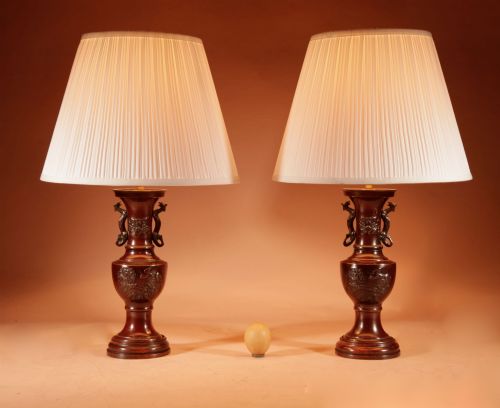
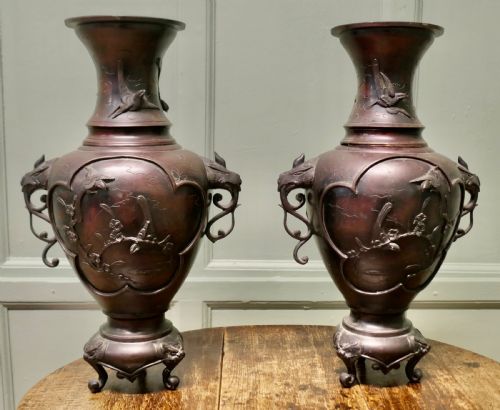
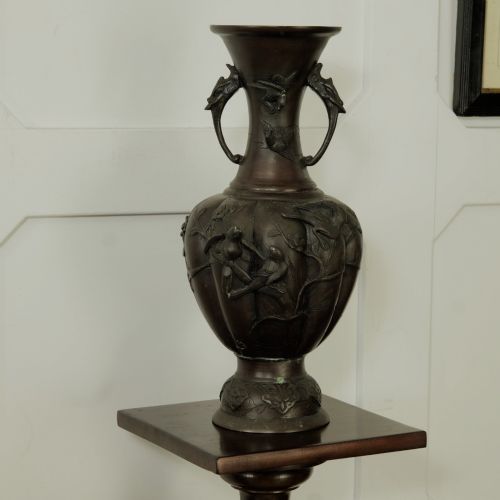
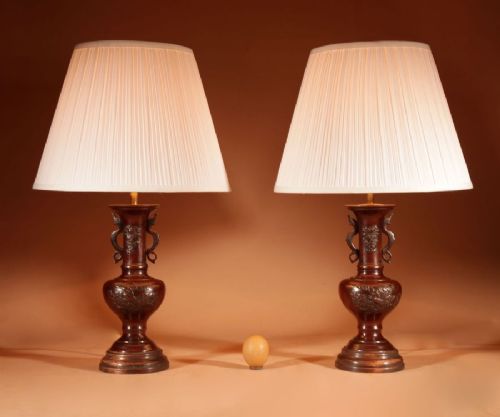
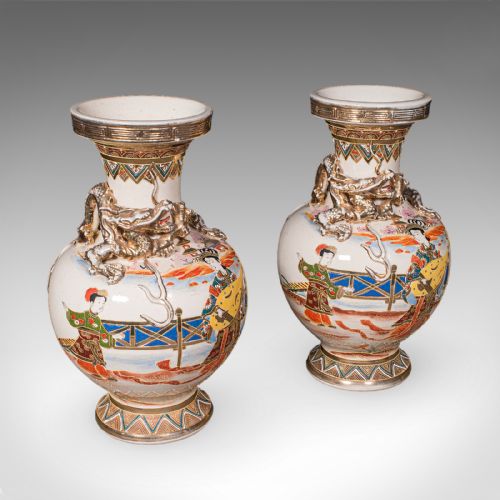
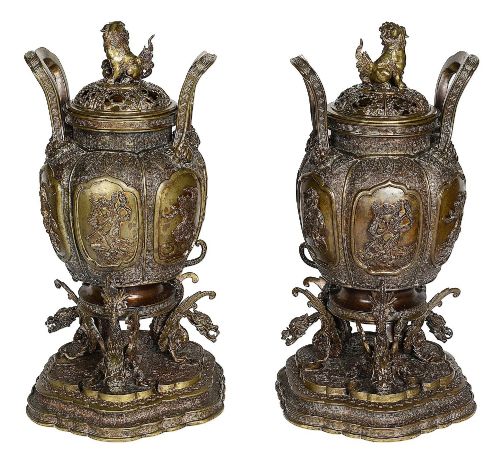
When searching for a japanese dragon urn, collectors encounter substantial metal vessels and ceramic vases dating primarily from the late nineteenth and early twentieth centuries. These objects range from monumental garden planters and temple water dispensers to smaller bronze lidded urns, table lamps, and intricately decorated baluster vases. Many examples date to the Meiji period, reflecting a rich tradition of Asian craftsmanship that also influenced European Japonisme styles during the Victorian era.
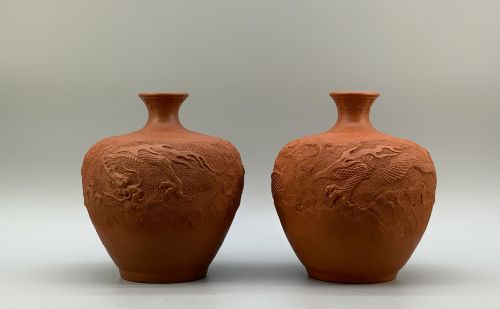
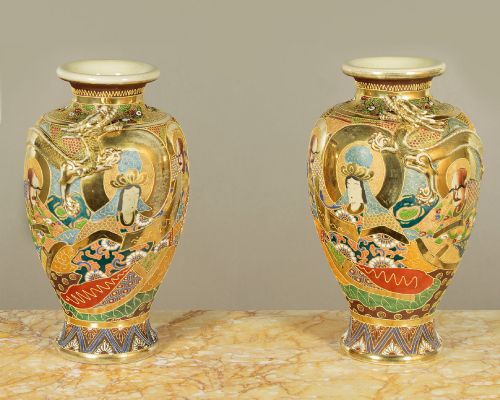
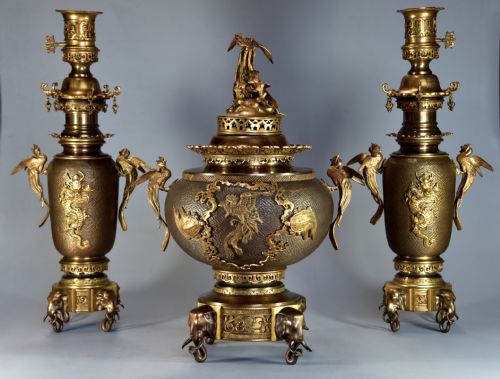
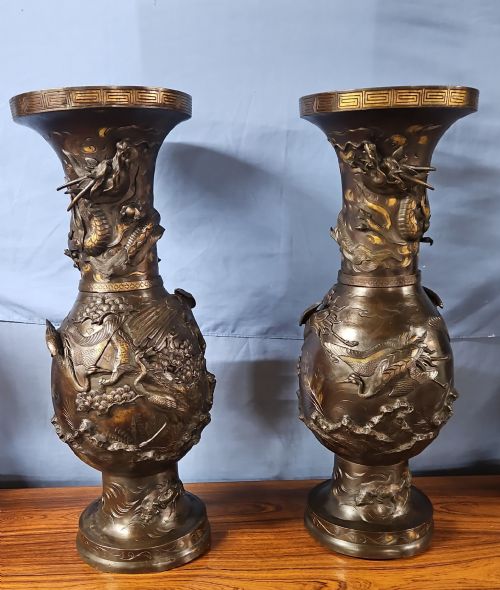
The selection includes matched pairs of bronze vases and garniture sets alongside individual ceramic pieces featuring hand-painted Satsuma details or Tokoname red clay. Formats vary from archaistic Hu vases and incense burners to massive garden usubata urns and champleve enamel table lamps. Buyers find both functional water containers and purely decorative display pieces originating from Japanese workshops and schools.
How they were made
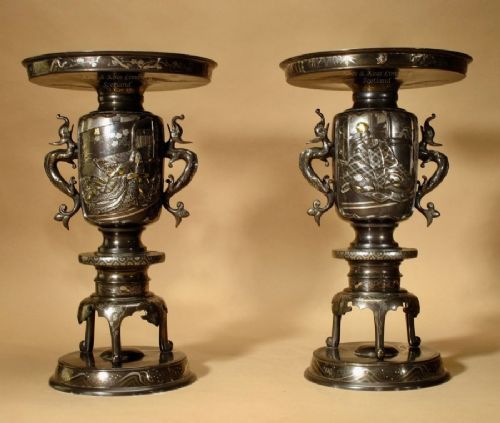
The metalwork vessels rely on cast bronze, patinated bronze, and gilt bronze, often enhanced with applied brass elements and intricate champleve or cloisonne enamel work. Artisans utilised gold leaf highlights and careful surface patination to bring depth to the writhing dragon motifs cast or chased into the metal. Schools such as Takaoka contributed advanced casting methods to shape large-scale temple and garden urns.
Ceramic examples employ earthenware, Tokoname red clay, and porcelain shaped into baluster and hexagonal vase forms. Painters decorated these surfaces with hand-painted details, incorporating complex figural scenes alongside traditional dragon and phoenix motifs. Cloisonne pieces like Totai Shippo integrate wirework enamel directly over alternative textures such as tree bark effects.
Listings feature items spanning the Victorian era through the early twentieth century, including the Meiji, Taisho, and Showa periods.
What varies in quality
Quality rests in the crispness of the casting and the precision of the surface decoration, particularly how sharply the dragon scales and claws are rendered in bronze. Master metalworkers achieved deep relief and controlled patination that separates standard production from pieces bearing signature marks or originating from esteemed makers like Hotoda. In enamel work, the fineness of the wire cells and the smooth vitrification of the coloured pastes dictate the overall standard.
Ceramic variants differ according to the delicacy of the hand-painted brushwork and the complexity of the composition, such as densely populated scenes involving numerous figures alongside the central dragon. The weight and stability of the underlying clay body, whether red earthenware or fine porcelain, further distinguish superior studio output from more commercial output.
Hotoda
The Japanese Dragon Urn Glossary
- Meiji Period
- The era in Japanese history spanning from 1868 to 1912, characterised by extensive artistic production and international export. Pieces from this time frequently display accomplished metal casting and detailed enamel work.
- Champleve
- An enamelling technique where troughs or cells are hollowed out in the metal surface and filled with enamel powder before firing. This creates raised metal outlines that define the pattern.
- Satsuma
- A type of Japanese earthenware featuring a pale, ivory-coloured cracked glaze decorated with detailed polychrome enamels and gilding. These ceramics often depict traditional figures, birds, and dragons.
- Usubata
- A specific form of bronze vessel traditionally used for flower arrangements, featuring a broad flat top above a columnar body. They frequently appear as large garden urns.
- Japonisme
- A nineteenth-century European artistic movement influenced by Japanese art and design. French and British makers adopted these aesthetic principles in bronze and decorative objects.
Japanese Dragon Urn: Frequently Asked Questions
What are japanese dragon urns made from?
These pieces are predominantly constructed from cast bronze, patinated bronze, and brass, frequently incorporating champleve or cloisonne enamel details and gold leaf.
Other examples are formed from ceramic materials including Tokoname red clay, earthenware, and fine porcelain with hand-painted decoration.
How do I identify a Meiji period piece?
Meiji period items date between 1868 and 1912, a time when Japanese metalwork and ceramics reached a high technical standard for the export market.
Look for refined bronze casting, intricate dragon motifs in high relief, and occasional artist signatures or school attributions on the base.
What is the difference between bronze and cloisonne urns?
Bronze urns rely on metal casting, chasing, and patination to form the dragon decoration directly in the metal body.
Cloisonne urns use thin metal wires soldered to a base to create compartments filled with coloured enamel paste, producing a smooth and colourful surface.