
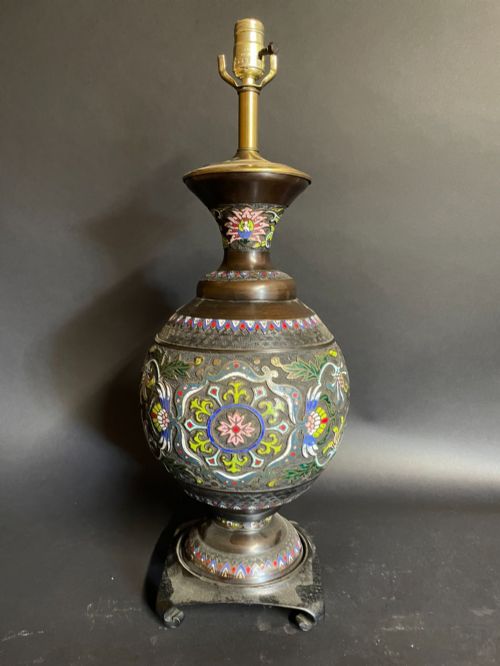


Japanese Cloisonne Urn
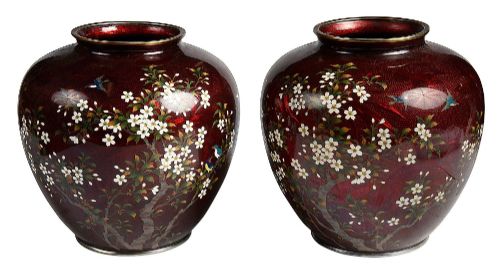
A Japanese cloisonne urn brings intricate wirework and vibrant enamel into a room, capturing the skilled craft of the Meiji period.
Japanese Cloisonne Urn
A Japanese cloisonne urn encompasses vessels shaped as ginger jars, temple water dispensers, and covered incense burners. The selections span the nineteenth century through the early twentieth century, incorporating Meiji and Edo period aesthetics.
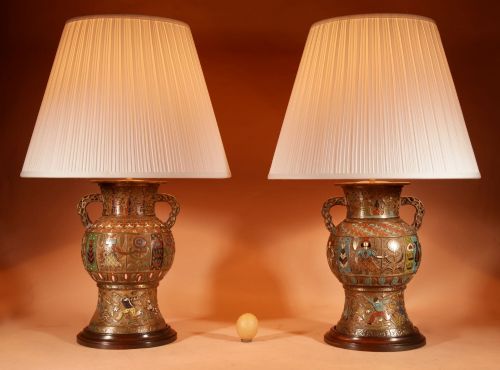
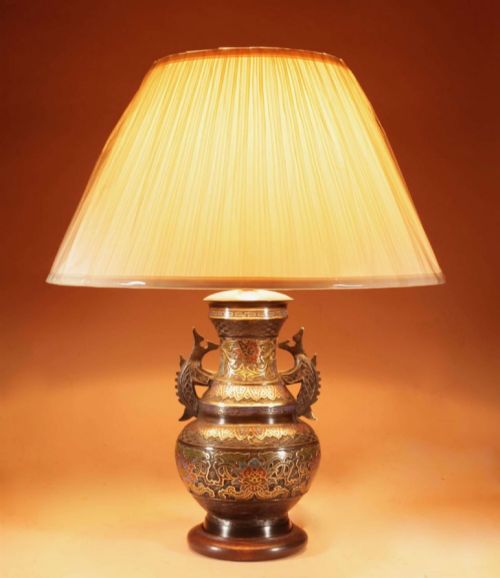
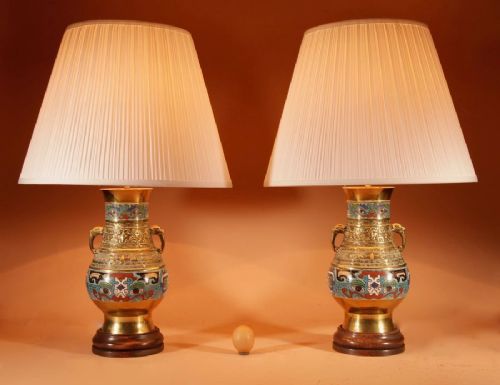
Buyers frequently encounter pairs of vases and table lamps adapted from earlier vessels alongside lidded jars and smaller cabinet pieces. These objects demonstrate the diverse decorative output of Japanese workshops exported to Western markets during the Victorian and Edwardian eras.
The physical scale ranges from miniature cabinet vases to massive palace vessels exceeding ninety centimetres in height. Bronze, brass, and copper bodies form the structural foundation for the applied enamel designs.
Materials and Technique
Artisans soldered thin flat ribbons of brass, copper, or bronze onto metal body bases to create raised compartments known as cloisons. These wire outlines formed intricate pictorial patterns depicting dragons, phoenixes, koi, and floral motifs.
Workers filled the partitioned cells with coloured enamel paste made from ground glass and mineral pigments before firing the vessel in a kiln. Successive applications of enamel and repeated firings ensured the surface reached the desired density and colour saturation.
Craftsmen polished the cooled surface down until the metal wire rims and the hardened enamel fused into a smooth continuous plane. Silver foil underlays occasionally appeared beneath translucent enamels to create luminous depth within specific design areas.
The surviving inventory demonstrates a heavy concentration of pieces originating from the nineteenth century and the Meiji period, executed in copper, bronze, and enamel.
Craftsmanship and Execution
The precision and fineness of the wirework separate exceptional examples from standard production pieces. Superior makers achieved microscopic cell divisions that rendered complex plumage and scales with astonishing clarity.
Depth and consistency of the enamel glazes indicate workshop proficiency. Master artisans avoided pitting, discolouration, and uneven shrinkage during the high-temperature firing process, resulting in a flawless vitreous finish.
The weight and stability of the underlying bronze or copper armature contribute significantly to overall standard. Heavier metal bases and meticulously finished interiors demonstrate uncompromised construction standards.
The Japanese Cloisonne Urn Glossary
- Cloisonne enamel
- A decorative metalwork technique where flat wires form cells that hold vitreous enamel paste. This method creates detailed multi-coloured surface patterns after kiln firing.
- Champleve
- An enamelling process where troughs or cells are carved directly into a thick metal surface to hold the coloured paste. This technique differs from soldered wire cloisonne.
- Meiji period
- The era of Japanese history lasting from 1868 to 1912, noted for rapid industrialisation and the widespread export of decorative arts to the West. Much of the surviving enamelwork originates from these decades.
- Koro
- A traditional Japanese incense burner featuring a pierced lid to release aromatic smoke. These vessels frequently appear in bronze or cloisonne enamel.
- Gin Bari
- A specialised cloisonne technique involving embossed silver foil placed beneath translucent enamel to create textured patterns. This method produces a shimmering, three-dimensional effect across the surface.
Japanese Cloisonne Urn: Frequently Asked Questions
How do I date a Japanese cloisonne urn?
Dating relies heavily on stylistic markers, wire types, and manufacturing methods associated with the Meiji and Edo periods. Earlier nineteenth-century pieces often utilise heavier bronze foundations and opaque, muted enamel palettes.
Later Victorian and Edwardian imports frequently exhibit finer wire cells and brighter, more experimental colour combinations. Signed pieces provide additional chronological context by linking the object to specific documented workshops.
Were these urns originally made as lamps?
Many examples found today were originally produced as lidded jars, temple vessels, or decorative vases rather than lighting fixtures. Importers and decorators frequently converted large antique vases into table lamps during the late nineteenth and early twentieth centuries to suit Western domestic interiors.
These conversions often involve drilled bases or fitted metal mounts that secure electrical components without altering the main body.
How should I clean a bronze and enamel urn?
Maintenance requires gentle dusting with a dry, soft microfibre cloth to prevent the accumulation of particles within the wire channels. Avoid using commercial metal polishes, abrasive cloths, or liquid cleaners, as these substances can scratch the delicate glass enamel or strip the aged patina from the bronze mountings.
Keeping the vessel away from direct sunlight preserves the stability and vibrancy of the original vitreous pigments.
What is the difference between an urn and a koro?
An urn is a broad term applied in Western markets to various decorative vessels, ginger jars, and palace vases imported from Japan. A koro specifically designates a ritual or domestic incense burner characterised by a pierced or vented lid designed to diffuse smoke.
While both utilise metal bodies and cloisonne decoration, the koro possesses a specialised functional form tied to traditional burning practices.