


Red Enamel Vase
These red enamel vase examples combine rich metallic pigments and glasswork across eras from Victorian manufacturing to Art Deco design.
Red Enamel Vase
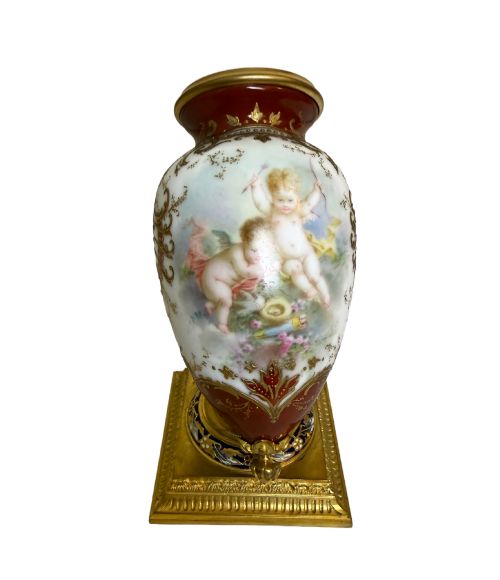
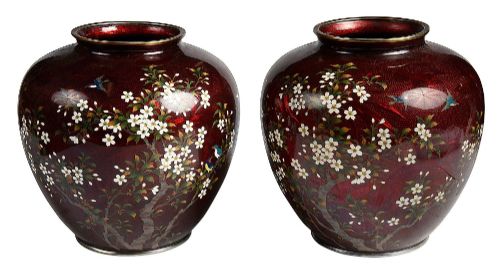
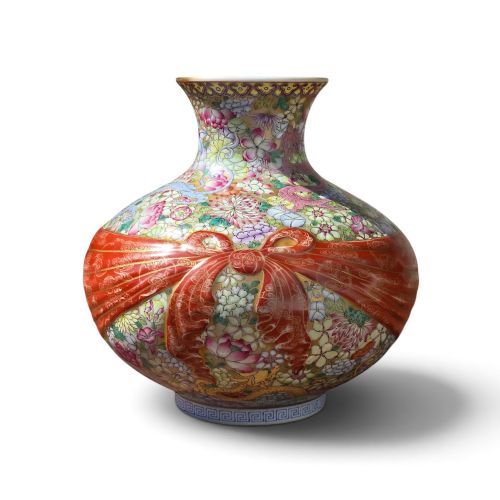
A red enamel vase spans several distinct centuries of decorative arts, appearing in European glass, Japanese metalwork, and Chinese porcelain traditions. When exploring this selection, buyers frequently encounter Victorian ruby glass vessels alongside Meiji period Japanese cloisonné pieces.
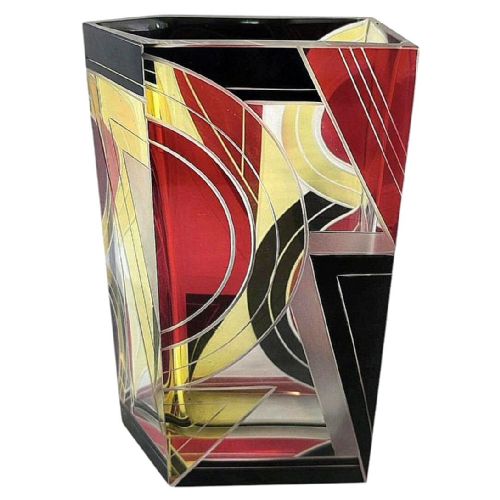
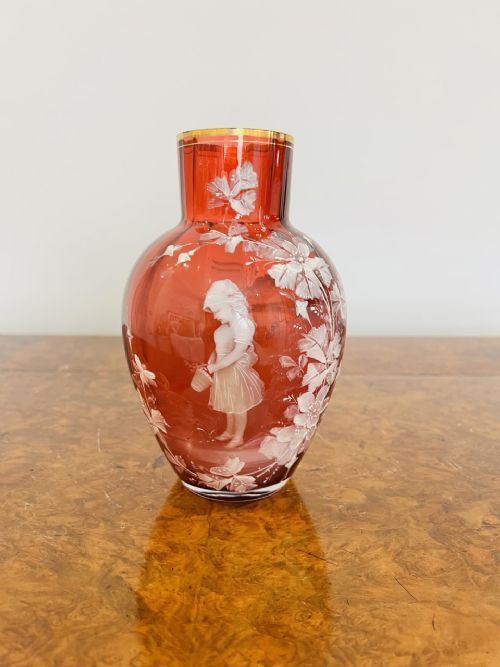
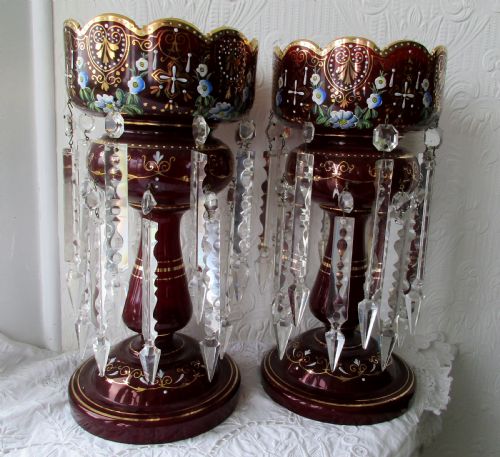
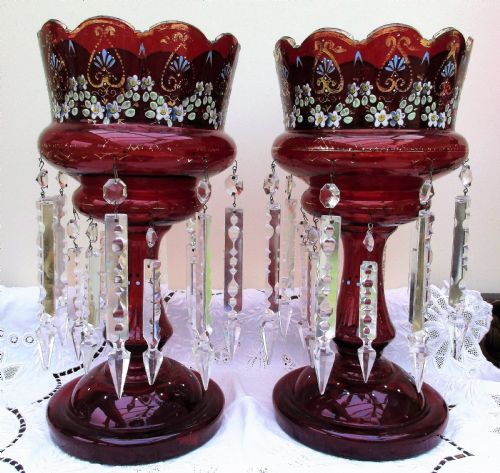
The assortment ranges from small hand-painted cabinet pieces to large mantle lustres and geometric Art Deco glass creations. Formats include traditional baluster vases, jars, and towering vessels decorated with floral or abstract motifs.
Evaluating quality
Quality rests in the precision of the enamel application and the clarity of the underlying glass, crystal, or porcelain. Fine Japanese examples demonstrate meticulous silver wirework and translucent enamel layers that catch the light evenly.
European glasswork gains distinction through crisp geometric moulding or delicate hand-painted motifs executed with clean lines. The integration of complementary materials, such as gilt bronze mounts or paired lustre drops, further separates standard output from exceptional work.
Materials represented include cranberry glass, porcelain, copper, gold leaf, and silver wire.
Ando Jubei·Legras·Monart·Sevres
The Red Enamel Vase Glossary
- Cloisonné
- Enamelling technique where thin metal wires are soldered to a base to form compartments filled with vitreous paste. These compartments are then fired and polished smooth.
- Basse-taille
- Transparent enamel technique applied over low-relief metal engraving. The underlying texture creates varied depths of colour through the translucent glaze.
- Lustre
- Ornamental glass vessel hung with crystal prisms. These decorative mantel pieces reflect candlelight from their ruby or cranberry glass surfaces.
- Mary Gregory glass
- Victorian glassware featuring white enamel silhouette painting, typically depicting children in pastoral landscapes. The technique gained popularity during the nineteenth century.
- Millefleurs
- Decorative ceramic pattern meaning thousand flowers. This dense floral composition appears frequently on fine Chinese porcelain vessels.
Red Enamel Vase: Frequently Asked Questions
How do I identify Art Deco red enamel glass?
Art Deco pieces typically display geometric patterns, clean lines, and opaque or coloured glass forms originating around the nineteen-thirties. These vessels rely on stylised motifs rather than the floral designs seen in earlier Victorian or Art Nouveau periods.
Makers from this era favoured industrial techniques and bold colour contrasts. Examining the weight of the glass and the precision of the enamel lines helps distinguish these twentieth-century works from nineteenth-century antiques.
What is the difference between ruby glass and cranberry glass?
Ruby glass and cranberry glass both achieve their rich red hues through the addition of gold chloride during the manufacturing process. Cranberry glass generally exhibits a lighter, pinker translucent tone, while ruby glass tends towards a deeper, more saturated crimson.
Both materials were widely utilised by Victorian glassmakers for vases and mantle lustres. Collectors often rely on side-by-side comparison under natural light to determine the specific glass shade.
How were Japanese cloisonné red vases made?
Japanese artisans applied fine silver wires onto metal body forms to map out intricate designs of birds, flowers, or geometric patterns. The resulting cells were then filled with coloured enamel pastes and fired multiple times.
Ginbari techniques involved stamping a textured foil pattern beneath translucent red enamel to create shimmering depth. The surface was subsequently ground down and polished to a smooth, lustrous finish.
Where should I display a heavy glass lustre?
Glass lustres require a stable, level surface such as a mantelpiece, sideboard, or sturdy table away from heavy household traffic. Because these pieces often feature hanging crystal prisms, placing them out of reach of children and pets protects the fragile elements.
Positioning them near natural light sources enhances the deep red tones of the glass. Adequate spacing allows the reflective crystal drops to be seen clearly without obstruction.