
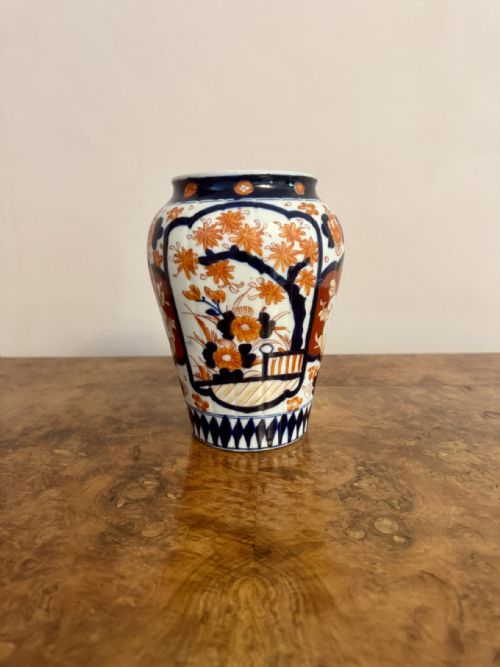


Japanese Decorative Display Vase
These japanese decorative display vase examples bring rich Meiji period artistry and striking Satsuma and Imari palettes into your rooms.
Japanese Decorative Display Vase
When you search for a japanese decorative display vase, you find vessels created for export and domestic display during the late nineteenth and early twentieth centuries. These range from heavy porcelain and earthenware bodies to cast bronze and cloisonne pieces.
You are most likely to meet Satsuma earthenware and Imari porcelain examples dating from the Meiji period through to the Edwardian era. The selection spans traditional two-handle forms, landscape panels, and large covered chargers and vases.
The forms originate from specific historic Japanese pottery centres and workshops, designed primarily for aesthetic impact in European and domestic interiors. They combine intricate hand-painted enamel work with elaborate gilding and decorative motifs.
How they were made
Potters shaped fine porcelain and earthenware bodies before applying detailed underglaze and overglaze enamel painting. Many pieces incorporate heavy gold leaf and gilt highlights to accentuate intricate figural and floral scenes.
Alternative techniques include bronze casting and detailed cloisonne work where metal wires form cells for coloured enamels. Some porcelain vessels also feature specialised surface treatments like lacquer over black paint.
Earthenware Satsuma pieces frequently utilise raised moriage decoration to create textured surfaces that stand proud of the ceramic body. Artisans painted landscape, samurai, and religious panels by hand with remarkable precision.
Some nineteenth-century makers experimented with unexpected textures, pairing traditional ceramic bodies with tactile lacquer over black paint.
What varies in quality
The finesse of the hand-painted brushwork separates standard production pieces from exhibition quality works. Superior examples display crisp detail in facial expressions, garments, and complex background patterns.
The application of gold leaf and heavy gilt influences visual depth and durability. Finer vases maintain intact gilding without rubbing, enhancing the overall contrast against deep cobalt blues and iron reds.
Structural complexity such as bamboo-handle forms, specialised lacquer finishes, and balanced symmetry dictate the artistic ambition of the maker. Heavier, larger bodies require greater technical skill during high-temperature firing.
Hododa·Kinkozan
The Japanese Decorative Display Vase Glossary
- Satsuma
- A type of Japanese earthenware featuring a crackle glaze decorated with polychrome enamels and gilt. It originated in Satsuma Province and became immensely popular during the Meiji period.
- Imari
- A style of Japanese porcelain decorated in underglaze blue, iron red, and gold. These wares were traditionally exported from the port of Imari.
- Moriage
- A decorative ceramic technique using raised slip or enamel dots and lines to create a three-dimensional, textured surface. It is frequently seen on high-quality Satsuma vases.
- Cloisonne
- An enamelwork technique where metal strips are soldered to a base to form compartments filled with paste and fired. This creates intricate coloured patterns across metal vessels.
- Meiji Period
- The era of Japanese history lasting from 1868 to 1912, characterised by the opening of trade with the West and the flourishing of decorative arts for export.
Japanese Decorative Display Vase: Frequently Asked Questions
What is a Satsuma vase?
A Satsuma vase is an earthenware vessel characterised by an ivory-coloured, crackle-glazed body painted with elaborate enamel scenes and heavy gold leaf.
These pieces were heavily produced for the export market during the late nineteenth century, often depicting samurai, landscapes, and religious figures.
How do I identify Imari porcelain?
Imari porcelain is readily identified by its distinctive palette of deep underglaze blue, iron red, and abundant gold highlights. The decorative schemes typically feature complex floral and geometric brocade patterns.
This style dates back centuries but remains prominent among nineteenth-century export pieces designed for display.
Where should I display large vases?
Large display vases suit prominent positions in a room, such as on heavy wooden furniture, sideboards, or dedicated display stands. Their substantial height and detailed panels demand space where light can catch the gilt and enamel work.
Ensure the surface is stable and capable of supporting heavier bronze or ceramic bodies safely.
What does Meiji period mean?
The Meiji period spans the reign of the Emperor Meiji from 1868 to 1912, marking a time of rapid modernisation and international trade in Japan. Craftsmen produced exceptional ceramics, bronzes, and lacquerware specifically tailored to Western tastes.
Objects from this era often bear distinct signatures or kiln marks reflecting this golden age of decorative export art.