


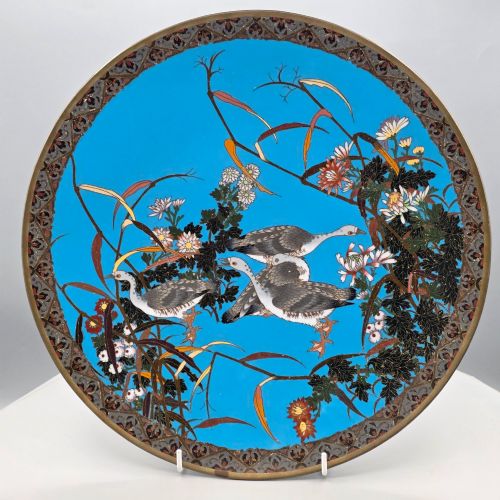




Japanese Cloisonne Enamel Plate
A Japanese cloisonne enamel plate brings intricate metalwork and vibrant coloured glass into focus, offering collectors a tangible piece of Meiji craftsmanship.
Japanese Cloisonne Enamel Plate
When searching for a japanese cloisonne enamel plate, collectors encounter substantial chargers, decorative trays, and wide dishes originating predominantly from the Meiji and late Edo periods. These pieces serve as visual histories of nineteenth-century metalwork, showing deep bowls and flat surfaces designed for display rather than dining.
The objects span varied configurations, including large circular chargers, octagonal trays, and square plates measuring up to fifty centimetres across. Many feature pictorial representations of the natural world, mythological creatures such as dragons and phoenixes, or traditional scenes involving samurai and deities.
Most examples date between the eighteen-fifties and nineteen-hundreds, capturing a period of immense technical development among makers. Pieces range from modest medium plates to massive, imposing chargers dominated by intricate wirework and polished enamel surfaces.
How They Were Made
Artisans constructed these items by applying fine brass or copper wire onto metal or porcelain foundations to form distinct cells, known as cloisons. These metallic partitions were soldered into place to map out elaborate motifs of birds, flowers, and landscapes before any colour was introduced.
Coloured enamel pastes were packed by hand into the individual wire compartments and fired repeatedly in kilns until the vitreous material melted and fused. After cooling, the entire surface was ground down and polished to create a smooth plane where the metallic outlines contained each hue.
Certain variations, such as totai shippo pieces, utilised porcelain bases rather than solid metal, incorporating simulated tree bark textures directly into the body. This technique required precise firing methods to bond the enamel layers securely to the ceramic substrate without distortion.
Japanese Cloisonne Enamel Plate Retail Price Guide 2026
Typical asking prices for japanese cloisonne enamel plate among the pieces listed under this phrase on Sellingantiques today, from the lower quarter to the upper quarter. They describe what is for sale here now, not the wider market.
Several chargers swap serene landscapes for startled frogs and determined shrimp.
What Varies in Quality
The refinement of the wirework stands as a primary indicator of distinction, where thinner, more complex cell boundaries denote greater artisan skill. Superior examples display microscopic attention to detail in rendering feathers, scales, and foliage without irregular gaps or uneven solder joints.
Compositional ambition and signature marks also separate standard decorative items from masterworks. Pieces carrying signatures from recognised workshops or featuring complex subject matter like leaping koi and multi-layered landscapes demonstrate superior execution and artistic intent.
Kinkozan
The Japanese Cloisonne Enamel Plate Glossary
- Cloisonne
- Enamel decoration produced by soldering thin metal wires to a base to form compartments for coloured pastes. This technique allows intricate patterns to be defined clearly before firing.
- Charger
- A large decorative plate or dish intended for display on a wall or stand rather than for practical table use. These sizeable objects often showcase the most ambitious artistic designs.
- Totai shippo
- A specific Japanese enamelling method utilising a porcelain body rather than a traditional metal base. The surface often incorporates textured elements like simulated tree bark beneath the enamel.
- Ho-o
- A mythical bird or phoenix frequently depicted in Japanese decorative arts as a symbol of virtue and grace. These creatures appear with elaborate plumage across many nineteenth-century chargers.
- Mon
- A traditional Japanese heraldic badge or crest used to identify families, clans, or temples. They are occasionally incorporated into the borders or fields of enamel plates.
Japanese Cloisonne Enamel Plate: Frequently Asked Questions
How do I display a large charger safely?
Large chargers require sturdy wall mountings or specialised display stands designed to support substantial weight without slipping. Ensure the rim is held securely without exerting excessive pressure on the enamel surface.
Keep pieces away from direct sunlight and damp environments to protect the integrity of the metal base and vitreous enamel over time.
Were these plates used for dining?
These items were created strictly for display and decorative purposes rather than everyday food service. Their intricate wire boundaries and polished enamel surfaces are unsuited for cutting implements or culinary use.
Collectors should treat them as fine works of art rather than functional tableware, handling them carefully by the edges to avoid surface wear.
How can I tell the Meiji period pieces apart?
Meiji period items often exhibit highly ambitious pictorial themes, such as Mount Fuji, expansive landscapes, or detailed dragons, alongside increasingly refined wirework techniques. The palette expanded significantly during this era to include subtle tonal shifts and transparent enamels over foiled backgrounds.
Earlier pieces from the late Edo period tend to feature heavier construction and bolder, more restrained motifs with thick brass wires.
What is the difference between a plate and a charger?
A charger is substantially larger than a standard plate, typically measuring thirty centimetres or more across, and was designed to be viewed from a distance on a sideboard or wall. Plates are smaller in diameter and offer more intimate, detailed compositions suited for close inspection.
Both forms utilise identical enamelling and wire-laying techniques but serve different display functions within a room.