





Japanese Cast Metalwork
Japanese cast metalwork comprises sculptural bronzes and vessels from the Meiji and Edo periods, offering collectors intricate animal figures and patinated vases.
Japanese Cast Metalwork
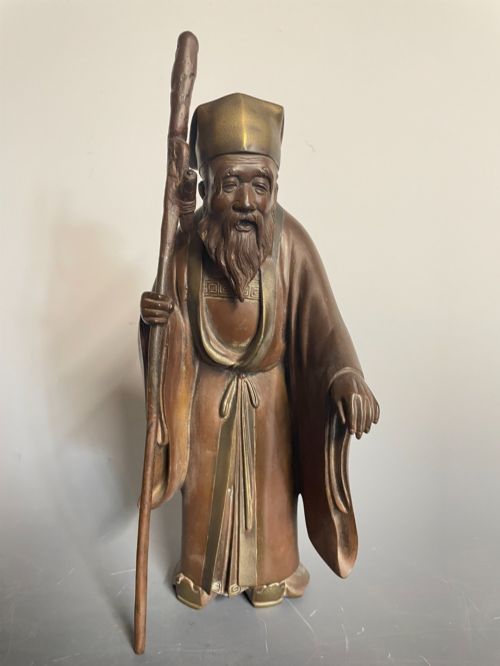
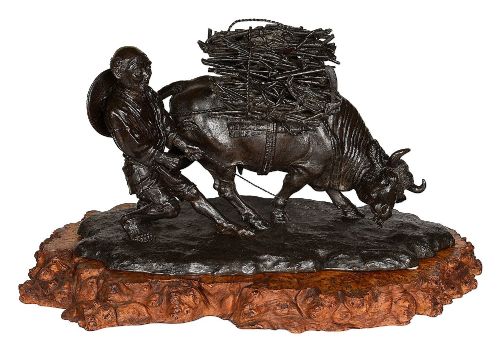
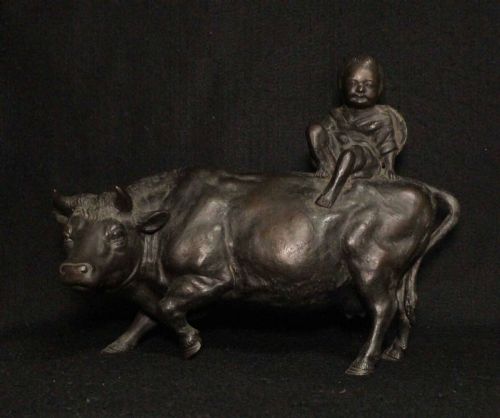
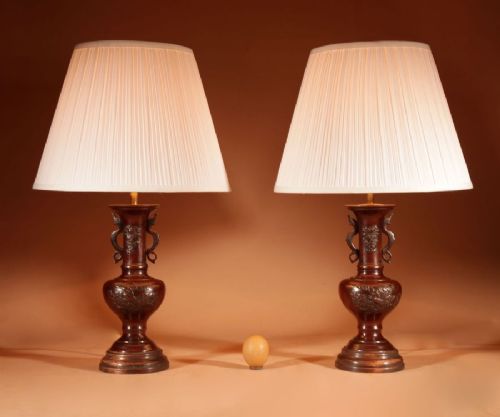
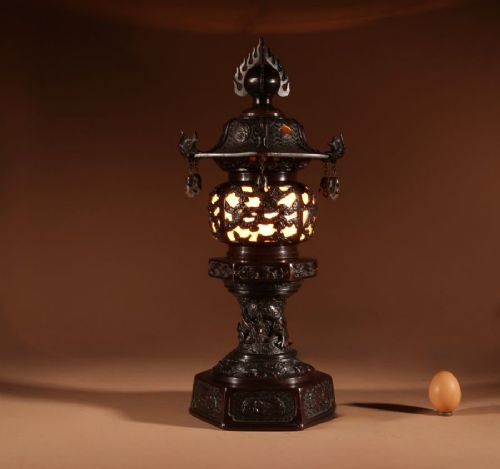
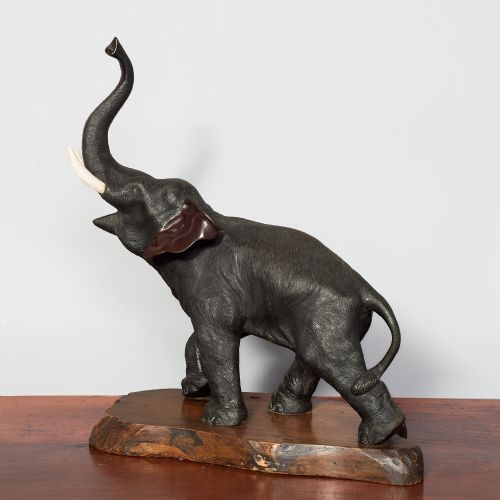
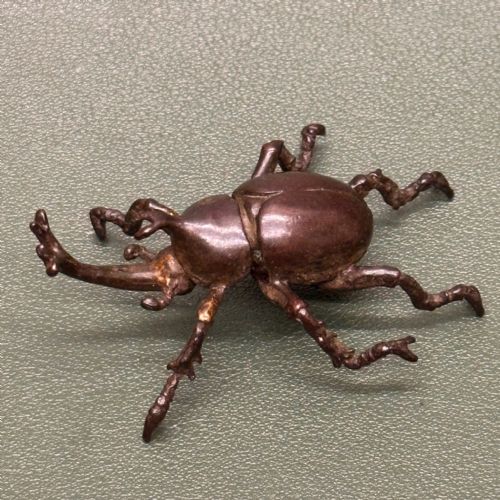
Japanese cast metalwork primarily encompasses bronze figures, vases, planters, and garden statuary originating from the nineteenth and early twentieth centuries. These objects reflect the decorative arts of the Meiji and Edo periods, capturing distinct aesthetic movements in East Asian metalcraft. Collectors encounter freestanding animal sculptures, such as elephants, horses, and rhinoceros beetles, alongside functional vessels like censers and table lamps.
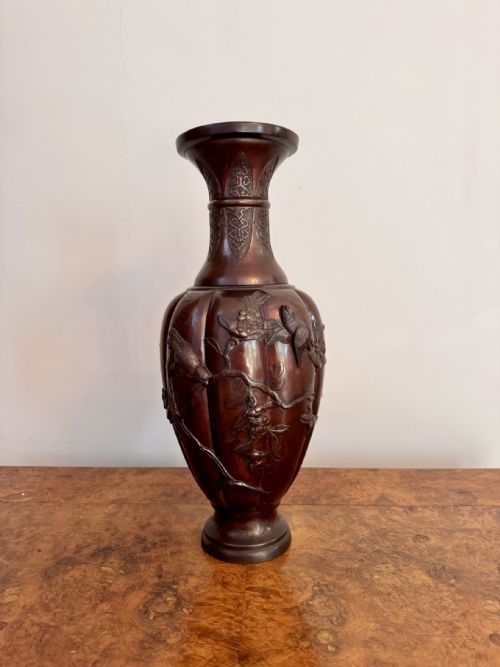
The pieces on this page span several decades of production, leaning heavily toward Meiji period workshops where casting techniques reached notable heights. Vases and urns often feature patinated surfaces, while figurative works portray figures such as woodmen, geisha girls, and demons with careful detail. Garden okimono and large planters demonstrate the scale and ambition achievable through traditional foundry methods.
Materials and Technique
Foundries relied primarily on bronze, utilising its strength and fluidity in molten states to capture fine details in figures and vessels. Patination techniques were applied to alter surface colour, producing rich browns, deep blacks, and nuanced metallic tones. Secondary materials like bone, wood, and glass appear occasionally as complementary elements in composite sculptures.
Casting methods allowed artisans to render complex forms, from the naturalistic anatomy of birds and animals to the geometric precision of archaistic vases. Metalworkers smoothed seams and polished surfaces by hand, ensuring that patinated finishes settled evenly across both large garden statues and small tabletop censers.
Materials documented across the listings include Bronze, Patinated Bronze, Brass, Bone, Burr Wood, Fabric, Glass, and Wood.
Evaluating Quality
Quality rests in the fidelity of the casting and the crispness of the chased surface details, separating standard production pieces from masterworks. The depth and stability of the original patination indicate how well the metal has aged and whether the surface retains its intended character. Proportions and anatomical accuracy in figurative works distinguish superior animal and human sculptures from simpler renderings.
Subtlety in design and the integrity of the overall form separate competent foundry output from exceptional artistic achievements. Pieces that integrate complex elements, such as articulated joints or mixed-material components, demand higher levels of technical mastery from the workshop.
Kunio Itô·Tokyo Foundry·Sakai Kōzan
The Japanese Cast Metalwork Glossary
- Meiji Period
- The era in Japanese history spanning from 1868 to 1912, noted for rapid modernisation and the flourishing of decorative metal arts. Work from this period forms the bulk of accessible cast metalwork.
- Edo Period
- The period lasting from 1603 to 1867, preceding the Meiji era and establishing foundational styles in Japanese craftsmanship. Pieces bearing this attribution reflect earlier aesthetic traditions.
- Okimono
- A traditional Japanese ornamental object designed for display on a shelf or in a tokonoma alcove. These sculptures often depict animals, figures, or botanical subjects.
- Censer
- A vessel intended for burning incense, frequently cast in bronze with perforated lids and decorative handles. These items served both ritual and domestic decorative functions.
- Patination
- The chemical or thermal treatment applied to the surface of metal to produce a specific colour and finish. It protects the bronze while enhancing its visual depth.
Japanese Cast Metalwork: Frequently Asked Questions
What is Japanese cast metalwork?
Japanese cast metalwork consists of bronze vessels, figures, and decorative objects produced primarily during the Edo and Meiji periods.
These pieces showcase traditional foundry techniques, featuring patinated surfaces and intricate detailing designed for domestic display or garden use.
How do I date these pieces?
Dating relies on stylistic markers associated with specific periods, such as the naturalism characteristic of Meiji workshops or the earlier forms of the Edo era.
Foundry marks and signatures, where present, can also help pinpoint the time and place of production.
How were these bronzes used?
Many items served practical purposes in households, including incense burners, flower vases, and table lamps.
Larger pieces, such as garden okimono and planters, were created to adorn outdoor spaces and traditional Japanese landscapes.
How do I care for patinated bronze?
Patinated bronze requires minimal intervention, needing only gentle dusting with a soft, dry cloth to remove surface particles.
Avoid using polishes, chemical cleaners, or abrasives, as these will strip away the original patination and damage the metal.