

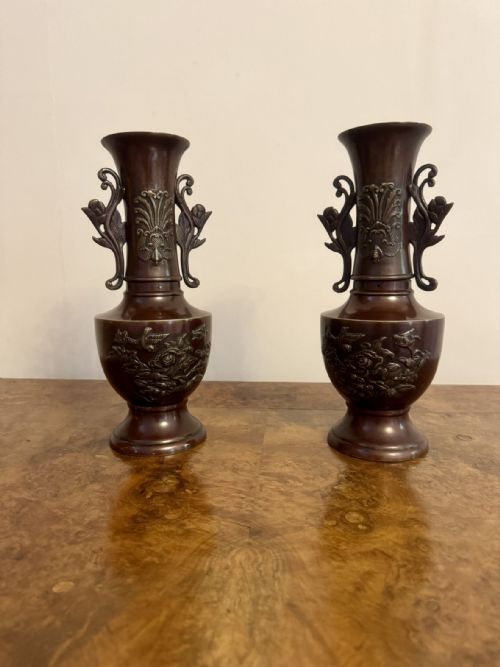


Relief Carved Vase
When you search for a relief carved vase, you are looking at substantial cast metal, clay, and stone vessels carrying deep sculptural ornament from the nineteenth and early twentieth centuries.
Relief Carved Vase
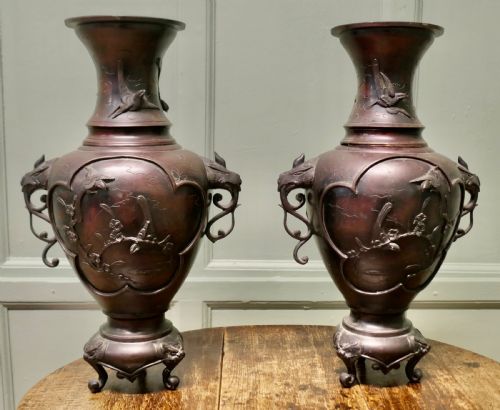
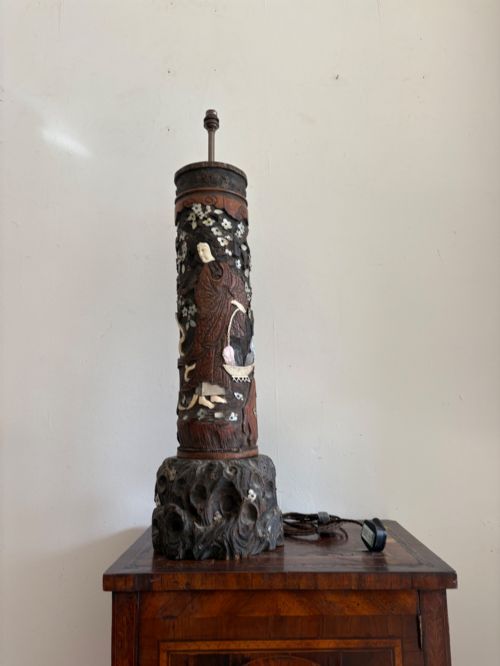
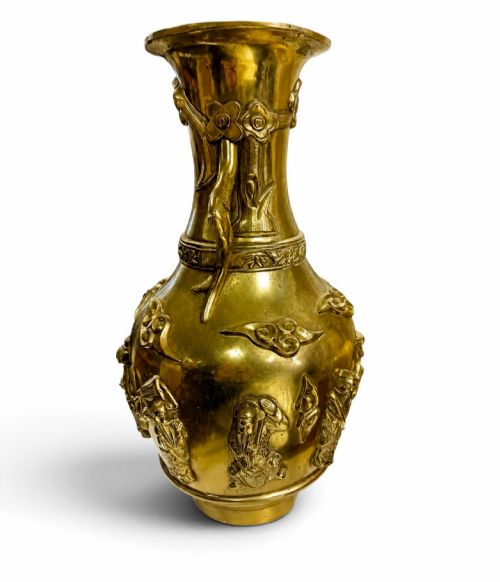
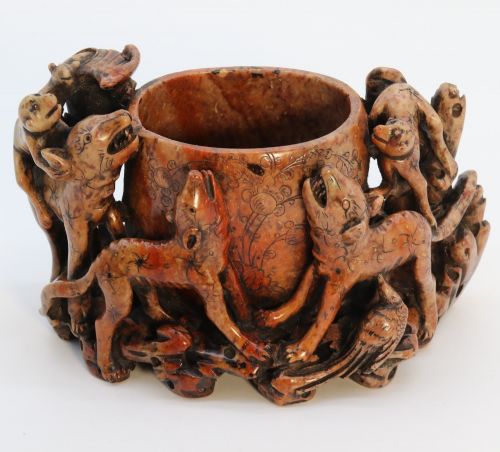
A relief carved vase on this page typically originates from Japanese Meiji period workshops, Qing Dynasty China, or nineteenth-century European foundries. The selection encompasses bronze baluster urns, decorative posy vases, stoneware jardiniere planters, and carved bamboo or soapstone brush pots.
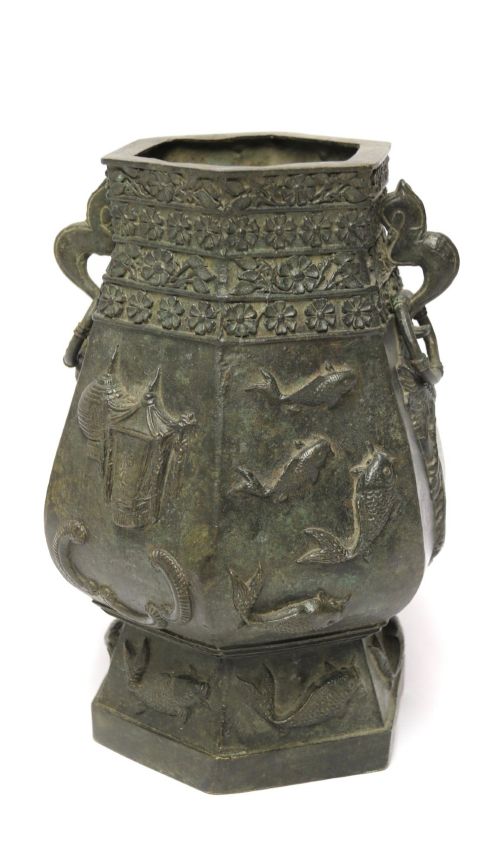
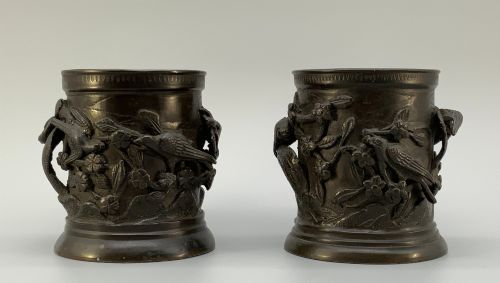
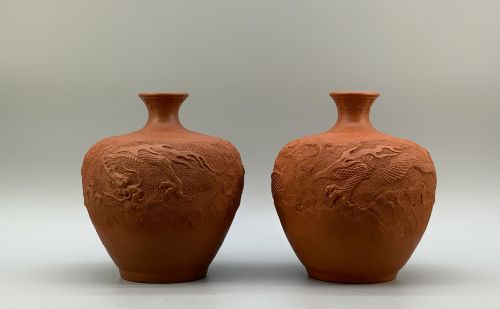
Makers utilised diverse forms ranging from hexagonal solid vessels to large presentation pairs adorned with birds, blossom, dragons, and Daoist immortals. Buyers encounter both Japanese bronze masterworks and French or Italian Grand Tour decorative pieces.
Materials and Techniques
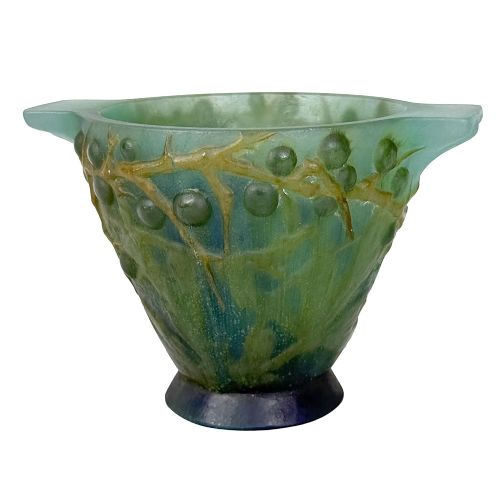
Metal vessels rely on bronze, copper-alloy, and brass, often patinated or finished with enamel details through casting and high-relief carving. Stoneware, red clay, bamboo, soapstone, and pate de verre glass provide alternative mediums for sculptural depth.
Artisans achieved raised surface designs through meticulous chiselling, carving, and moulding. This subtractive or additive technique yields tactile motifs such as entwined dragons and floral arrangements that stand proud of the vessel body.
Judging the Workmanship
Quality rests in the crispness of the sculptural relief and the proportion of the vessel. The finest examples display deep, undercut casting or carving where every feather, scale, or petal remains distinct and energetic.
The weight and stability of the material, alongside the control of patination or glaze, separate standard production pieces from masterworks. Signature marks from notable Japanese foundries or European glasshouses further elevate the standing of a vessel.
Makuzu Kozan II·Genryusai Seiya·Henry Bergé·Amalric Walter
The Relief Carved Vase Glossary
- Meiji Period
- The era in Japanese history spanning from 1868 to 1912, noted for exceptional bronze casting and decorative arts. Pieces from this time frequently exhibit naturalistic motifs in high relief.
- Baluster
- A vase form with a rounded body that tapers toward the neck and base, resembling an architectural pillar. This classic shape provides a stable canvas for extensive sculptural carving.
- Patinated Bronze
- Metal treated with chemicals or heat to produce a stable surface colour and finish. This layer protects the bronze while enhancing the visual depth of relief decoration.
- Pate de verre
- A glass-making method where finely crushed glass is packed into a mould and fused in a kiln. The technique produces dense, softly textured coloured glass vessels with tactile surfaces.
- Brush Pot
- A cylindrical container traditionally used in East Asian studies for holding writing brushes. These vessels are frequently carved from bamboo, soapstone, or wood with intricate exterior scenes.
Relief Carved Vase: Frequently Asked Questions
How do I display a heavy bronze vase safely?
Place heavy metal vessels on stable, level furniture capable of supporting considerable weight without bowing. Ensure the base makes full contact with the surface to prevent tipping.
Keep them away from high-traffic walkways where accidental contact might occur, particularly with pieces featuring protruding handles or delicate applied elements.
What is the difference between Chinese and Japanese bronze vases?
Chinese bronze vessels often reference archaic ritual forms, featuring taotie masks, Daoist immortals, or imperial symbols like dragons and phoenixes. Their patination and alloy composition reflect centuries of traditional casting lineage.
Japanese Meiji period vases typically lean toward naturalism, depicting birds, blossom, and dynamic wildlife with meticulous surface chiselling and distinct signature plates or foundry marks.
Can these vases hold water for fresh flowers?
Most antique metal and stone vessels were designed for ornamental display rather than holding water. Porous materials like soapstone or unglazed red clay can absorb moisture and suffer internal degradation.
If you wish to use them for cut stems, place a discrete waterproof glass or plastic liner inside the neck to protect the historic interior.
How should I clean patinated bronze surfaces?
Dust bronze and patinated metal gently with a soft, dry microfibre cloth or a clean brush. Avoid chemical cleaners, abrasive polishes, or water, which can strip away the historic patina and applied finishes.
Leaving the surface undisturbed helps preserve the integrity and visual character accumulated over the centuries.