




Japanese Brass Cloisonne
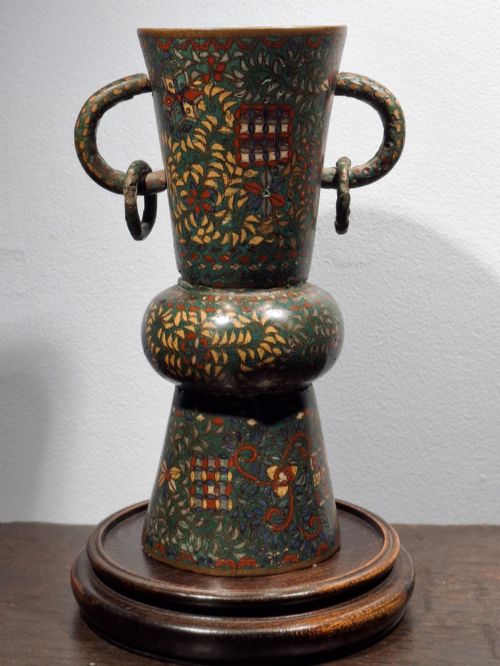
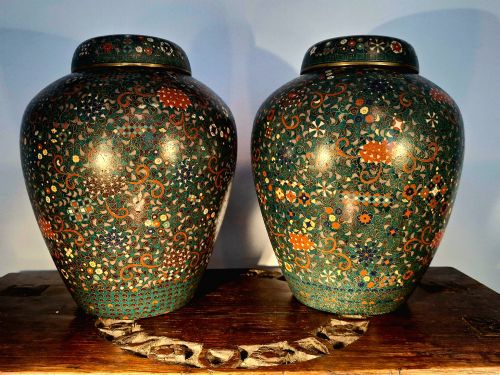
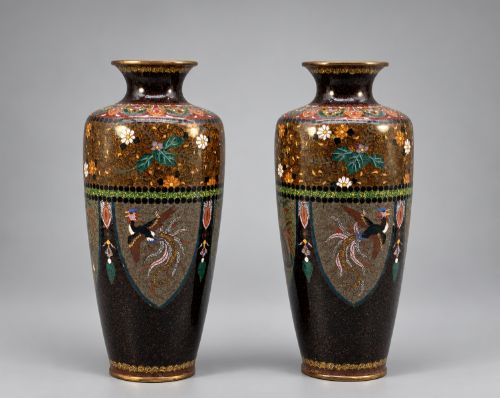
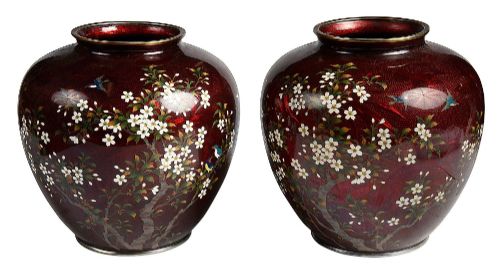
Japanese brass cloisonne brings together metalwork and vitreous enamel in vessels and chargers made during the Meiji, Edo, Taisho and Showa periods.
Japanese Brass Cloisonne
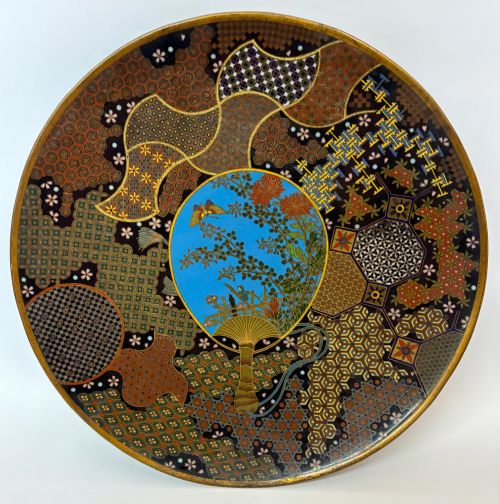
When someone searches for japanese brass cloisonne, they encounter decorative chargers, vases, bowls, trays and table lamps originating from nineteenth and early twentieth century Japan. These pieces range from plates depicting birds, koi, dragons and Mount Fuji to lidded jars and fitted lighting.
The version most commonly met on this page belongs to the Meiji period, alongside examples spanning from the Edo period through to the early twentieth century. Makers applied coloured enamels within wire cells soldered to metal bases to form intricate pictorial scenes.
Forms vary from large display dishes spanning half a metre down to small jewellery boxes, cups and pairs of matched vases. The objects serve as decorative focal points that showcase traditional metalworking and glazing techniques.
What varies in quality
Quality separates simple production items from exceptional works through the precision of the wirework and the complexity of the pictorial design. Finer examples display microscopic cell work forming nuanced gradients of feathers, scales and landscapes without visible pitting or distortion in the enamel.
The density and ambition of the decoration also divide the range, with superior chargers and vases featuring multi-layered motifs such as leaping koi, dragons or Mount Fuji rendered in a wide palette of translucent and opaque colours. The crispness of the finishing polish across the metal wires determines the final refinement of the piece.
Japanese Brass Cloisonne Retail Price Guide 2026
Typical asking prices for japanese brass cloisonne among the pieces listed under this phrase on Sellingantiques today, from the lower quarter to the upper quarter. They describe what is for sale here now, not the wider market.
Frogs, ibises, owls and leaping koi populate the enamel surfaces of these metal vessels, often outnumbering human figures entirely.
Inaba Company
The Japanese Brass Cloisonne Glossary
- Cloisonne
- Enamelwork in which coloured pastes are fired in compartments formed by thin metal strips soldered to a metal foundation. This technique allows intricate pictorial designs to be rendered on vases and chargers.
- Champleve
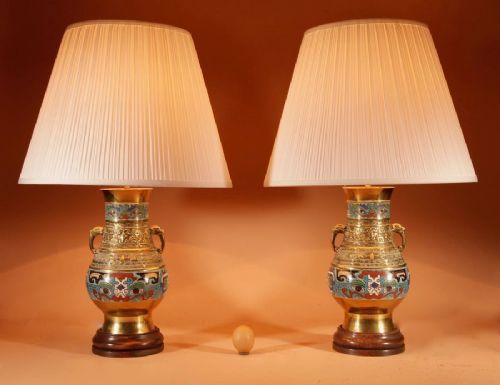
- An enamelling technique where troughs or cells are carved or cast directly into the thick metal body rather than using soldered wires. It appears on heavy bronze and brass lamps and vessels.
- Charger
- A large ornamental decorative plate intended for display on a wall or stand rather than for dining use. Many Meiji period examples feature elaborate bird and floral motifs.
- Meiji Period
- The era of Japanese history lasting from 1868 to 1912, noted for the opening of trade and the export of advanced metalwork and cloisonne enamel. Pieces from this time show high technical proficiency.
- Shippo
- The Japanese term for cloisonne enamel, literally translating to seven treasures. It describes the jewelled appearance of the fired enamel cells.
Japanese Brass Cloisonne: Frequently Asked Questions
How do I clean Japanese cloisonne?
Dust these pieces gently with a soft, dry cloth to prevent accumulation in the wire recesses. Avoid liquid cleaners, abrasives and immersion in water, as moisture can affect the old metal base and soldered joints.
Keep them away from direct sunlight and areas of high humidity to protect the integrity of the vitreous enamel surface over time.
How can I tell the period?
Dating relies on stylistic shifts, material weight and construction methods visible in the base and wirework. Edo period pieces often display thicker bronze or brass foundations with heavier, more restrained enamel palettes.
Meiji and later pieces typically exhibit finer wire cells, highly controlled colour shading, and occasionally maker signatures or company marks on the underside.
What is the difference between cloisonne and champleve?
Cloisonne involves soldering thin metal wires onto the surface of a brass or copper vessel to create individual cells for enamel. Champleve uses recessed channels carved or cast directly into a heavier bronze or brass body.
Champleve items generally feel heavier and present a bolder, more structural integration of metal and coloured enamel.