








Japanese Arita Porcelain Charger
These Japanese arita porcelain charger pieces bring vibrant colour and historic kiln craft to walls and tables.
Japanese Arita Porcelain Charger
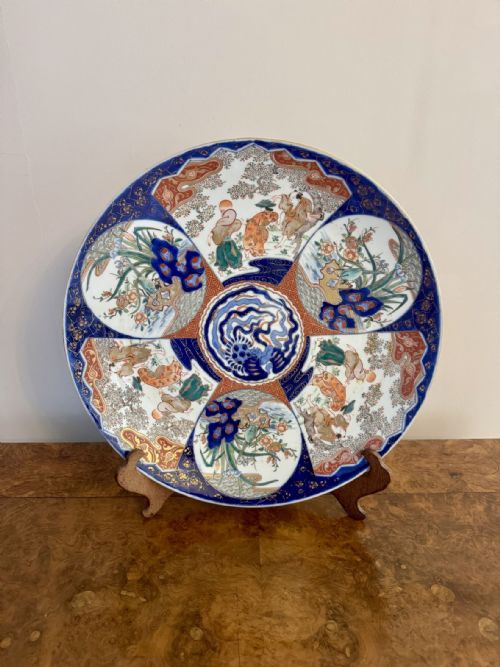
A Japanese arita porcelain charger is a broad, shallow ceramic plate made for display rather than dining. When you search for this phrase, you encounter large platters intended to serve as focal points in a room.
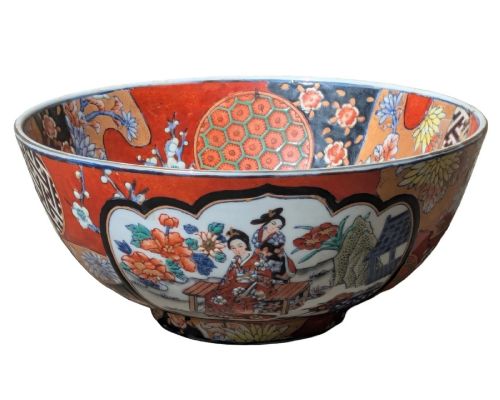
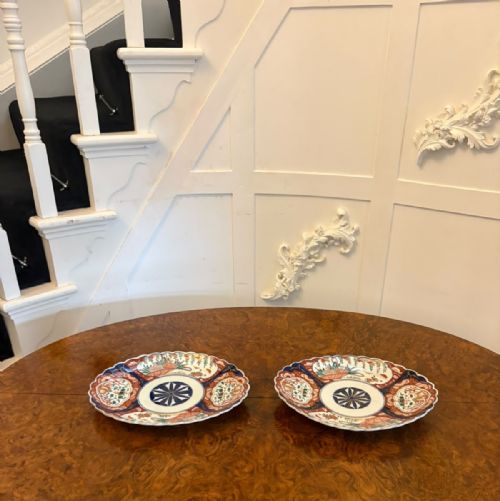
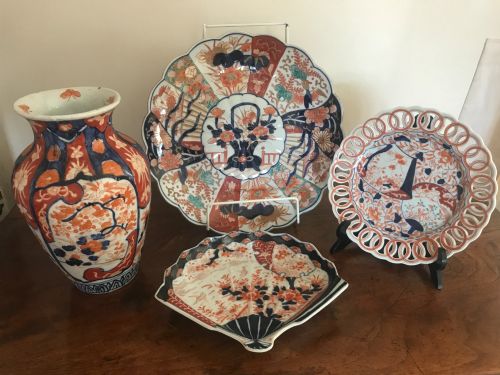
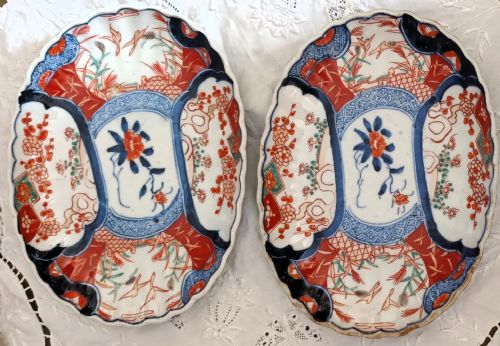
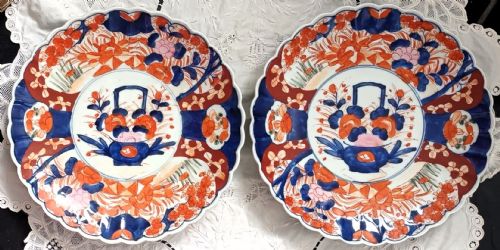
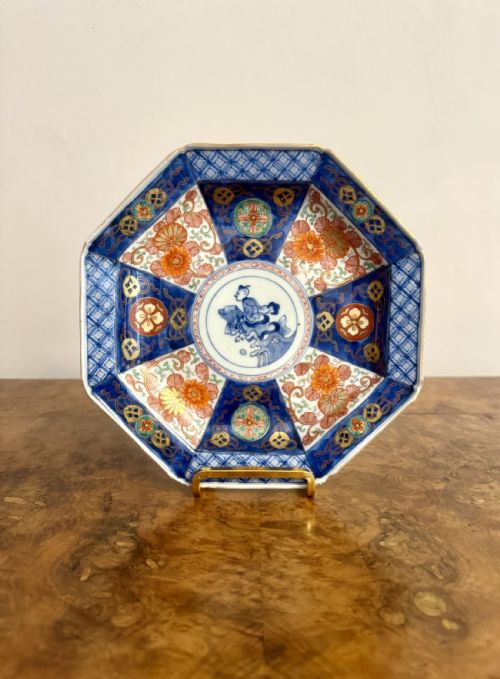
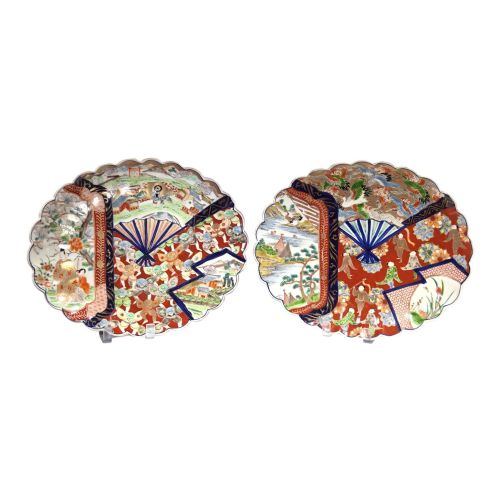
The examples on this page span several eras, originating predominantly from the nineteenth century and the Meiji period, alongside eighteenth-century Edo pieces and later twentieth-century items. Forms range from traditional circular platters to scalloped, hexagonal, fan-shaped and square plates, as well as related bowls and dishes.
Most items you meet here display the characteristic Imari palette of iron red, cobalt underglaze blue and gilt highlights. Designs frequently incorporate floral motifs, exotic birds, and marine subjects such as koi carp.
How they were made
Potters built these pieces from fine ceramic clay mined in the Arita region, shaping them on a wheel or pressing them into moulds. Cobalt underglaze pigment was applied to the raw clay body before an initial firing.
After glazing and a high-temperature firing, artisans added overglaze enamels in rich colours alongside gold leaf or gilding. A final lower-temperature kiln firing fused the surface decoration to the glazed porcelain.
Listings feature porcelain, enamel, gold leaf, glaze, cobalt underglaze, gilding and ceramic across the eighteenth, nineteenth and twentieth centuries.
What varies in quality
The refinement of the hand-painted brushwork sets the finer chargers apart from standard production pieces. Precision in the rendering of complex floral patterns, birds and fish indicates the skill of the original decorator.
The crispness of the cobalt underglaze and the preservation of the gold leaf or overglaze enamel details determine visual impact. Unusual moulding, such as fan shapes or scallop edges, demonstrates greater technical ambition by the potter.
The Japanese Arita Porcelain Charger Glossary
- Arita
- The Japanese town where porcelain production began in the early seventeenth century following the discovery of suitable ceramic stone. It remains the historic heartland of Japanese porcelain manufacture.
- Imari
- A style of Japanese export porcelain characterised by a strong palette of cobalt blue, iron red and gold. The name derives from the port town from where these wares were shipped to Europe.
- Meiji Period
- The era in Japanese history lasting from 1868 to 1912, associated with rapid modernisation and an explosion of decorative arts destined for international markets.
- Cobalt Underglaze
- A blue pigment applied directly to the unglazed ceramic body that survives high kiln temperatures without fading. It forms the stable dark blue foundation beneath the later enamel colours.
- Edo Period
- The period of Japanese history spanning from 1603 to 1867 under the rule of the Tokugawa shogunate. Early Arita wares originate from this long era of internal peace and artistic growth.
Japanese Arita Porcelain Charger: Frequently Asked Questions
How were japanese arita porcelain charger pieces displayed?
These large platters were traditionally designed to be stood upright on dining sideboards or mounted on walls for decorative effect.
Their substantial size and colourful enamel patterns made them striking interior ornaments in both Japanese homes and European drawing rooms.
What is the difference between arita and imari?
Arita refers to the geographical production town and the porcelain body itself, while Imari is the decorative style and shipping port.
All Imari porcelain from this region is a subset of Arita ware, though Arita also encompasses blue and white pieces without the typical Imari red and gold palette.
How do I date a meiji period charger?
Meiji period chargers date from between 1868 and 1912, a span defined by the reign of Emperor Meiji.
Pieces from this era often exhibit particularly dense hand-painted polychrome decoration and generous application of gold leaf.
Can these chargers be used for serving food?
While originally functional vessels in some contexts, antique chargers are primarily treated as decorative ceramic art today.
The delicate overglaze enamels and gold leaf can be worn down by regular washing and heavy use.