


Jaeger Lecoultre Clock
A jaeger lecoultre clock brings mechanical ingenuity and striking design together, offering a timeless focal point for any interior.
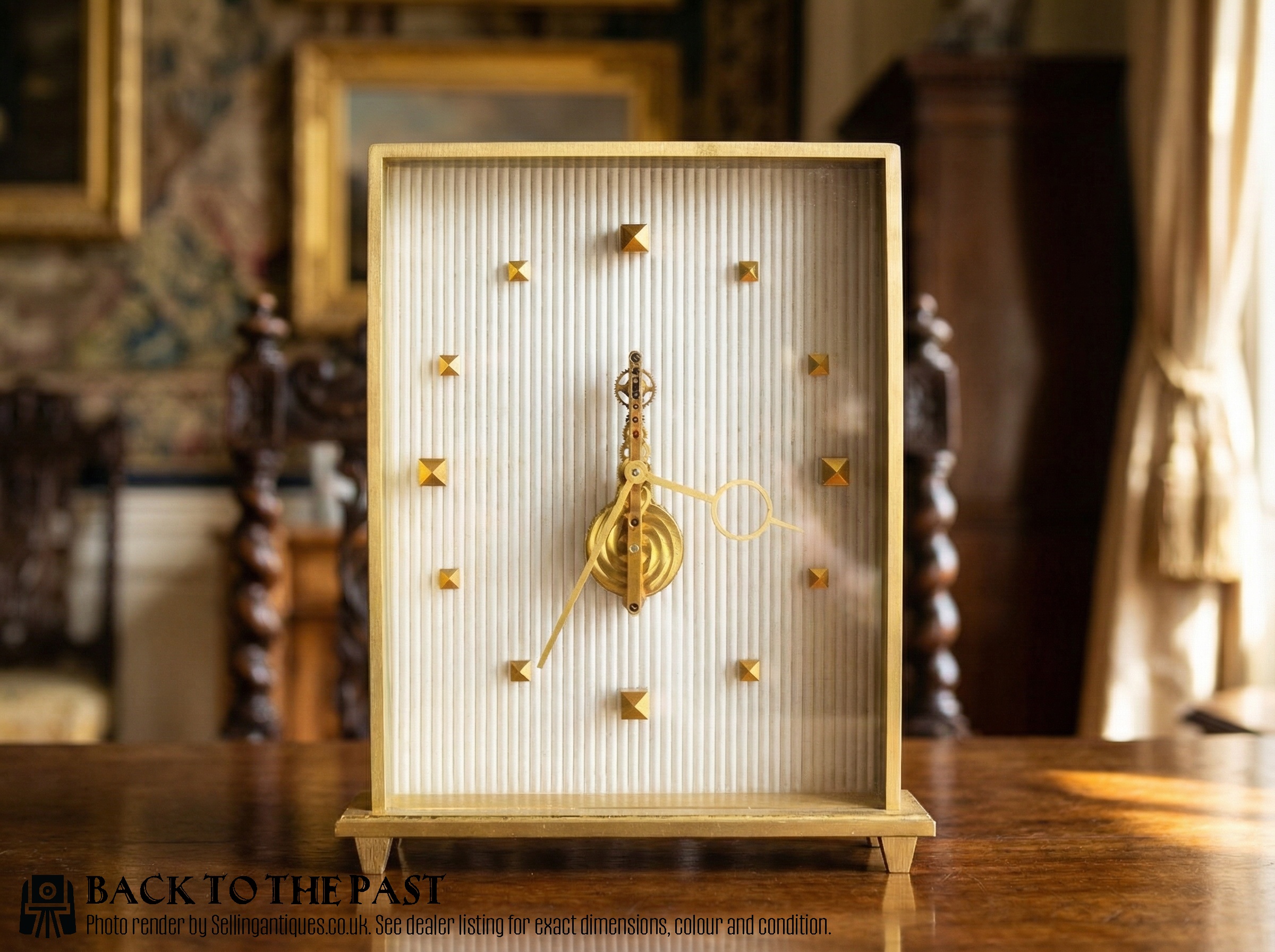
Jaeger Lecoultre Clock
When searching for a jaeger lecoultre clock, buyers encounter a diverse range of timepieces spanning the nineteenth century through the mid-twentieth century. The selection encompasses desk clocks, mantel clocks, wristwatches, and travel alarms reflecting Art Deco and Mid-Century Modern styles.
The most common version met on this page is the Atmos clock, alongside various eight-day table clocks and skeleton models. These pieces originate from distinct periods, notably the 1930s, 1950s, and 1960s, showcasing both functional utility and decorative elegance.
How they were made
Makers utilised brass, gilt brass, and metal as foundational structures, often applying gold plate or rhodium plating to achieve specific metallic finishes. Glass enclosures, bell-jars, and acrylic elements frequently protect the delicate internal mechanisms while maintaining visibility of the movement.
Art Deco and Mid-Century Modern designs dictated the aesthetic presentation, incorporating clean lines, enamel accents, and skeletonised movements. Construction techniques balanced precise Swiss horological engineering with robust casing methods to ensure lasting mechanical reliability.
Jaeger Lecoultre Clock Retail Price Guide 2026
Typical asking prices for jaeger lecoultre clock among the pieces listed under this phrase on Sellingantiques today, from the lower quarter to the upper quarter. They describe what is for sale here now, not the wider market.
Current listings feature pieces spanning the 19th century through the 1960s, constructed from brass, glass, rhodium, and gilt brass.
What varies in quality
The sophistication of the movement mechanism, from standard calibres to complex perpetual motion systems and skeletonized layouts, establishes the grade of the piece. Finishes involving heavy rhodium plating or intricate gold gilt maintain their visual integrity more effectively over decades of display.
The Jaeger Lecoultre Clock Glossary
- Atmos clock
- A mechanical timepiece that winds itself by changes in atmospheric temperature. It uses a hermetically sealed capsule containing a gas that expands and contracts with thermal shifts.
- Skeleton clock
- A timepiece designed with open plates and bridges that expose the gear train and escapement. This allows observers to view the entire working mechanism in action.
- Mystery clock
- A timepiece where the hands appear to float without any visible connection to a movement. The dial is typically made of transparent crystal or glass concealing the driving gears.
- Rhodium plating
- A deposition of a hard, reflective white metal over a base material. It provides enhanced durability and a bright, corrosion-resistant finish.
- Calibre
- A specific designation used by watchmakers to identify a particular movement design or model. Different numbers denote distinct internal configurations and dimensions.
Jaeger Lecoultre Clock: Frequently Asked Questions
How does an Atmos clock work?
An Atmos clock operates on thermal energy by detecting minute changes in ambient temperature. A hermetically sealed chamber inside expands and contracts, winding the mainspring without human intervention.
This continuous self-winding mechanism allows the clock to run indefinitely without batteries or manual key winding. It remains one of the most famous innovations in horological history.
Where should I place my clock?
These clocks require a stable, vibration-free surface to maintain accurate timekeeping. Mantelpieces, sturdy desks, and specialised wall brackets provide ideal stable foundations.
Avoid placing mechanical desk and mantel clocks in areas subject to heavy vibrations, direct sunlight, or extreme temperature fluctuations. Proper placement ensures the delicate internal gears experience minimal disruption.
How do I identify the production era?
Dating these timepieces involves examining design markers, dial typography, and internal calibre numbers. Art Deco examples typically feature geometric styling from the 1930s, while later models reflect mid-century aesthetics.
Checking accompanying paperwork, serial numbers, and specific case designs helps narrow down the exact decade of manufacture. Consulting historical movement references provides further verification.
Are these clocks difficult to service?
Servicing requires specialised knowledge due to the complex nature of perpetual motion and high-precision movements. Atmos mechanisms, in particular, utilise sealed gas systems that demand expert handling.
Professional horologists experienced with Swiss movements should perform any necessary cleaning, oiling, or repairs. Regular servicing preserves both the mechanical health and the long-term value of the timepiece.