


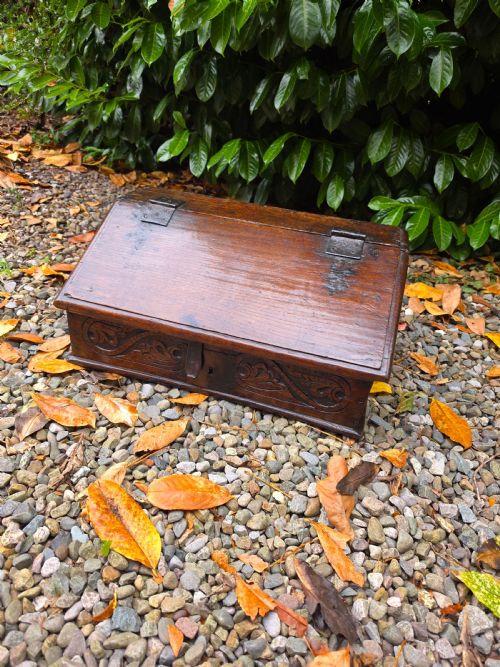
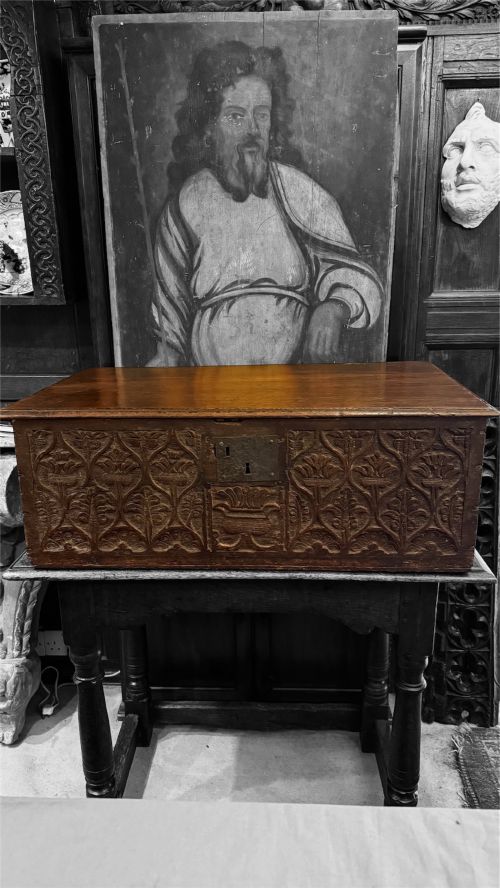
Jacobean Writing Desk
A jacobean writing desk brings solid timber construction and period character into a modern study through heavily carved oak furniture.
Jacobean Writing Desk
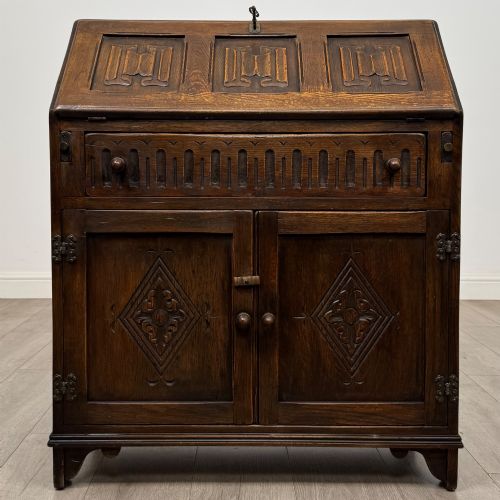
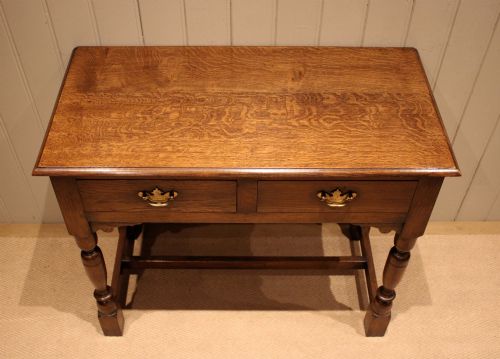
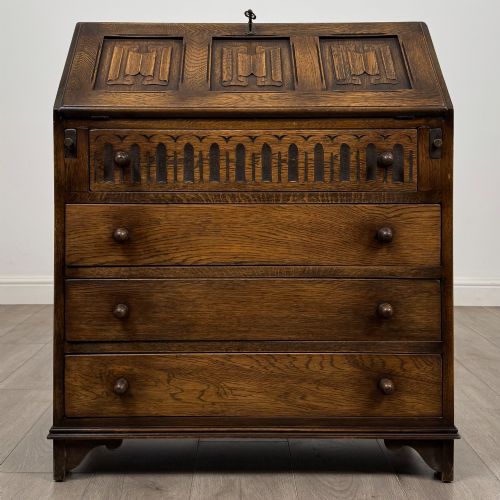
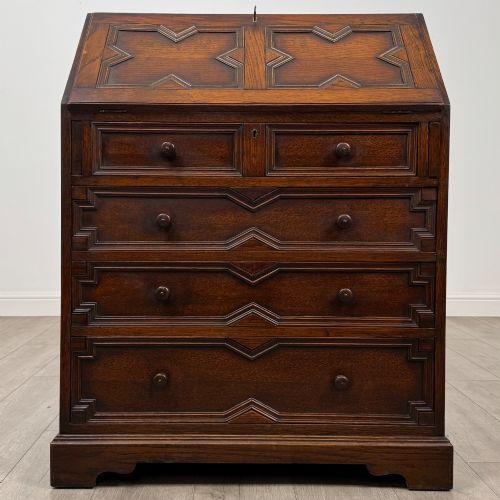
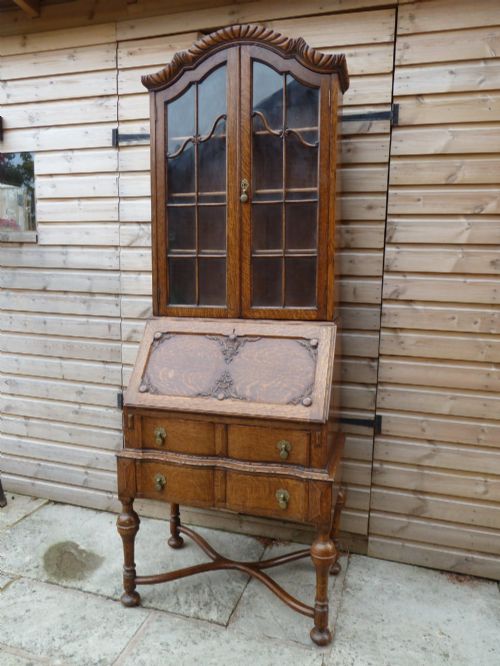
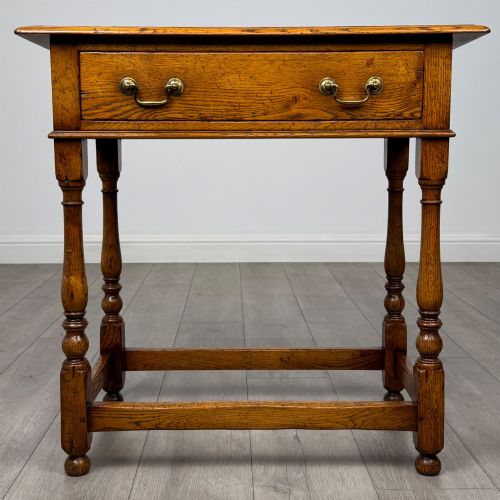
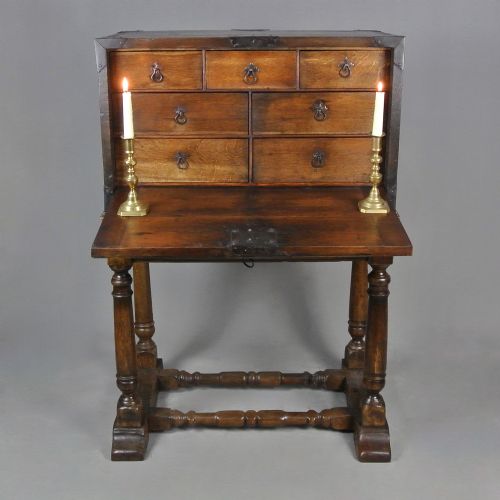
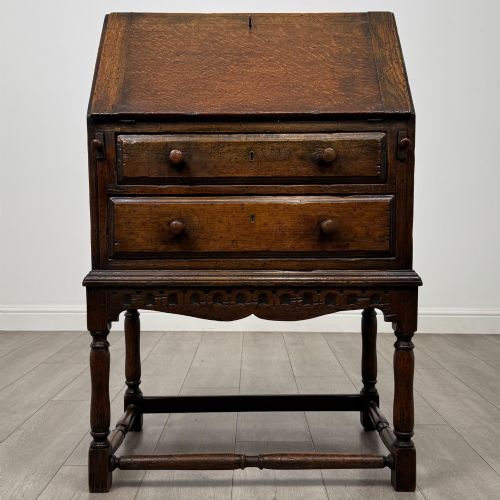
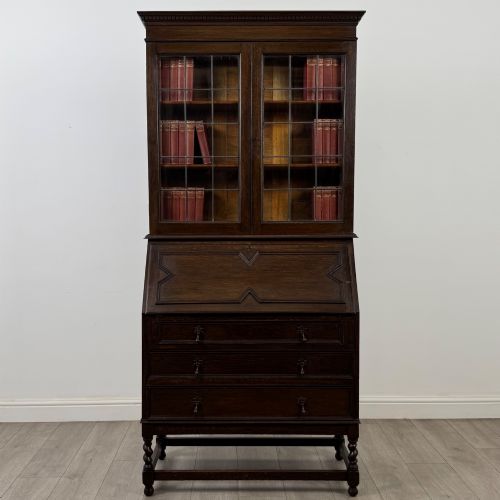
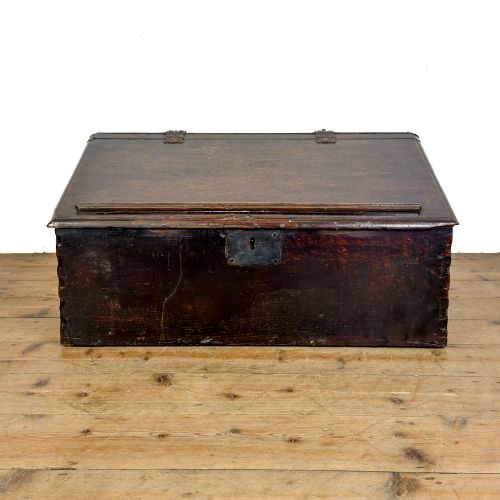
A jacobean writing desk typically encompasses forms ranging from early seventeenth-century oak boxes and slant-front bureaux to later revival pieces produced in the nineteenth and twentieth centuries. Buyers searching for this phrase encounter solid timber items designed for correspondence and document storage, including side tables with drawers and elaborate bureau bookcases.
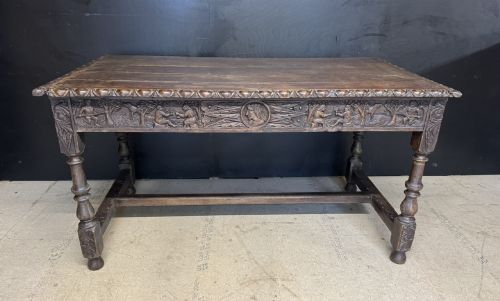
The selection bridges genuine seventeenth-century vernacular pieces with revival items from the Edwardian era and the nineteen-twenties. Side tables, writing tables with leather inserts, and bureau cabinets dominate the available forms, reflecting both original period utility and later historicist revivals.
Markers of Quality
Quality in these desks rests upon the crispness of the timber carving and the integrity of the oak construction. Pieces featuring finely figured solid oak, well-executed internal compartments, and period-appropriate hardware distinguish themselves from simpler or later revival iterations.
The depth and execution of decorative carving, from standard linenfold to elaborate architectural motifs, indicate the skill of the maker. Furthermore, the preservation of original internal fittings, such as small drawers and document compartments, elevates the standing of an individual piece.
Listings span periods from the seventeenth century through the Edwardian era to the nineteen-twenties, utilising solid oak, oak veneer, brass, iron, leather, and glass.
Wylie & Lochhead
The Jacobean Writing Desk Glossary
- Bureau
- A writing desk featuring a sloping hinged lid that opens to reveal a fitted interior of small drawers and pigeonholes. This form evolved from simple desk boxes placed on tables into freestanding pieces with drawer storage below.
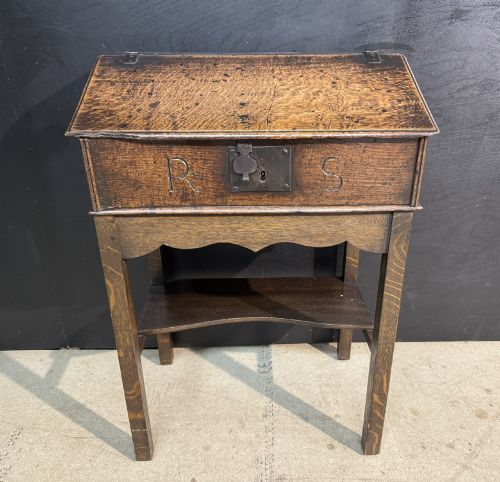
- Bible Box
- A small wooden chest with a sloping or flat lid, originally built to house heavy religious texts or family documents. These portable receptacles represent some of the earliest forms of writing storage.
- Linenfold
- A style of relief carving used on wooden panels to imitate folded fabric resembling parchment or linen. It is frequently encountered on Edwardian and earlier oak furniture.
- Writing Slope
- A portable box with an angled lid designed to provide a slanted surface for writing letters. Interiors often include compartments for inkwells and pens.
- Vernacular
- Furniture made by local craftsmen using regional materials and traditional methods, often lacking the formal design hallmarks of metropolitan workshops.
Jacobean Writing Desk: Frequently Asked Questions
What is a jacobean writing desk?
A jacobean writing desk is a piece of furniture designed for writing, typically constructed from oak and featuring period characteristics such as panelled construction or carved decoration.
These items range from seventeenth-century desk boxes and slant-front bureaux to later revival pieces manufactured in the nineteenth and twentieth centuries.
Where were these desks used?
These desks were utilised in domestic interiors, studies, and administrative spaces for correspondence, record-keeping, and the storage of important documents. Portable versions like bible boxes and writing slopes allowed users to move their writing workspace between rooms.
Larger bureau bookcases and writing tables served as permanent fixtures in period homes.
How do I care for antique oak?
Caring for antique oak furniture requires maintaining stable indoor humidity levels and keeping pieces away from direct heat sources and sunlight. Regular dusting with a soft, dry cloth preserves the finish of the wood without the need for heavy chemical polishes.
Leather writing inserts benefit from occasional gentle conditioning to prevent drying and cracking.