



Jacobean Style Occasional Table
A jacobean style occasional table brings dark timber and turned supports into a room, serving as a sturdy surface for lamps or books.
Jacobean Style Occasional Table
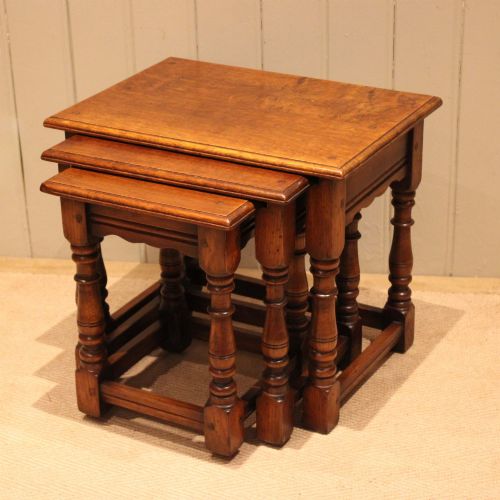
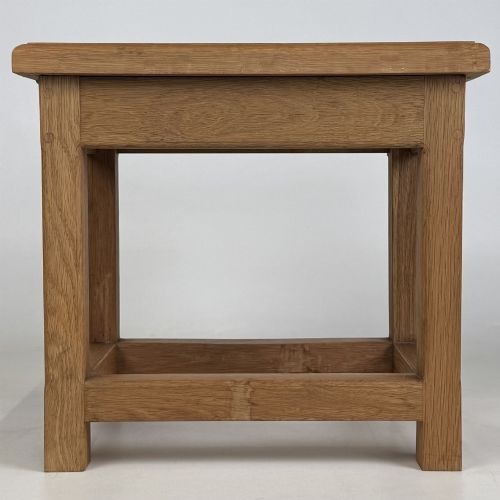
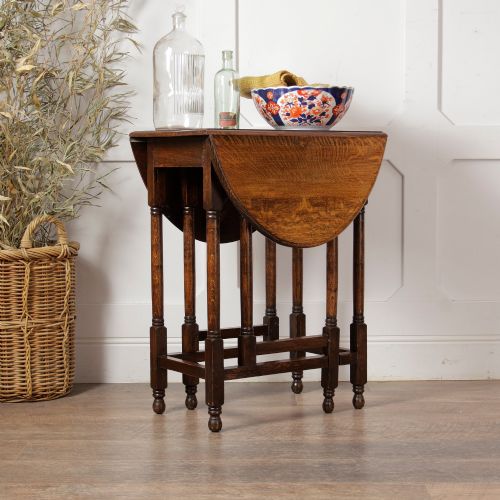
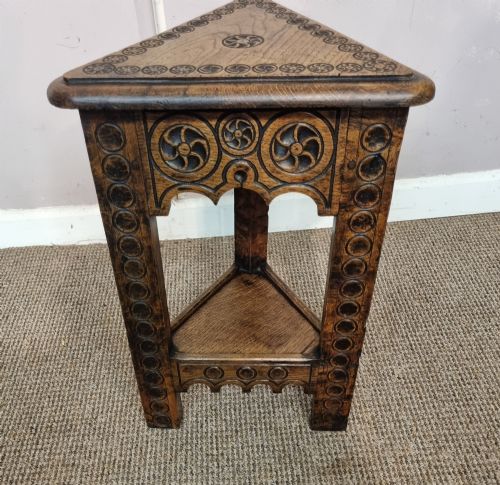
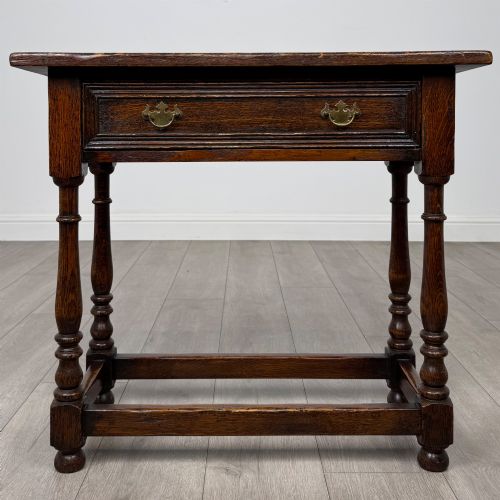
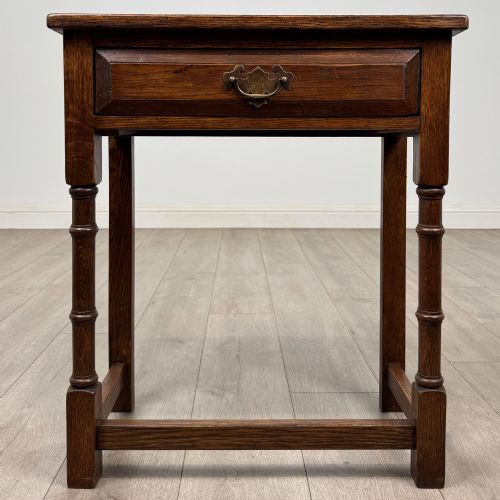
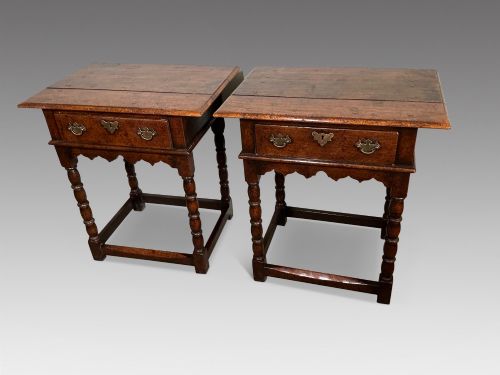
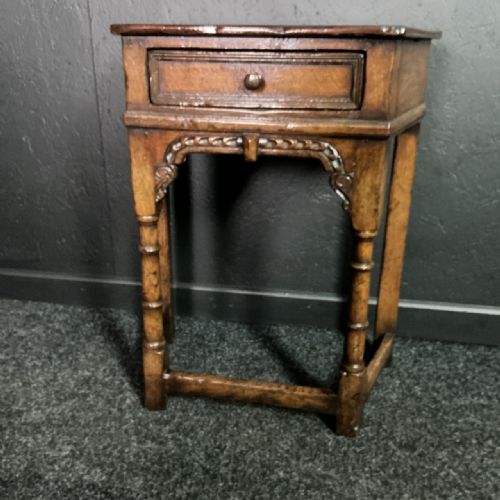
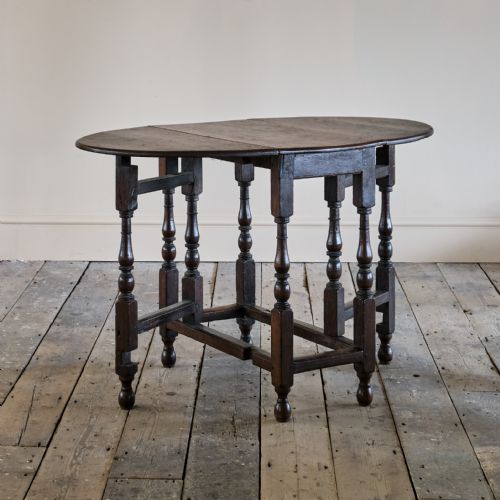
A jacobean style occasional table is typically encountered as an early twentieth century revival piece, alongside examples stretching back through the nineteenth century and into the seventeenth. Buyers searching for a jacobean style occasional table look for compact timber surfaces suited to daily use, often appearing as gateleg designs, side tables, small coffee tables, or joint stools.
The material palette is dominated by solid oak, matched with walnut, yew wood, and occasional mahogany or rosewood. Forms range from hexagonal and triangular tops to nests of tables and drop leaf variants, reflecting the diverse domestic needs addressed by cabinetmakers across different decades.
Materials and Technique
Construction relies heavily on solid oak, chosen for its strength and grain, while walnut and yew wood appear in select pieces. Joinery often incorporates traditional methods visible in joint stools and drawer frames.
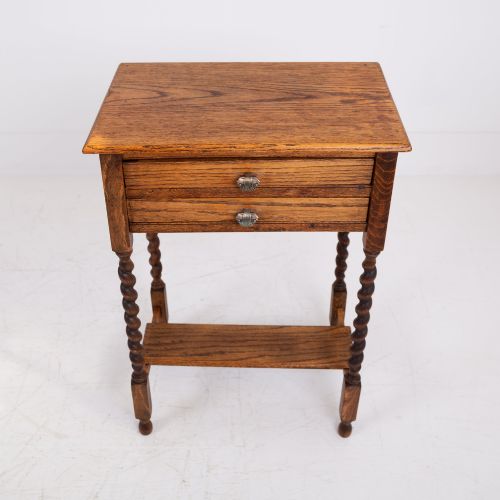
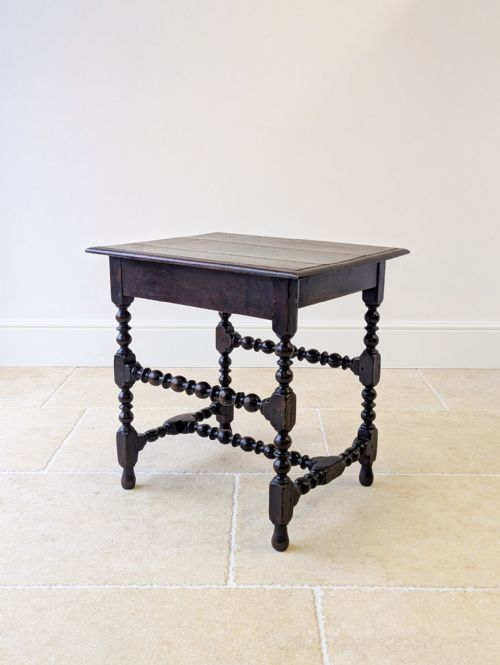
Turned wooden components define the structural silhouette, employing bobbin turning and barley twist legs to support the top. Carved ornamentation, panel details, and occasional marquetry add surface texture rooted in historic revivalism.
Some drop leaf coffee tables double as unexpected hiding spots for nineteenth century correspondence.
Craftsmanship and Proportion
Quality rests in the weight of the timber and the crispness of the turned work, distinguishing solid construction from lighter production. Grain choice and the integrity of joints dictate how well a piece holds its structure over decades of daily contact.
Proportion and surface finish separate finer examples from simpler utilitarian items, with well-balanced tables showing careful attention to edge profiles and leg placement. The presence of hand carving or deliberate inlay signals a higher grade of workshop execution.
The Jacobean Style Occasional Table Glossary
- Gateleg table
- A table with hinged leaves supported by swing-out legs that pivot from the frame. This form allows the surface area to expand or contract depending on space requirements.
- Bobbin-turning
- A method of lathe work that produces a series of rounded spheres or disks resembling wooden beads along the length of a leg. It appears frequently on seventeenth century and revival supports.
- Barley twist
- A spiral-carved column resembling a twisted rope, turned on a lathe during the seventeenth century and revived extensively in later periods. It provides strong vertical emphasis on table legs and plant stands.
- Joint stool
- A low, sturdy wooden stool constructed with mortise and tenon joints, often used as a multi-purpose occasional table in early domestic settings. The form persists in revival pieces.
- Stretcher
- A horizontal wooden brace connecting the legs of a table to provide structural rigidity. Stretchers can be straight, X-shaped, or arched.
Jacobean Style Occasional Table: Frequently Asked Questions
How do I identify a revival piece?
Revival pieces often show twentieth century construction methods beneath historic styling, such as modern screw fixings or standardised machine turning.
Examining the underside and drawer linings reveals timber seasoning and tool marks characteristic of later decades rather than the seventeenth century.
Where did people use these tables?
These compact surfaces served multiple functions in domestic interiors, holding lamps, writing materials, or decorative objects.
Their modest footprint allowed them to sit beside seating or in hallways without obstructing movement through the room.
What woods were used most?
Oak forms the primary material for the vast majority of these pieces, reflecting traditional English cabinetmaking preferences.
Walnut and yew wood appear in select examples, offering alternative grain patterns and richer colouration.
How do I care for the surface?
Regular dusting with a dry cloth protects the timber finish from abrasive particles and moisture accumulation.
Applying appropriate beeswax periodically helps nourish the wood and maintain its natural sheen without sealing the grain permanently.