



Edwardian Barley Twist Table
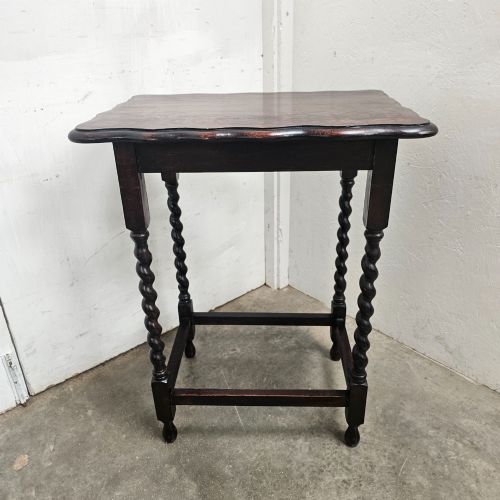
An Edwardian barley twist table brings solid oak construction and turned supports together in a practical piece for daily living.
Edwardian Barley Twist Table
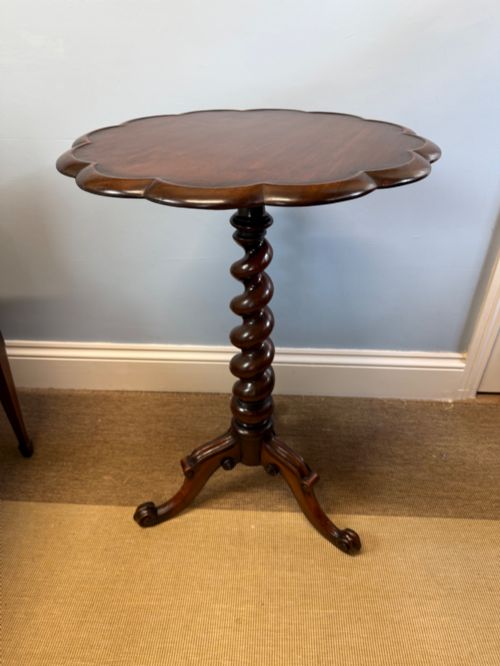
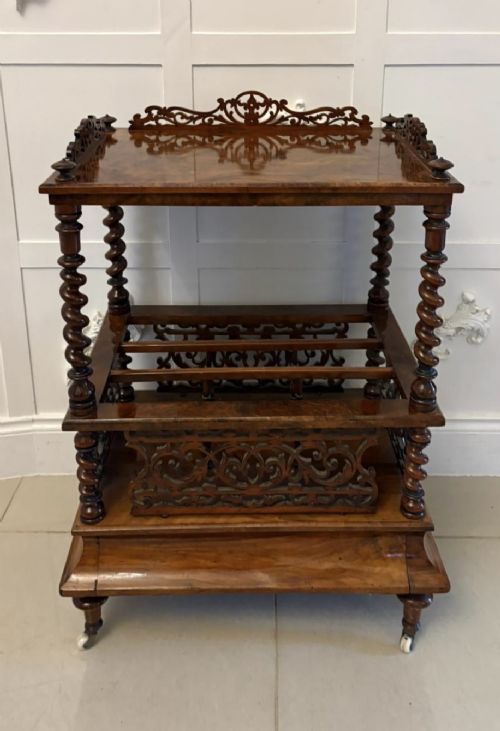
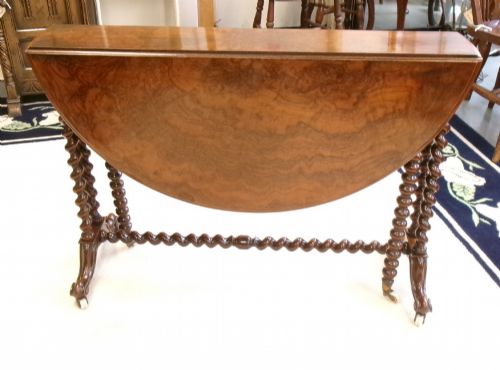
When you examine an Edwardian barley twist table, you encounter compact occasional furniture and gateleg dining tables designed for versatile placement in period interiors. The pieces on this page span the Edwardian era, the nineteen-twenties, and the Victorian period, reflecting a sustained popularity of turned woodwork.
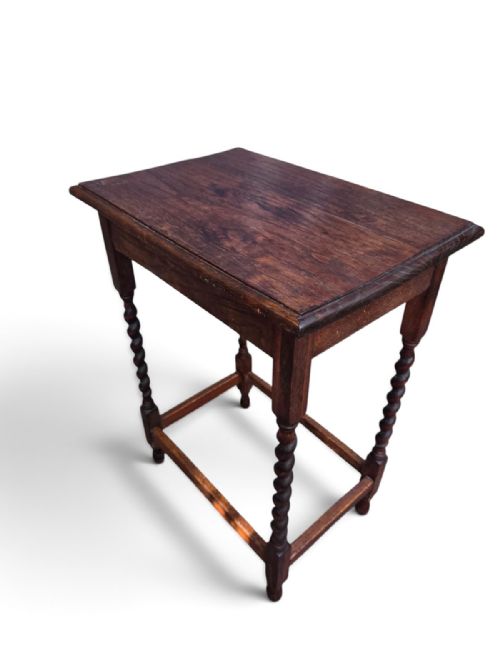
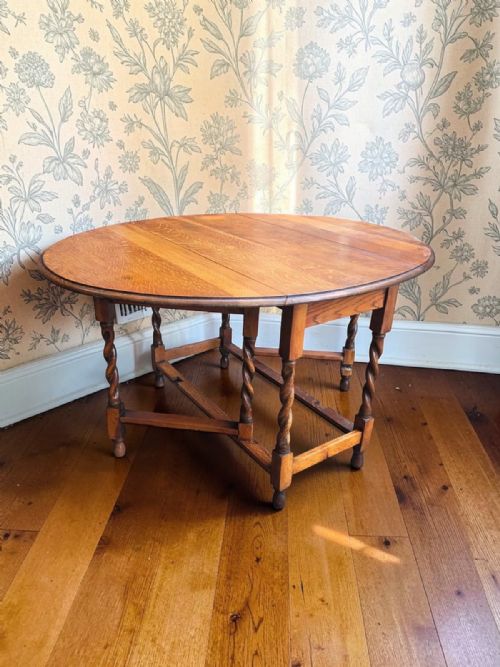
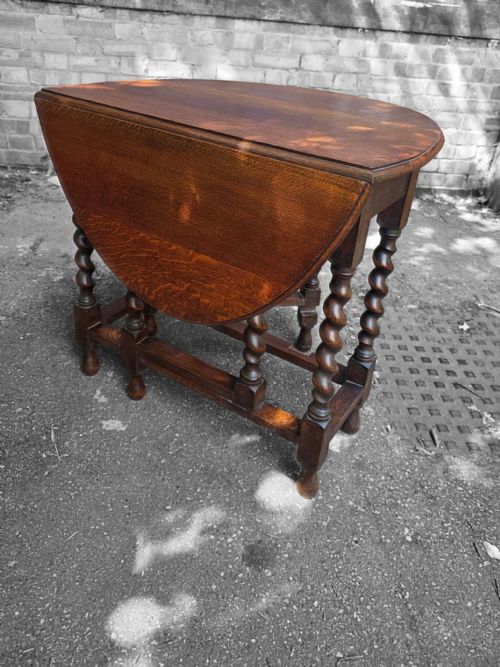
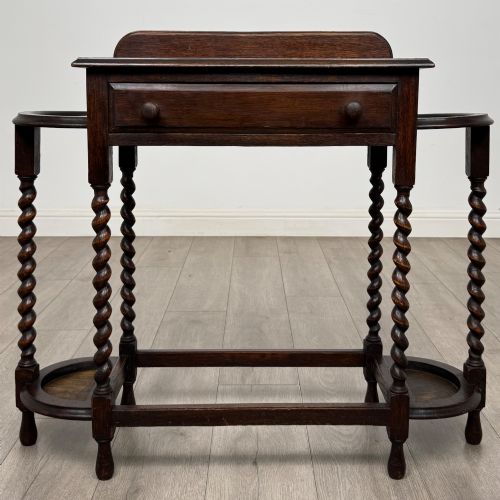
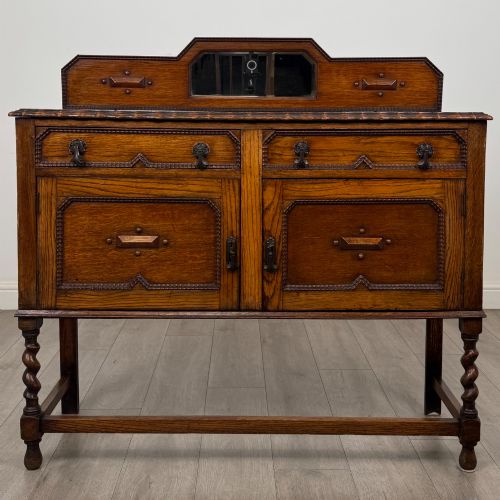
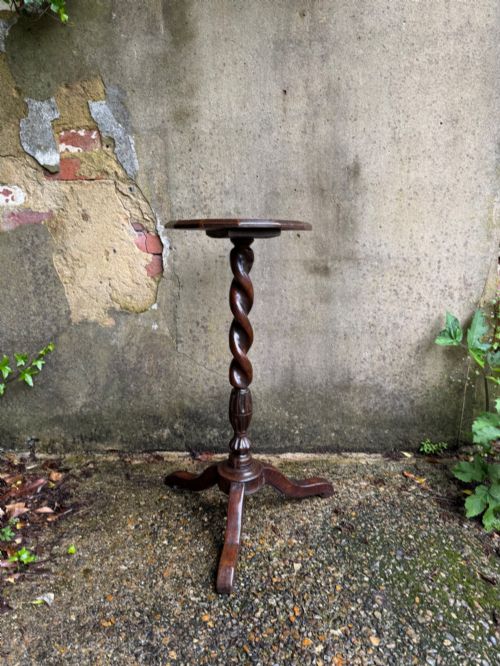
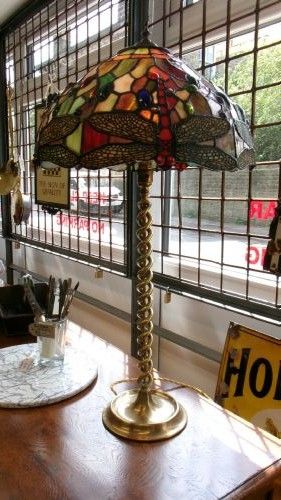
The most common form you will meet is the oak occasional or drop-leaf table featuring spiral legs and stretchers. Side tables, gateleaf dining versions, and tall table lamps also appear frequently across the listings.
Makers drew on Jacobean Revival and Carolean Revival styles, translating seventeenth-century turning techniques into domestic furniture for early twentieth-century homes. These tables served for afternoon tea, holding lamps, or writing correspondence in drawing rooms and halls.
How they were made
Craftsmen built these tables primarily from solid English oak, frequently utilising walnut or mahogany for occasional and standard lamp variants. Timber was selected for grain pattern and strength, particularly for weight-bearing drop leaves and gateleg frames.
The characteristic twist turning was achieved on a lathe by cutting a continuous helical groove down the wooden leg or brass shaft. Brass components, seen in candlesticks and tall table lamps, were cast and turned to mimic the spiral wooden form.
Joinery techniques included traditional mortise and tenon joints for table frames, alongside hinged drop-leaf mechanisms supported by swing-out gatelegs. Surfaces were finished to highlight the natural figure of the oak or walnut.
Listings on this site feature oak as the primary timber, complemented by brass, walnut, and mahogany across various periods.
What varies in quality
The distinction between standard examples and the finest work lies in the crispness and depth of the spiral turning on the legs. Superior pieces display smooth, evenly proportioned twists carved without the minor irregularities found in mass-produced items.
Timber selection dictates overall quality, with dense, figured oak and rich walnut commanding greater regard than plain or heavily stained secondary woods. Solid construction in drop-leaf mechanisms and stretchers ensures long-term stability under regular use.
Proportion and scale separate ordinary tables from exceptional ones. Well-balanced occasional tables maintain a harmonious relationship between the thickness of the barley twist legs and the surface area of the top.
The Edwardian Barley Twist Table Glossary
- Barley twist
- A form of turning resembling a rope or spiral helix, popular in seventeenth-century furniture and revived during the Victorian and Edwardian periods. This decorative profile defines the legs and uprights of the tables and lamps on this page.
- Gateleg table
- A drop-leaf table with hinged flaps supported by legs that swing out like a gate. This design allows the table to expand for dining or fold compactly against a wall.
- Drop leaf
- A hinged table leaf that can be lowered when not in use. It provides flexible surface area in smaller rooms.
- Occasional table
- A small, movable table designed for specific, intermittent uses such as holding a lamp, books, or tea. These pieces are easily repositioned around a sitting room.
- Jacobean Revival
- A nineteenth and early twentieth-century style imitating the heavy, carved oak furniture of the early seventeenth century. Barley twist legs are a primary hallmark of this aesthetic.
Edwardian Barley Twist Table: Frequently Asked Questions
What rooms suit an Edwardian barley twist table?
These tables fit comfortably into sitting rooms, hallways, and studies where surface space is needed without a heavy visual footprint.
Compact occasional forms serve beside armchairs or sofas, while drop-leaf versions adapt easily to smaller dining areas.
How do I care for solid oak surfaces?
Regular dusting with a dry, soft cloth maintains the finish without building up unwanted residues.
Avoid placing timber furniture near direct heat sources or strong sunlight to prevent the wood from drying out.
Are these tables sturdy enough for daily dining?
Gateleg and drop-leaf dining versions in oak are built with robust frames and swing-out leg supports designed for regular meals.
Heavier oak tables provide reliable stability, though care should be taken with the folding leaf hinges.
How can I tell an Edwardian table from a Victorian one?
Edwardian examples often feature lighter golden oak tones and simpler, cleaner lines suited to early twentieth-century domestic interiors.
Victorian pieces tend to use darker finishes, heavier turnings, and occasionally denser timbers such as burr walnut.