

Jacobean Style Oak Drawers
Jacobean style oak drawers offer solid timber construction and rich historical turning, bringing substantial character and practical storage to a room.
Jacobean Style Oak Drawers
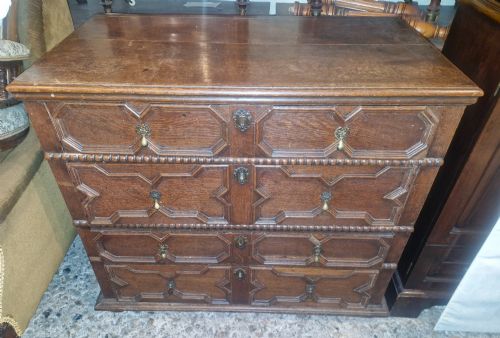
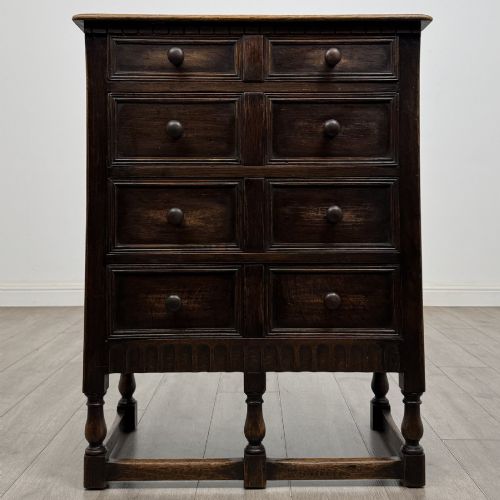
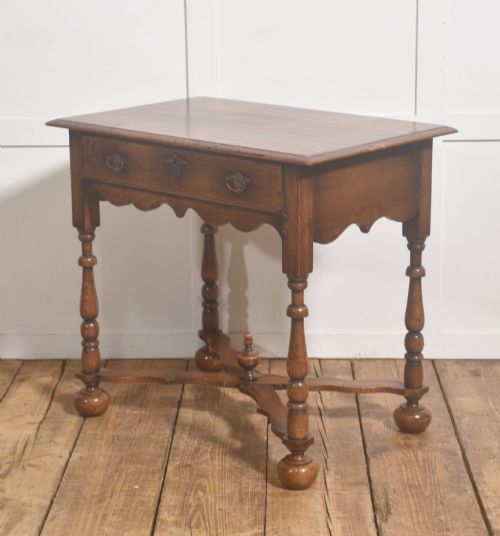
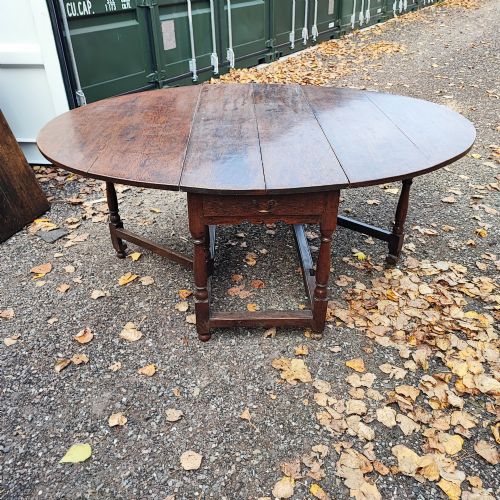
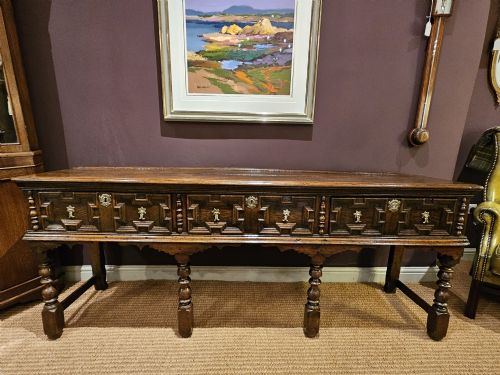
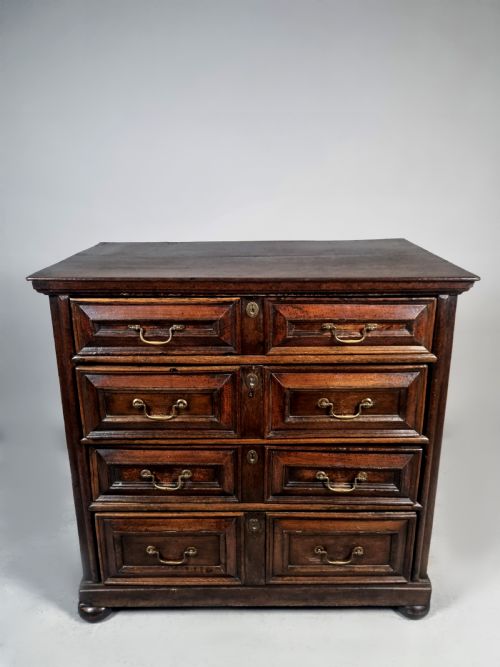
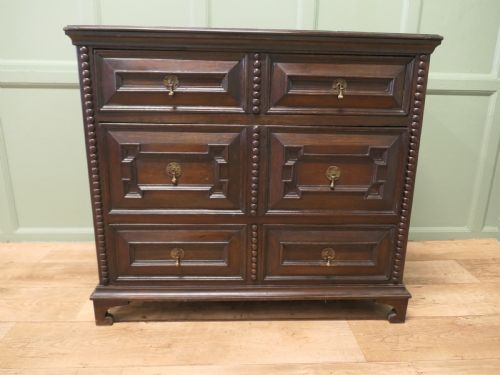
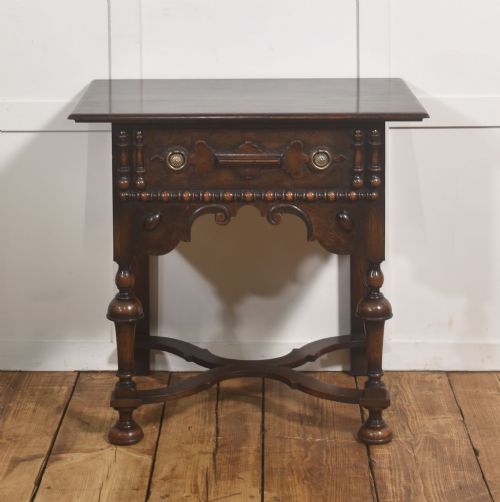
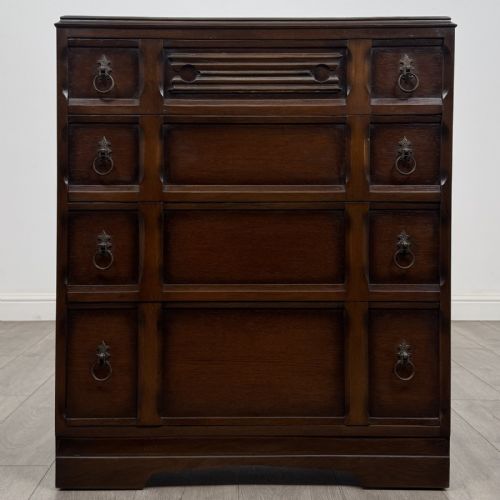
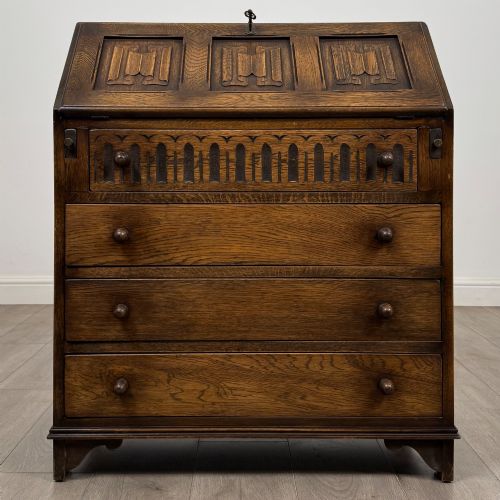
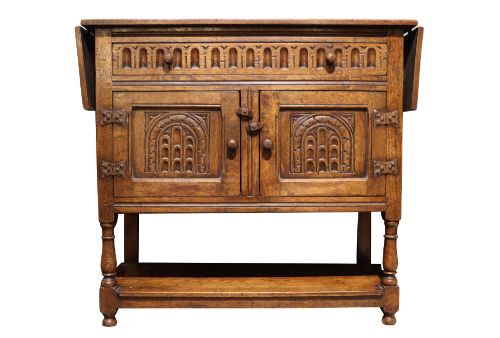
Jacobean style oak drawers encompass pieces built in the seventeenth century alongside revival interpretations produced during the Edwardian era and the nineteen-twenties. The selection includes chest of drawers forms, dresser bases, side tables, and sideboards featuring heavy timber construction.
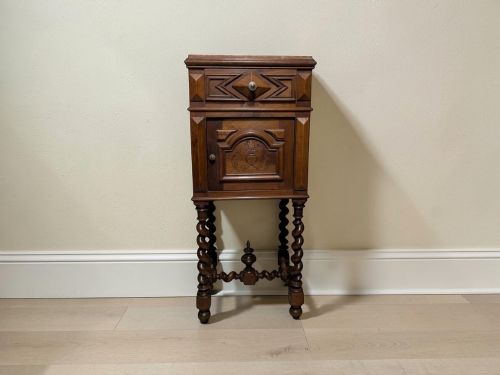
Buyers meet early period originals alongside twentieth-century revival pieces that adopt historic vocabulary such as geometric moulding and carved decoration. These forms range from small proportioned bedside units and occasional tables to large storage chests.
The material palette centres on solid oak augmented by walnut, fruitwood, brass, iron, and glass details. Surviving examples demonstrate utility across domestic spaces, serving as writing desks, cupboards, and linen storage.
Materials and construction
Makers utilised solid oak as the principal timber, selecting it for durability and grain pattern while occasionally incorporating walnut and fruitwood in seventeenth-century pieces. Joinery relied on traditional methods suited to heavy hardwood construction.
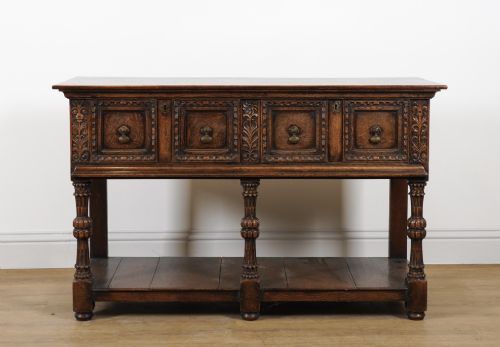
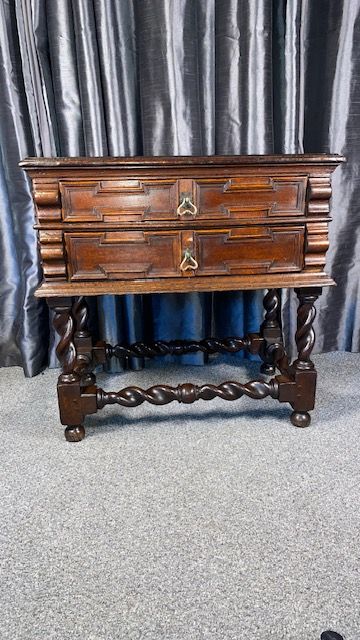
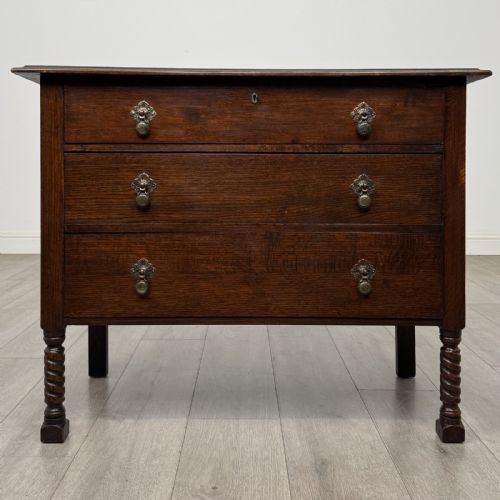
Decoration involved hand carving, geometric moulding applied to drawer fronts, and turned components such as barley twist and bobbin legs. Hardware typically consisted of brass or metal handles and hinges.
Jacobean Style Oak Drawers Retail Price Guide 2026
Typical asking prices for jacobean style oak drawers among the pieces listed under this phrase on Sellingantiques today, from the lower quarter to the upper quarter. They describe what is for sale here now, not the wider market.
A cottage-size green man carved oak mule chest hides ancient woodland faces within its storage timber.
Quality factors
Quality depends upon the integrity of the timber and the crispness of the carved or moulded detail across the drawers and frame. Period pieces from the seventeenth and eighteenth centuries derive distinction from age and original surfaces.
Revival examples from the twentieth century vary according to the depth of the carving and the weight of the solid oak utilised in the construction. Proportion and balance between the turned supports and the drawer body determine the visual success of each piece.
The Jacobean Style Oak Drawers Glossary
- Geometric moulded
- A style of decoration featuring raised panels or mouldings arranged in geometric patterns across drawer fronts. This technique gained prominence during the seventeenth century.
- Barley-twist
- A turned wooden support resembling a helix or twisted rope. It appears frequently on the legs and stretchers of revival tables and drawer stands.
- Dresser base
- A low sideboard or table fitted with drawers beneath the top surface. These pieces often feature turned legs and substantial timber construction.
- Bobbin turned
- A style of turning that creates a series of rounded spheres or discs along the length of a furniture leg. It is characteristic of seventeenth-century and revival joinery.
- Mule chest
- A storage chest fitted with one or more drawers at the base. It combines the utility of a traditional chest with accessible lower drawer storage.
Jacobean Style Oak Drawers: Frequently Asked Questions
How do I identify a seventeenth century piece?
Seventeenth century originals display period joinery methods, hand-cut boards, and authentic wear patterns developed over centuries of use.
Revival pieces made in the twentieth century often use machine-cut elements and standardised hardware while copying earlier aesthetic styles.
What is geometric moulding?
Geometric moulding involves applying raised wooden strips to drawer fronts in repeating patterns, creating depth and shadow.
This decorative method defines many case pieces from the seventeenth and early eighteenth centuries.
Where should I place a side table?
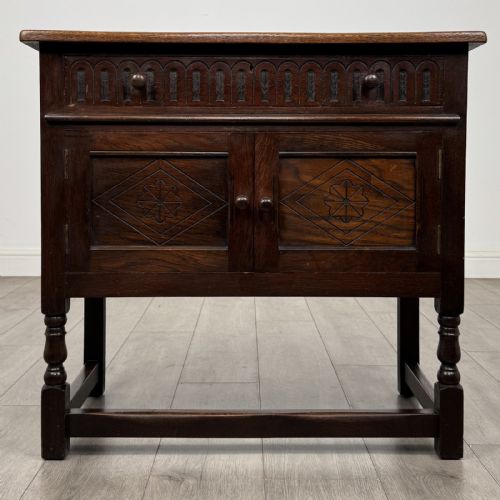
These compact timber tables function well as lamp tables, bedside cabinets, or occasional surfaces in hallways and living rooms.
Their sturdy oak construction allows them to support everyday items while adding historic character to a room.
Are twentieth century revival pieces well made?
Nineteen-twenties and Edwardian revival furniture often employs heavy solid oak and traditional turning techniques like barley-twist supports.
These pieces provide robust domestic utility and replicate historic aesthetics without requiring seventeenth-century maintenance.