


Jacobean Style Drawers
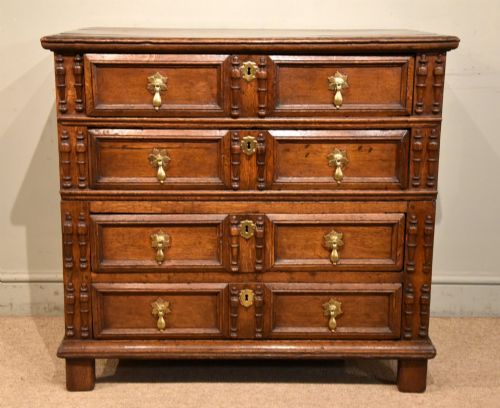
These jacobean style drawers combine heavy timber construction with period details, offering practical storage grounded in centuries of revival design.
Jacobean Style Drawers
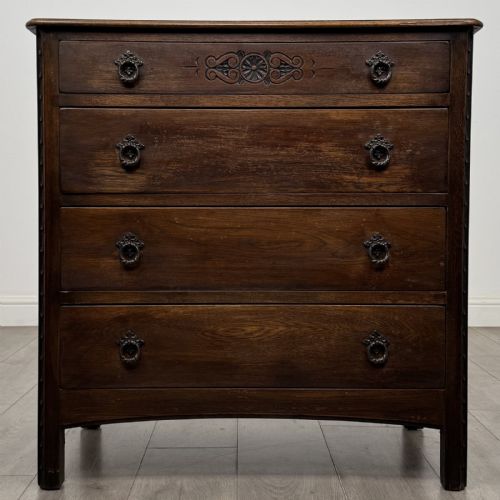
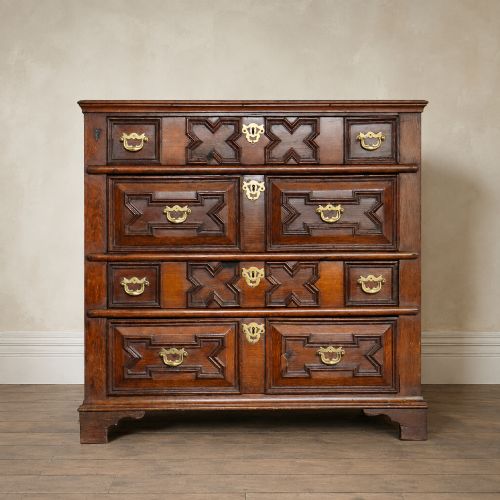
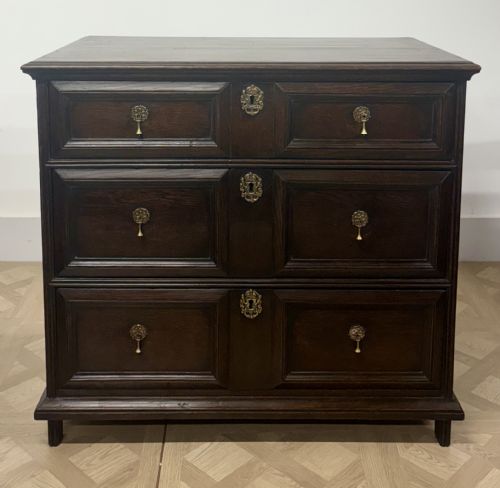
When searching for jacobean style drawers, a buyer encounters heavy timber furniture built with traditional proportions and distinctive ornamentation. These items draw heavily on seventeenth-century motifs, though a large proportion originate from later revival periods.
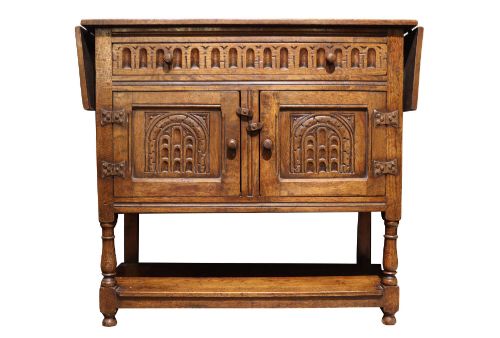
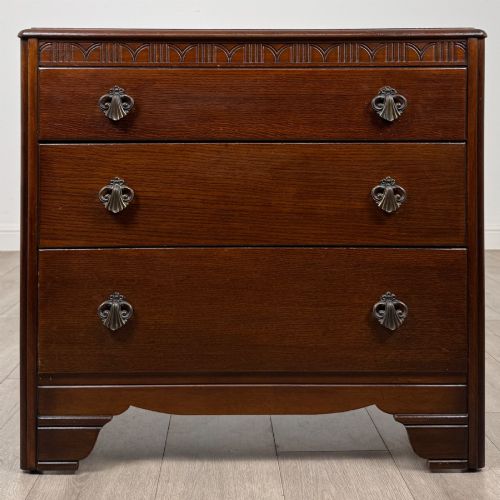
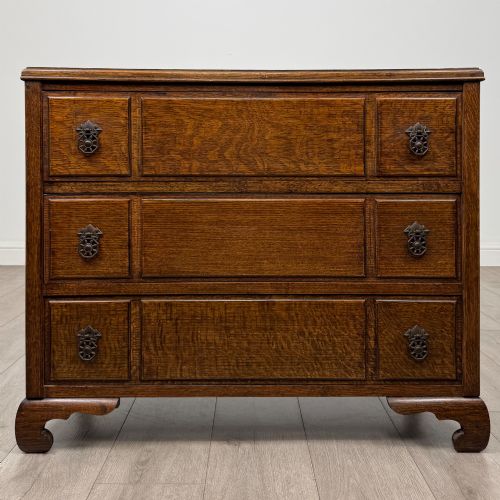
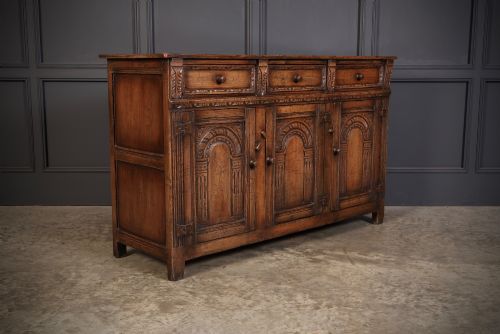
The inventory on this page leans heavily toward Edwardian and early twentieth-century interpretations, alongside genuine seventeenth-century survivals and eighteenth-century examples. Alongside standard drawer configurations, related forms like dresser bases and sideboards frequently appear.
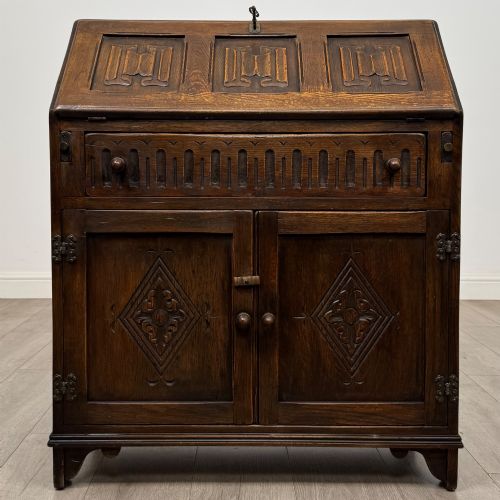
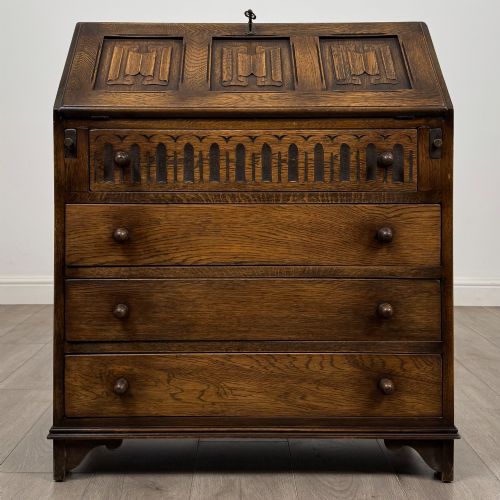
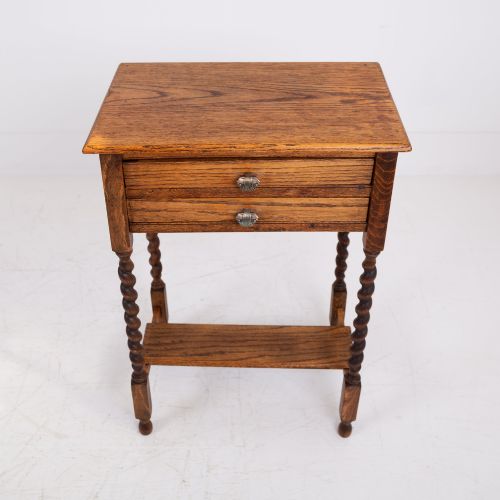
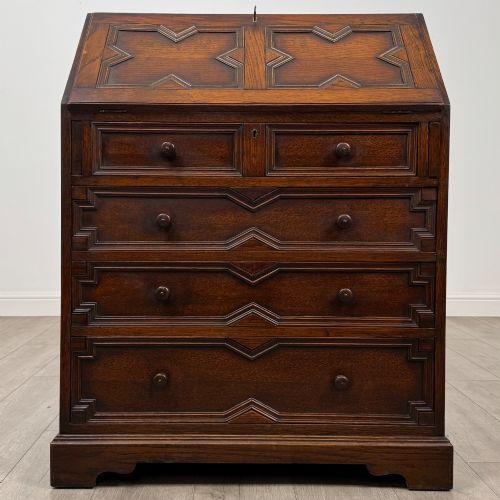
Most pieces serve as functional storage chests, though versions with writing bureaus or integrated side tables also feature in the selection. Oak dominates the forms, providing the robust framework characteristic of the aesthetic.
How they were made
Makers constructed these pieces primarily using solid oak, supplemented occasionally by walnut, fruitwood, and pine. Carpenters relied on sturdy joinery methods to support the substantial weight of the timber and withstand daily use.
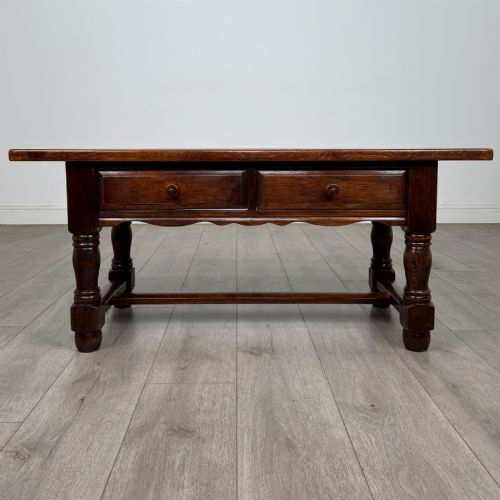
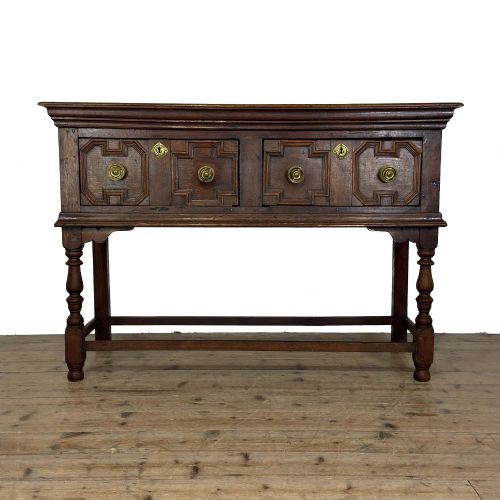
Surface decoration involved specialised woodworking techniques, including geometric moulding, linenfold panels, and relief carving. Turned elements such as barley-twist supports frequently appeared on legs and stretchers during revival phases.
Hardware additions typically involved brass or iron drop handles and keyplates, securing the operational fronts of each drawer compartment.
Listings span several centuries, featuring 17th Century originals alongside Edwardian and 1920s revival pieces in oak and walnut.
What varies in quality
The standard of workmanship separates basic utilitarian builds from master-carved examples. Crisp detailing in geometric mouldings and relief carvings indicates superior bench skill.
Selection of timber grain and uniformity in the oak planking dictate visual coherence across the facade. Heavy, solid construction without excessive secondary softwood replacement preserves the integrity of the piece.
The Jacobean Style Drawers Glossary
- Geometric Moulding
- Raised wooden profiles applied to drawer fronts in repeating symmetrical patterns. This technique creates depth and shadow play across the flat surfaces of seventeenth-century case furniture.
- Linenfold
- A style of wood carving resembling folded parchment or cloth panels. Cabinetmakers frequently applied this texture to vertical panels on bureaus and lower cabinet doors.
- Barley-Twist
- A column or furniture leg turned in a helical spiral shape. This support style gained popularity during the seventeenth century and saw extensive revival use in the Edwardian era.
- Dresser Base
- A low rectangular cabinet fitted with drawers and occasionally cupboards below a wide top surface. These versatile units served functional storage roles in historical kitchens and dining rooms.
- Charles II Period
- The historical era spanning the mid to late seventeenth century defined by richly carved oak and walnut furnishings. Furniture from this timeframe establishes the primary design vocabulary for subsequent revivals.
Jacobean Style Drawers: Frequently Asked Questions
How do I date a jacobean style chest?
Distinguishing between seventeenth-century originals and twentieth-century revivals requires examining tool marks, timber shrinkage, and secondary woods. Original items show hand-cut joinery and period hardware fixings.
Revival pieces from the Edwardian period or the 1920s utilise machine-sawn components and standardised fixings while accurately copying earlier geometric mouldings and carved details.
What is the difference between oak and walnut versions?
Oak forms the primary structural timber for the majority of these storage chests, providing a heavy, grained appearance suited to country and revival aesthetics. Walnut appears less frequently, usually reserved for higher-status seventeenth-century pieces.
Walnut offers a smoother surface texture and richer brown tones compared to the coarse grain of traditional English oak.
Where should I place a dresser base at home?
Dresser bases provide long, low surfaces suitable for placement in dining rooms, hallways, or living spaces. Their generous top boards accommodate lamps, books, or decorative objects.
The deep drawers below offer practical storage capacity for household linens, tableware, or everyday items.
How should I care for antique oak drawers?
Maintain antique oak furniture by dusting regularly with a dry cloth and avoiding excessive moisture. Direct sunlight and sudden temperature changes can cause the solid timber to warp or split over time.
Apply traditional beeswax occasionally to nourish the wood grain and preserve the historic patina without sealing the surface.