


Jacobean Side Cabinet
A jacobean side cabinet brings solid timber presence and formal carved panels into a room.
Jacobean Side Cabinet
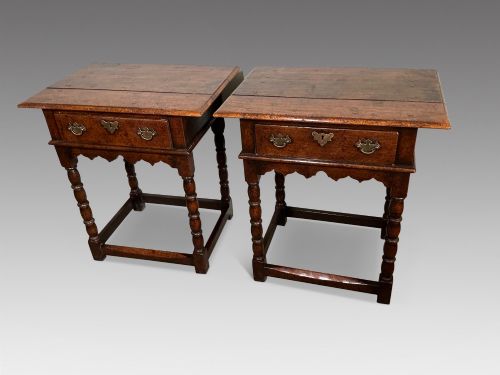
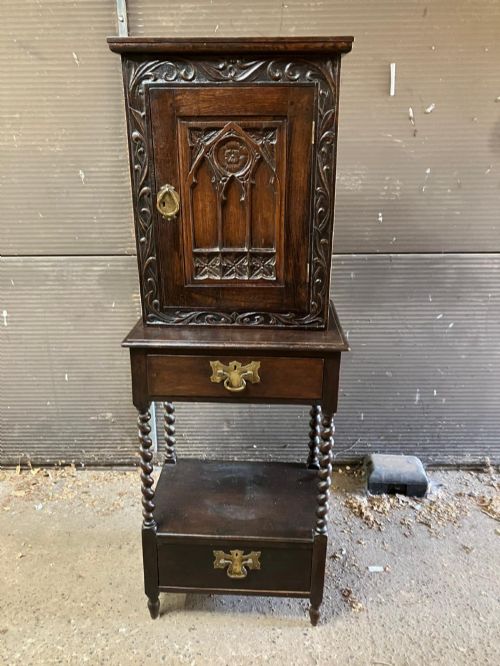
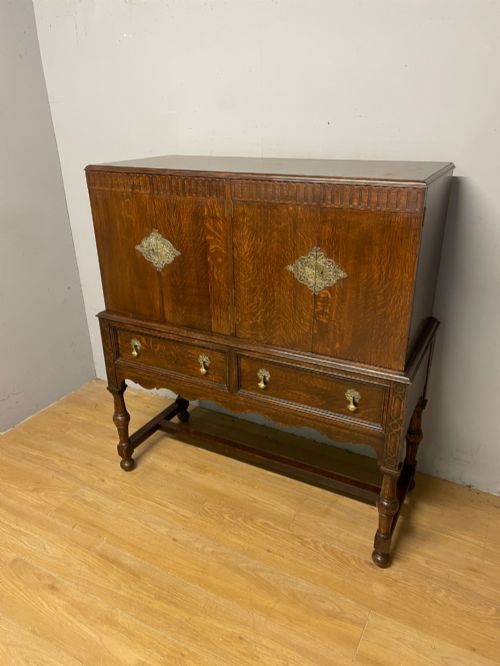
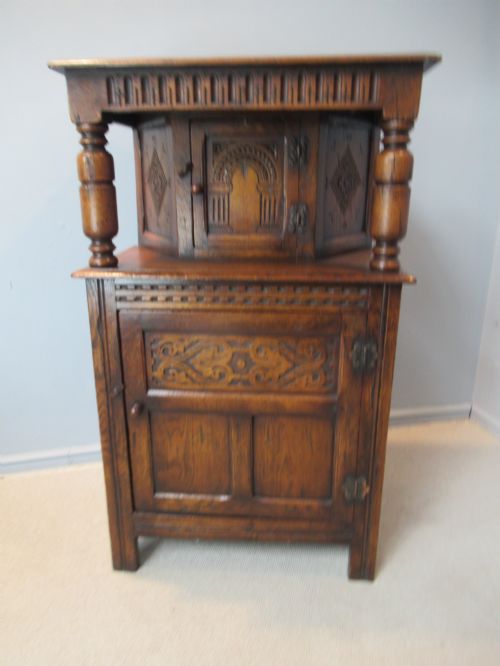
When you search for a jacobean side cabinet, you encounter substantial timber storage pieces spanning genuine seventeenth-century origins through to twentieth-century revivals. The forms include court cupboards, press cupboards, cabinets on stands, and simpler side cupboards.
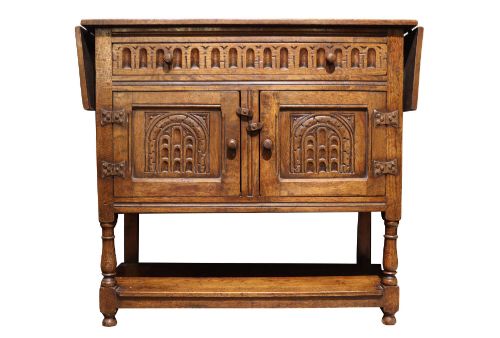
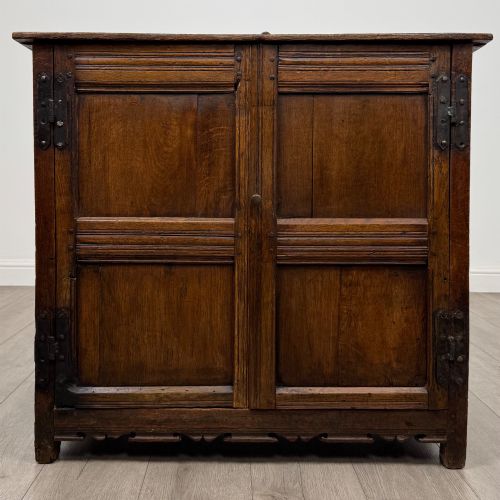
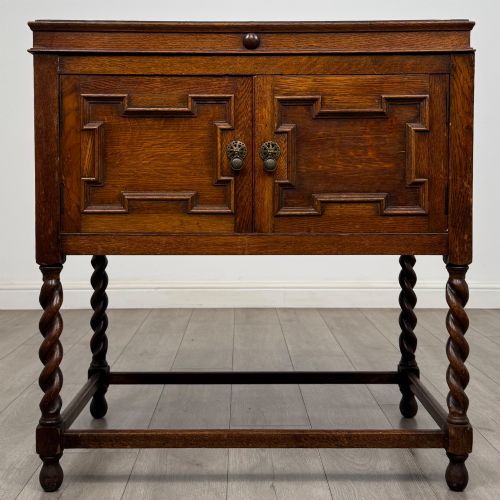
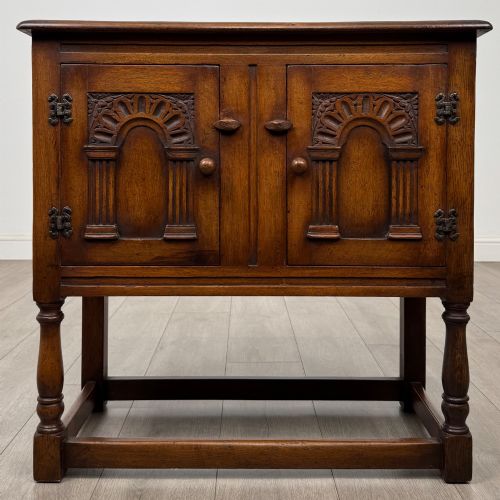
Most examples met on this page date from the Edwardian era and the 1920s or 1930s, adopting earlier motifs such as linenfold panels and geometric mouldings. These revival items sit alongside genuine seventeenth-century pieces and Victorian interpretations.
The primary function remains storage, whether standing as a tall court cupboard or serving a bedroom as a small bedside cabinet. The proportions range from compact bedside units to expansive standing livery cupboards.
What varies in quality
The standard of carving determines much of the visual distinction across these pieces, moving from crisp, deep relief work to softer machine milling on later revivals. Depth and sharpness in floral and geometric motifs show the hand of a skilled artisan.
Timber selection and panel construction also separate standard production items from finer masterworks. Solid oak boards that retain natural grain movement and tight joints indicate superior cabinetmaking.
Listings span from the 17th century through Victorian revivals to 1930s oak production.
Leemings Halifax
The Jacobean Side Cabinet Glossary
- Court cupboard
- A heavy oak storage piece featuring an upper recessed section supported by pillars above a enclosed lower cupboard. These vessels typically served to display plate or store provisions in wealthy seventeenth-century households.
- Linenfold
- A style of wood carving that imitates folded fabric, frequently seen on vertical panels of cupboards and cabinets. This decorative technique gains popularity during the Tudor and Jacobean periods.
- Press cupboard
- An enclosed storage item designed for clothing and household textiles, often incorporating upper and lower sections with heavy doors. The interior usually contains shelves or hanging pegs.
- Jacobean revival
- A nineteenth and twentieth-century design movement that reproduces the heavy proportions and carved ornamentation of the early seventeenth century. Makers utilise solid oak and traditional motifs to recreate historical interiors.
- Flemish baroque
- A decorative style characterised by exuberant carvings, twisting columns, and dramatic scrollwork imported into British furniture design. Cabinets in this manner display rich visual movement across the timber.
Jacobean Side Cabinet: Frequently Asked Questions
How do I spot a true seventeenth-century piece?
Examine the construction methods, tool marks on the timber, and the nature of the joints. Genuine early pieces show hand-riven oak and pegged mortise and tenon joinery without modern adhesives.
Distinguishing a period original from a twentieth-century revival requires looking at wear patterns, timber shrinkage, and the consistency of the dark patination across internal and external surfaces.
What is the difference between a court cupboard and a side cabinet?
A court cupboard typically incorporates two stacked tiers with an open or recessed upper section supported by turned columns. They provide a more architectural silhouette within a room.
A side cabinet offers a simpler rectangular footprint with enclosed doors and a flat top surface, functioning primarily for general storage and surface display.
Where should I place a dark oak cabinet?
These substantial timber pieces anchor a dining room, hallway, or living space by providing strong vertical or horizontal lines. Pair them with neutral walls to let the carved oak panels stand out clearly.
Avoid positioning solid oak directly beside active heat sources or in intense direct sunlight to protect the timber from drying out and splitting over time.
Are twentieth-century revival cabinets well made?
Revival items from the Edwardian period and the 1920s or 1930s often utilise solid oak and sturdy joinery. Many workshops maintained high standards of traditional craftsmanship during these decades.
While they lack the age of seventeenth-century originals, these pieces offer durable construction and period character suited for daily domestic use.