



Jacobean Style Desk
A jacobean style desk brings heavy carved timber and formal presence into a room, offering a solid surface for writing.
Jacobean Style Desk
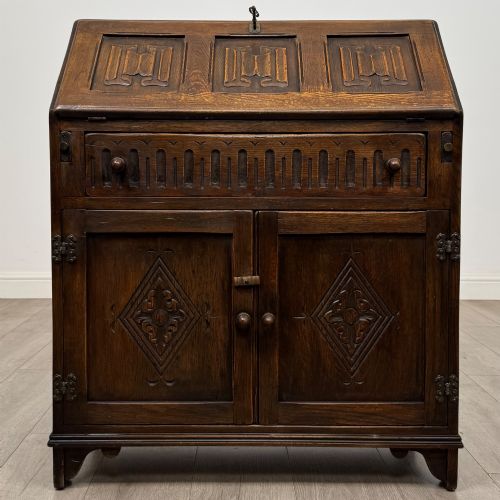
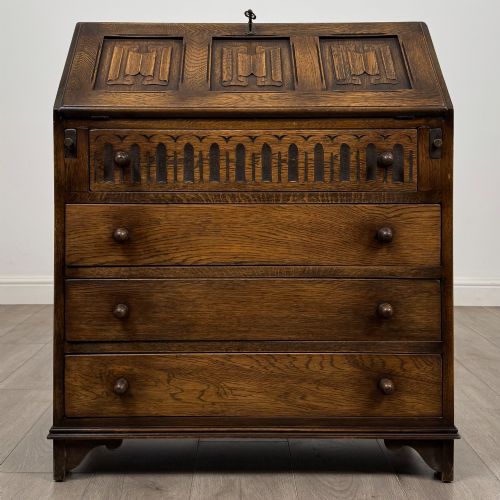
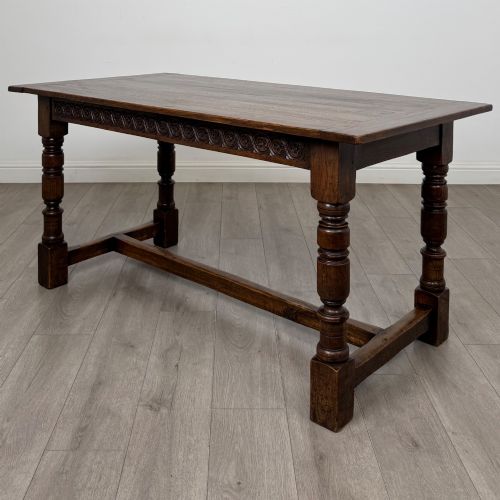
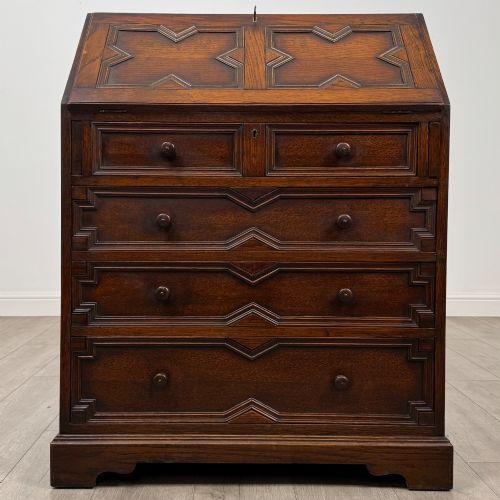
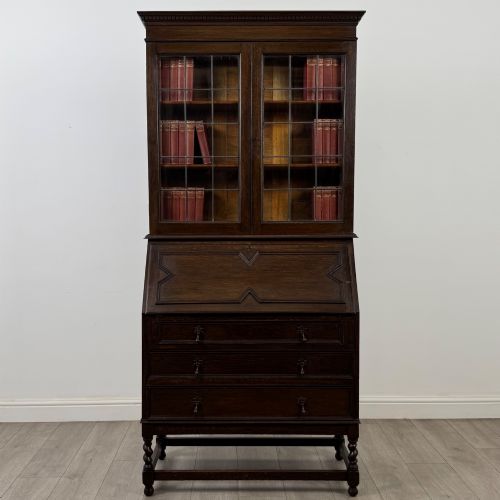
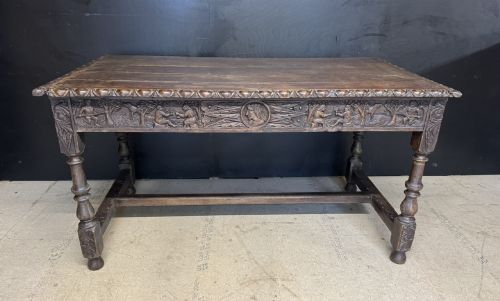
A jacobean style desk typically appears as a bureau, a bureau bookcase, or a writing table rooted in the revival periods of the nineteenth and twentieth centuries. These pieces draw upon seventeenth-century forms, often incorporating sloping writing flaps or flat writing surfaces set above drawer banks.
The versions most commonly met on this page date from the Edwardian era through the nineteen-twenties, constructed to satisfy a lasting taste for historic revival furniture in oak.
Makers and workshops of the Victorian and later revival eras built these desks to echo older seventeenth-century joinery, frequently pairing writing surfaces with enclosed storage for papers and books.
How they were made
These items rely principally on solid oak, selected for its strength and capacity to take deep chisel carving, panel work, and linenfold motifs. Joinery methods draw on traditional framing techniques to support heavy writing tops and drawer structures.
Brass hardware, such as drop handles and escutcheons, provides functional contrast to the dark timber, while secondary materials like leather inset writing surfaces appear on specific desk variations.
Vergers occasionally kept their parish notes inside heavy oak bible boxes.
What varies in quality
The distinction between standard commercial revival pieces and finer workshop examples lies in the depth and crispness of the hand carving on the drawer fronts and panels. Heavier timber selection and balanced proportions also separate the superior desks from simpler mass-produced equivalents.
The integrity of the internal drawers, the smoothness of the writing flap hinges, and the retention of original brass fittings dictate the standing of an individual desk within the range.
Wylie & Lochhead
The Jacobean Style Desk Glossary
- Bureau
- A desk featuring a sloping hinged flap that opens to reveal a fitted interior of small drawers and pigeonholes.
- Linenfold
- A carved wooden panel motif imitating folded drapery or fabric, frequently seen on revival oak furniture.
- Barley twist
- A turned column or furniture leg resembling a spiral rope, common in seventeenth-century and revival joinery.
- Escutcheon
- A protective brass plate surrounding a keyhole, often decorative on revival drawer fronts.
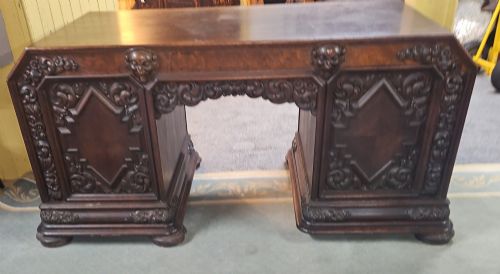
- Pedestal desk
- A heavy writing table supported by two separate banks of drawers resting on the floor.
Jacobean Style Desk: Frequently Asked Questions
What is a jacobean style desk?
A jacobean style desk is a heavy wooden writing piece, usually made of oak and decorated with carved panels, drawing inspiration from seventeenth-century design.
These desks often take the form of drop-front bureaux or flat-topped writing tables produced during Victorian and twentieth-century revival periods.
How do I date an oak bureau?
Dating relies on examining the timber grain, the style of the hardware, and the construction methods used inside the drawer frames.
Revival pieces from the Edwardian era or the nineteen-twenties often combine machine-planed secondary woods with hand-finished exterior carving.
Were these desks used for writing?
Yes, they served as the primary household station for correspondence, accounts, and the storage of writing paper.
The sloping flaps on bureau models supported paperwork, while internal compartments kept inkwells and letters organised.
How do I care for antique oak furniture?
Oak furniture benefits from stable indoor humidity away from direct heat sources to prevent the timber from splitting.
Regular dusting with a dry cloth and occasional application of traditional beeswax help maintain the finish.
What is a bureau bookcase?
A bureau bookcase combines a lower writing desk with an upper shelved cabinet enclosed by wooden or glazed doors.
This form allowed owners to store a library of books directly above their writing surface.