


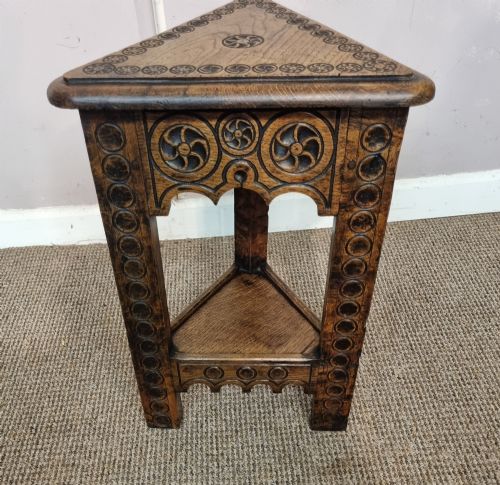
Jacobean Side Table
A jacobean side table brings grounded timber and solid construction into a room, offering deep grain and centuries of domestic utility.
Jacobean Side Table
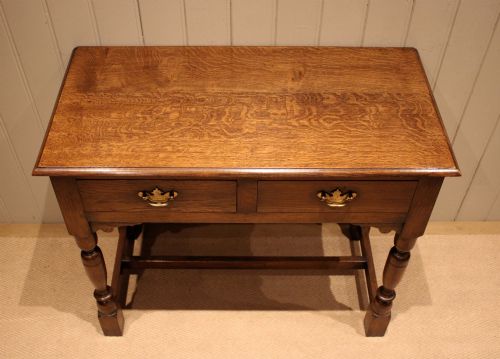
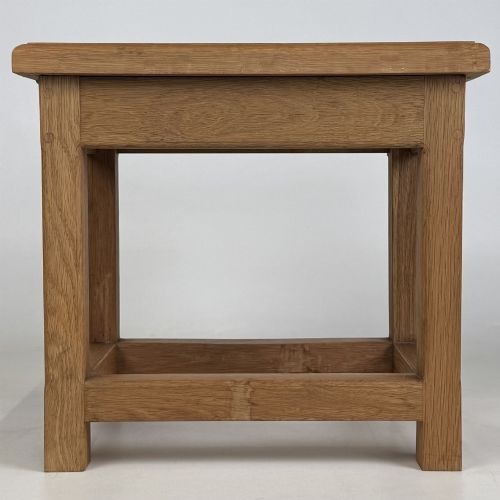
When you search for a jacobean side table, you encounter pieces that range from authentic late seventeenth-century originals to later revivals produced during the Victorian, Edwardian, and nineteen-twenties periods. The form generally serves as a low surface with robust legs, often incorporating drawers or drop leaves for practical use in hallways, reception rooms, and dining spaces.
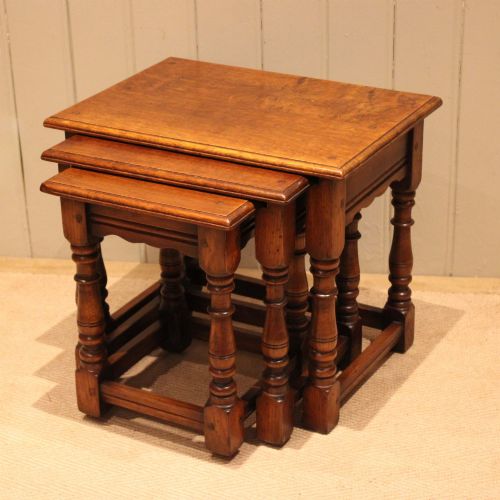
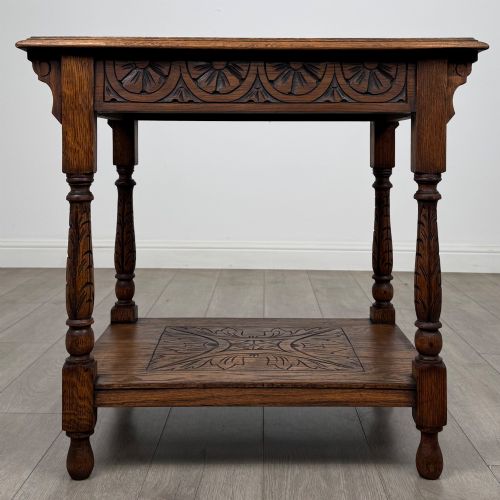
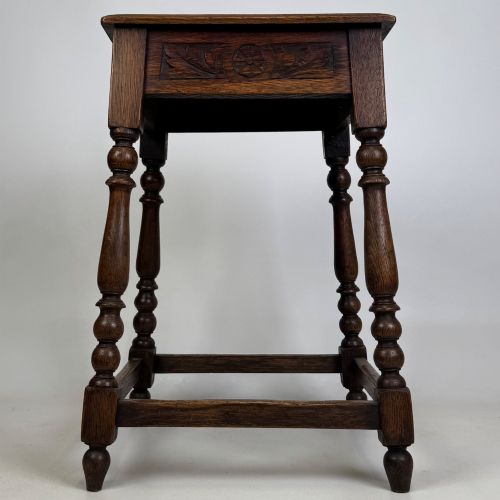
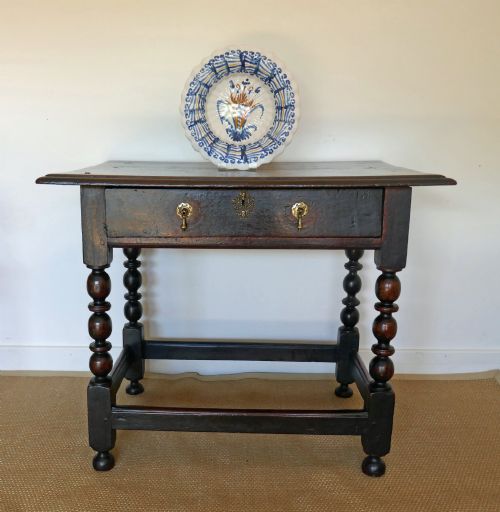
The version you are most likely to meet on this page is the early twentieth-century revival piece, constructed in solid oak with carved decoration and turned supports, echoing the seventeenth-century vernacular. Alongside these later interpretations appear genuine seventeenth-century examples featuring plank tops and pegged joints, bearing the dark patination accumulated over generations.
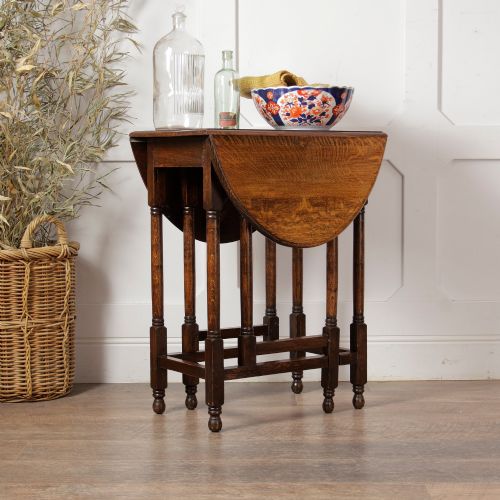
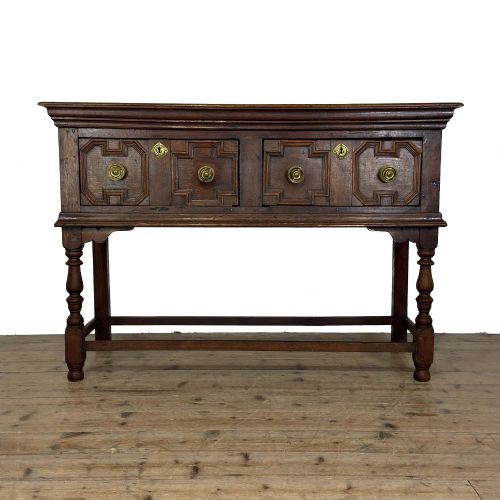
Beyond the standard side table format, the search encompasses related forms such as gateleg tables, dresser bases, and occasional tables that share the same heavy timber vocabulary and dark finish. These pieces anchor a room visually, bringing historical weight and tactile grain to contemporary interiors.
How they were made
The primary material across the selections is solid oak, frequently chosen for its durability and prominent medullary rays, supplemented by occasional uses of yew wood and elm in specific regional forms. Joinery relies on traditional pegged mortise and tenon construction, ensuring structural rigidity without reliance on modern metal fixings.
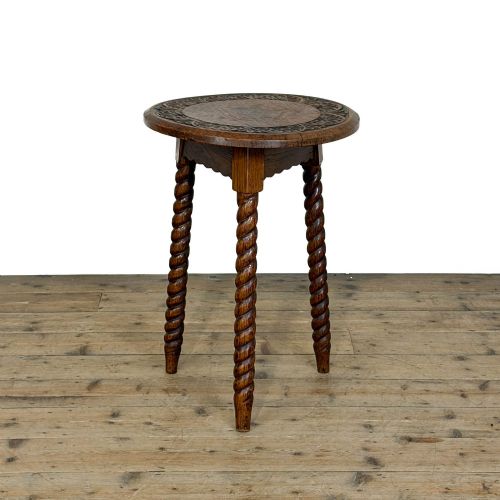
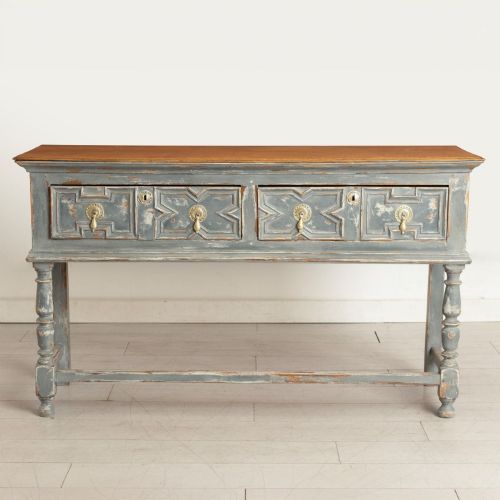
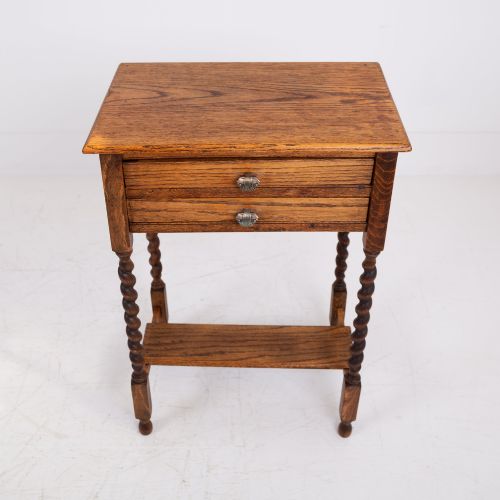
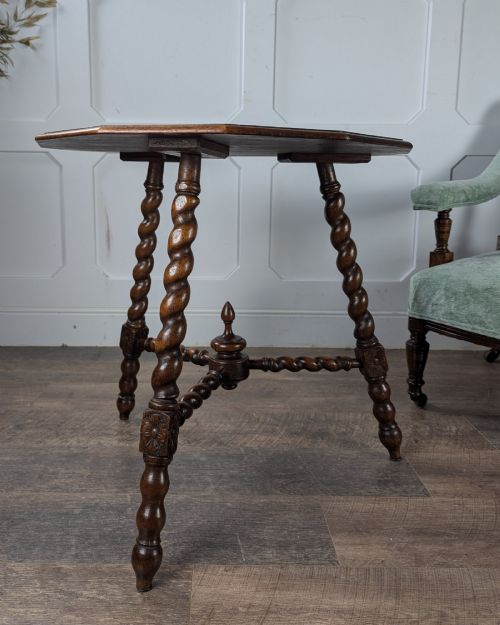
Turning techniques define the leg supports, utilising bobbin-turning, barley twists, and chunky baluster shapes produced on a lathe. Carving is typically executed by hand directly into the solid timber rails and drawer fronts, displaying geometric strapwork, floral motifs, and linenfold panels.
Listings feature oak, yew wood, and elm across seventeenth-century originals and twentieth-century revivals.
What varies in quality
Quality diverges between pieces built with thick, uncompromised solid timbers and those utilising thinner stock or applied decorative elements upon a lighter carcase. The integrity of the original joints and the depth of the timber's natural patination distinguish a superior survivor from a heavily restored or loosely constructed equivalent.
The crispness and depth of the hand-carving mark the distinction between workshops, where sharply defined details demonstrate superior craftsmanship compared to shallow, mechanically softened ornamentation. Proportions also govern value, with smaller-scale pieces retaining greater architectural harmony than bulky adaptations.
The Jacobean Side Table Glossary
- Barley twist
- A type of woodturning shaped like a spiral helix, popular on legs and stretchers during the seventeenth century and revived in later centuries. It catches the light and adds a dynamic vertical element to heavy furniture.
- Bobbin-turned
- A series of rounded wooden spheres or discs carved along the length of a leg or stretcher, resembling a string of beads. This technique dates prominently to the mid to late seventeenth century.
- Gateleg table
- A table with hinged drop leaves supported by legs that swing outward like a gate to hold the leaves in place. They provide flexible surface area while folding flat when not needed.
- Joint stool
- A sturdy, low wooden seat constructed with mortise and tenon joints and pegged timber. These pieces preceded chairs in many households and double as small occasional surfaces.
- Patina
- The surface sheen and colour acquired by wood over long periods through handling, waxing, and ageing. It reveals the genuine history and tactile character of antique timber.
Jacobean Side Table: Frequently Asked Questions
Are jacobean side tables sturdy enough for daily use?
These tables are constructed from solid hardwoods like oak and elm using traditional pegged joinery, making them exceptionally robust for everyday placement in a home.
Their heavy construction handles weight well, though care should be taken to protect antique wax finishes from moisture and heat.
How can I tell a seventeenth-century table from a later revival?
Authentic period pieces display distinct hand-tool marks, iron-forged fixings, and dry, deep patination that develops naturally over centuries of exposure.
Revival pieces from the Victorian and Edwardian eras often feature machine-sawn timber edges, brighter factory finishes, and standardised joinery methods.
Where did people originally use these tables?
In seventeenth-century households, such tables stood against walls in halls and parlours to hold drinking vessels, lighting, or household documents.
Later revival versions found places in Edwardian hallways and reception rooms as decorative surfaces for lamps and calling card trays.
How do I care for the oak surface?
Maintain the timber by applying a traditional beeswax polish sparingly and buffing it with a soft cloth to preserve the natural grain and sheen.
Avoid placing the furniture near direct heat sources or in damp areas to prevent the solid oak panels from splitting or warping.