
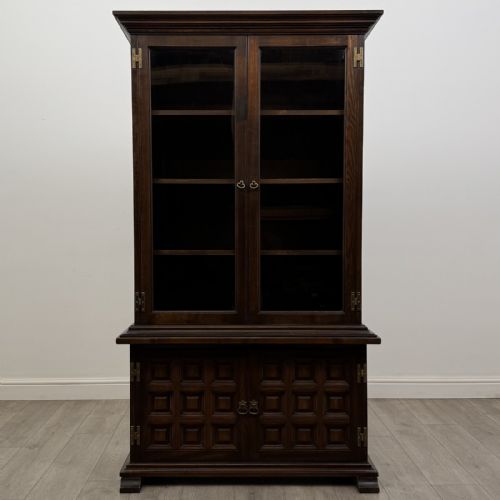
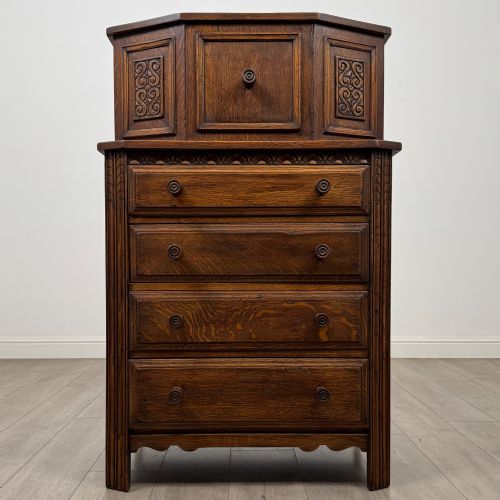
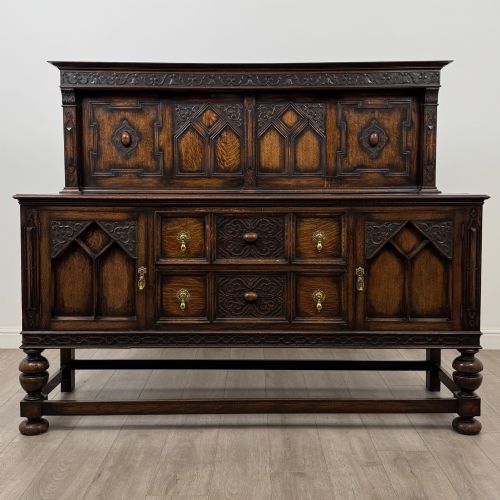
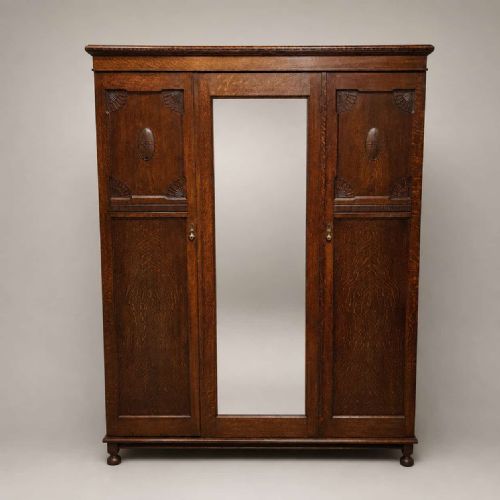
Jacobean Revival Oak Panel
These jacobean revival oak panel pieces bring heavy timber warmth and traditional carved detail into modern spaces.
Jacobean Revival Oak Panel
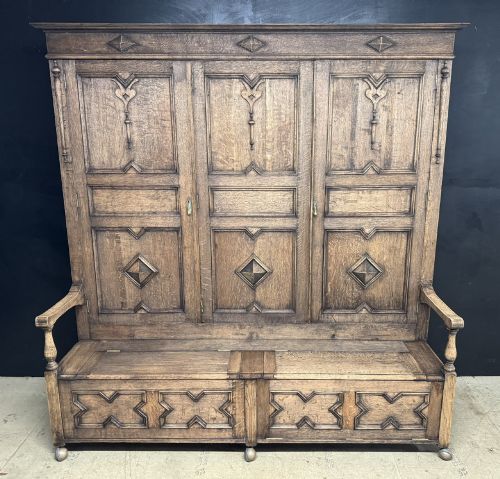
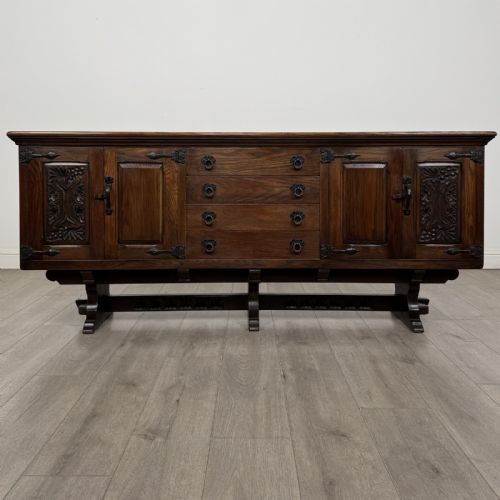
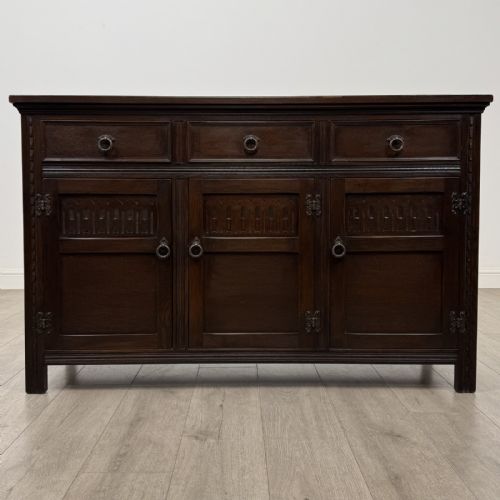
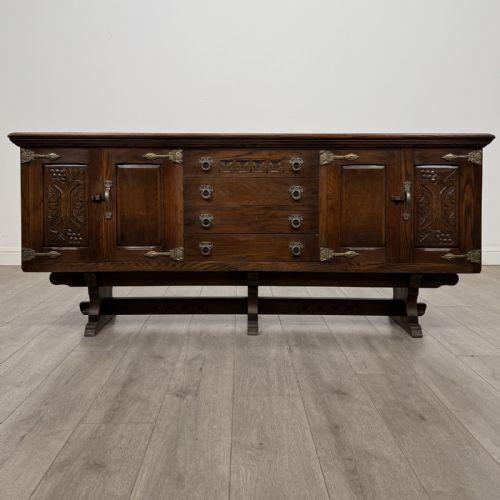
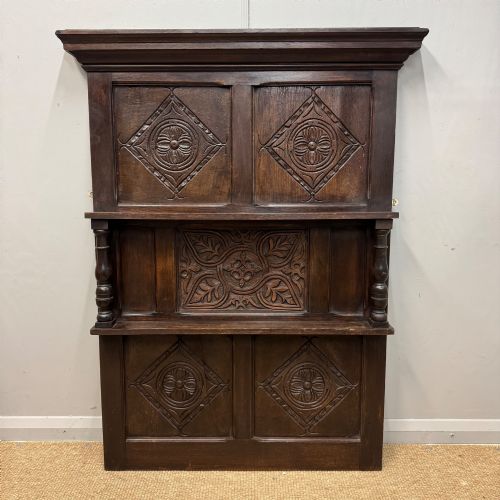
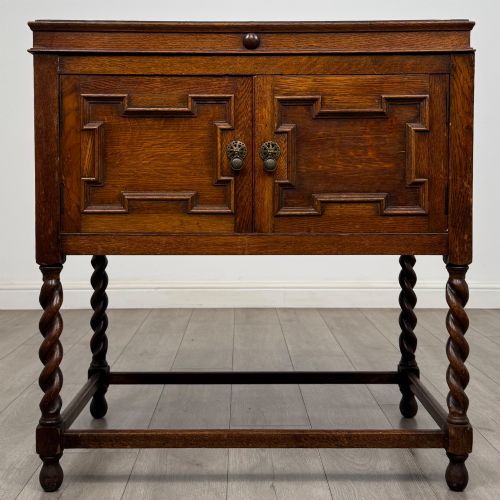
A jacobean revival oak panel search reveals solid timber furniture and architectural elements rooted in seventeenth-century English design. You will find cupboards, sideboards, settles, bookcases, and wall panels originating from the Victorian, Edwardian, and early twentieth-century periods.
The pieces most frequently met on this page date from the late nineteenth century through the nineteen-thirties. Makers of these eras drew heavily on earlier styles, incorporating deep relief carving, panelled construction, and architectural mouldings into practical domestic furniture.
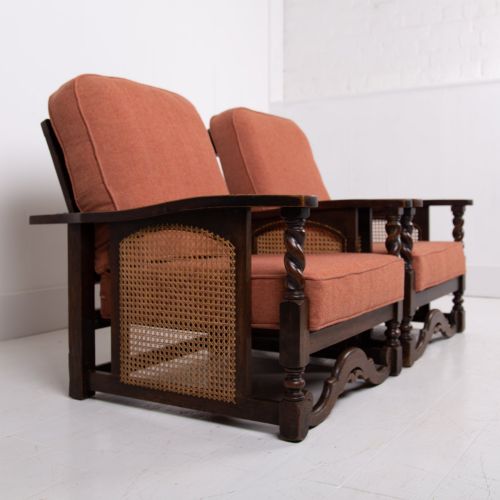
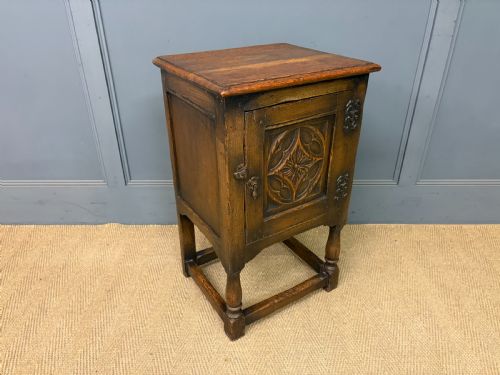
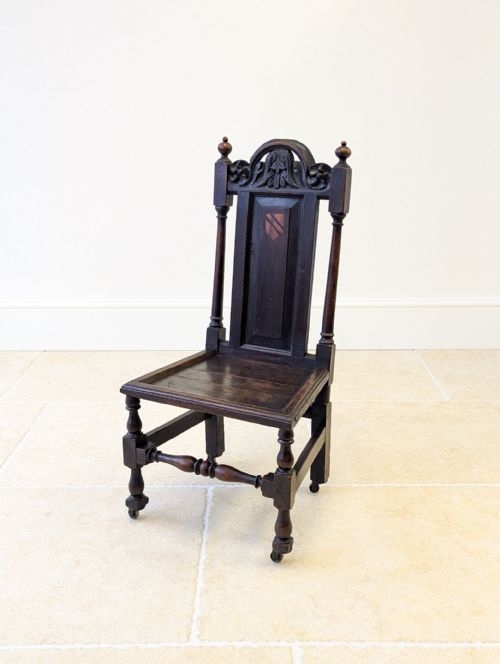
Form follows function across the selection, ranging from substantial wardrobes and dressers to smaller wall plaques and hall chairs. Oak remains the defining material, often enhanced with walnut, brass hardware, or cane inserts.
How they were made
Construction relies primarily on solid oak, selected for its durability and prominent grain. Workshops utilised traditional joinery methods such as mortise and tenon frames to hold heavy panels in place without warping.
Surface decoration involves hand-carving executed with gouges and chisels to produce geometric strapwork, scrolling foliage, and figural motifs. Turning lathes shaped structural components like barley-twist legs and supports.
Secondary timbers such as walnut and fruitwood appear alongside brass hinges, iron handles, and leaded glass doors. Caning and fabric inserts provide textural contrast within chair backs and cabinet panels.
Listings span the Victorian, Edwardian, and nineteen-thirties periods, demonstrating continuous revival interest in early oak forms.
What varies in quality
Depth and crispness of the hand-carved detail distinguish finer examples from mass-produced output. Superior pieces exhibit sharp undercutting and confident relief work rather than shallow, machine-routed patterns.
Integrity of the timber and joinery dictates longevity. Pieces constructed from dense, well-seasoned oak with tight joints maintain structural stability through centuries of use, whereas lesser items suffer from shrinkage and loose framing.
The Jacobean Revival Oak Panel Glossary
- Wainscot chair
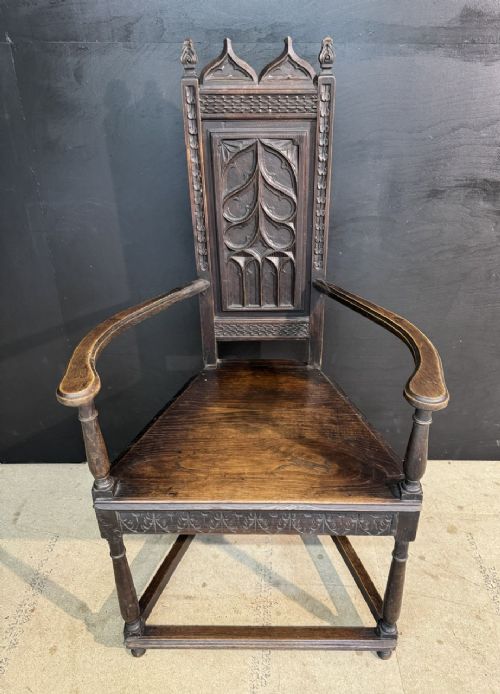
- A heavy wooden armchair characterised by a panelled back and solid wooden seat. These pieces originated in the Tudor and Jacobean periods before being revived in later centuries.
- Barley-twist
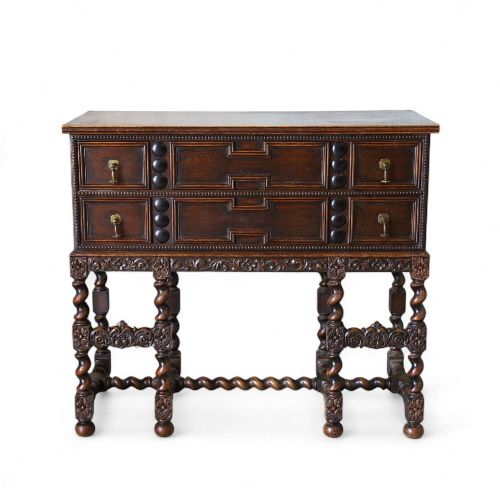
- A decorative column or support turned on a lathe to resemble a twisted rope. This turned detail appears frequently on legs and stretchers of revival furniture.
- Overmantle
- A decorative panel, mirror, or mirror-frame designed to be positioned directly above a fireplace mantelpiece. They often incorporate elaborate woodwork and carved reliefs.
- Settle
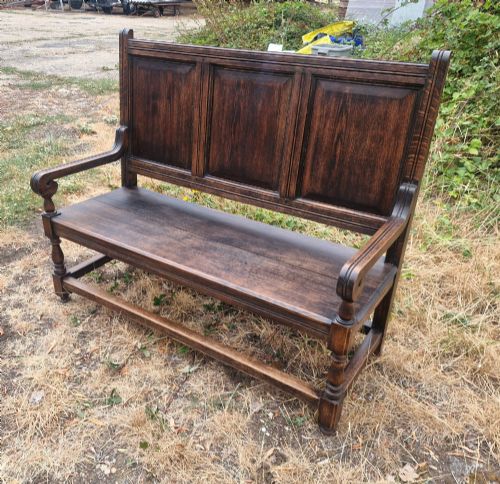
- A wooden bench featuring a high solid back designed to block drafts, often fitted with enclosed storage beneath the seat. Country house examples display substantial proportions and panelled construction.
- Strapwork
- Ornamentation consisting of narrow bands or ribbons folded, crossed, and interlaced in geometric patterns. Carvers used this motif extensively on friezes and panels.
Jacobean Revival Oak Panel: Frequently Asked Questions
What defines a jacobean revival piece?
These items imitate the heavy proportions, dark finishes, and geometric carved ornamentation of seventeenth-century English furniture. Workshops produced them in large numbers during the Victorian and Edwardian eras.
They combine historical decorative vocabulary with the functional requirements of nineteenth and twentieth-century homes.
Are these pieces genuinely seventeenth century?
Most items bearing this style date from the nineteenth or early twentieth century, spanning the Victorian, Edwardian, and nineteen-thirties periods. Some listings incorporate earlier timber or antique carved elements into later constructions.
Examination of the joinery, tool marks, and wood seasoning helps determine the exact age of the construction.
How do I care for oak furniture?
Keep wooden surfaces away from direct heat sources and strong sunlight to prevent the timber from drying out and splitting. Regular dusting with a dry cloth maintains the finish.
Apply a traditional beeswax polish occasionally to nourish the grain and protect the surface from moisture.
Where do these items fit best?
The substantial presence and dark wood tones suit traditional hallways, dining rooms, and studies. They anchor a room when paired with neutral walls and plain textiles.
Large wardrobes and sideboards require adequate wall space and clearance for opening doors.