
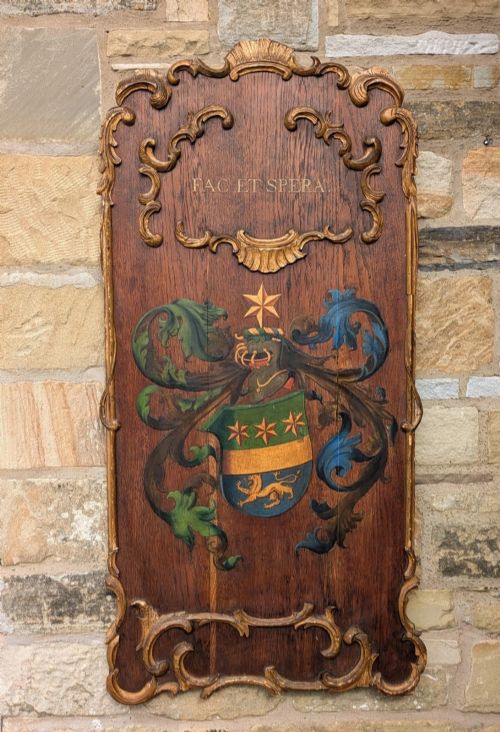
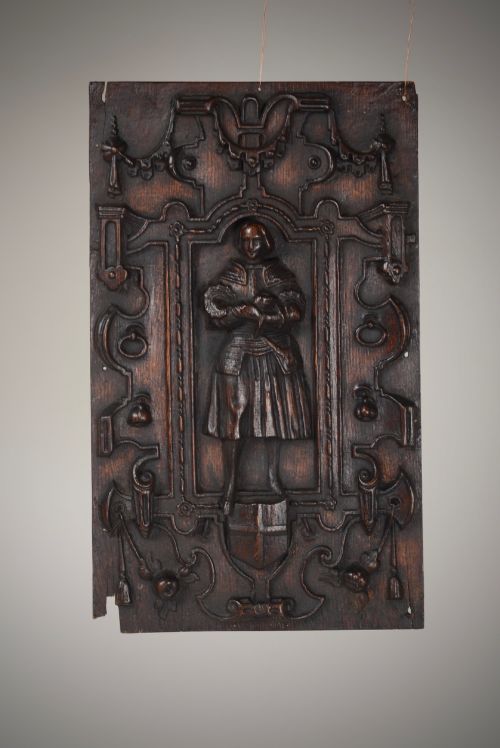
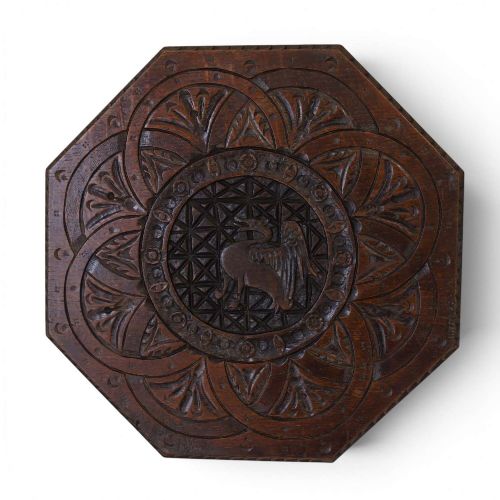


Heraldic Carved Oak Plaque
A heraldic carved oak plaque brings solid timber, historic coats of arms and deep relief carving straight to a wall.
Heraldic Carved Oak Plaque
A heraldic carved oak plaque displays family crests, coats of arms and armorial bearings rendered in timber and relief. Buyers searching for a heraldic carved oak plaque encounter wall plaques, carved wooden panels and wall sculptures executed in oak, fruitwood and hardwood.
The versions met most frequently on this page span the seventeenth, eighteenth and nineteenth centuries, alongside Victorian Gothic Revival and Edwardian examples. Pieces range from seventeenth-century panels depicting figures like Joan of Arc to nineteenth-century shields and armorial book covers set into brass frames.
Materials and construction
These plaques rely on solid timber foundations, predominantly oak and quarter-sawn oak, augmented by fruitwood and hardwood details. Craftsmen employed hand-carving techniques to build deep, intricate relief work into the wood.
Selected examples incorporate surface paint and polychrome decoration alongside gilt highlights. Certain pieces also integrate secondary metals, notably brass frames or mounts, to secure and frame the timber panels.
Listings span the seventeenth, eighteenth and nineteenth centuries, reaching into the early twentieth century with Edwardian and 1910 examples.
Assessing quality
The choice of timber grain, particularly quarter-sawn oak, and the preservation of original polychrome paint or gilt surfaces contribute significantly to the visual weight and historical integrity of the plaque.
The Heraldic Carved Oak Plaque Glossary
- Heraldic
- Pertaining to heraldry, coats of arms and armorial bearings. These designs denote family lineage and historic allegiances.
- Armorial
- Displaying a coat of arms or heraldic insignia. Such elements form the central decorative focus of these plaques.
- Polychrome
- Painted in several colours. This surface treatment brings historical coats of arms to vivid life.
- Quarter-sawn
- Timber cut radially from the growth rings. This method produces a durable board with a distinct, decorative grain pattern.
- Gilt
- Covered thinly with gold leaf or gold paint. It highlights specific heraldic details against the dark oak background.
Heraldic Carved Oak Plaque: Frequently Asked Questions
What is a heraldic carved oak plaque?
A heraldic carved oak plaque is a wooden wall hanging displaying a coat of arms, family crest or armorial shield. These pieces celebrate lineage and heraldry through hand-carved relief work.
They appear in various forms, including wall sculptures, panels converted from tabletops and brass-framed inserts dating from the seventeenth century onwards.
How were these plaques displayed?
Historically, armorial plaques and crests hung in great halls, libraries and civic spaces to display family alliances and status. They served as permanent markers of identity and heritage.
Today, collectors mount them directly onto walls as focal points in period or study interiors, much like paintings.
How do I date an oak plaque?
Dating relies on tool marks, timber selection, stylistic cues and the nature of any integrated metalwork. Seventeenth-century panels display deep, hand-hewn relief, whereas Victorian pieces often follow Gothic Revival or Pugin design principles.
The presence of original paint, gilt or specific historical ciphers also helps anchor pieces to periods such as the early eighteenth century or the nineteenth century.
Are all these plaques made of solid oak?
While oak and quarter-sawn oak dominate the construction, makers also utilised alternative timbers such as fruitwood and hardwood for contrasting details. Some examples incorporate brass frames or mounts.
Surface treatments vary from bare carved wood to polychrome painted finishes and gilt highlights.