

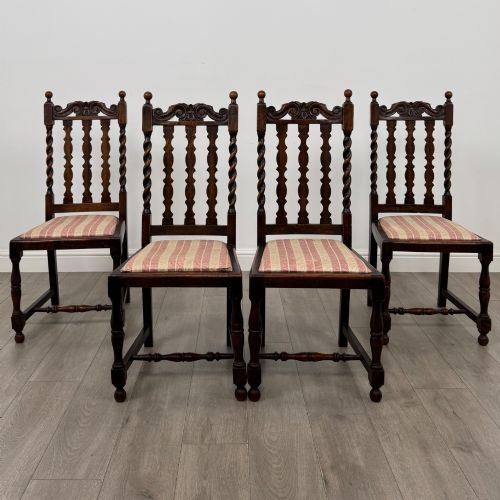
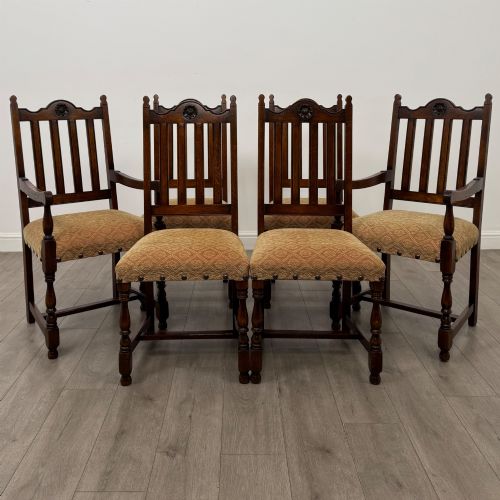
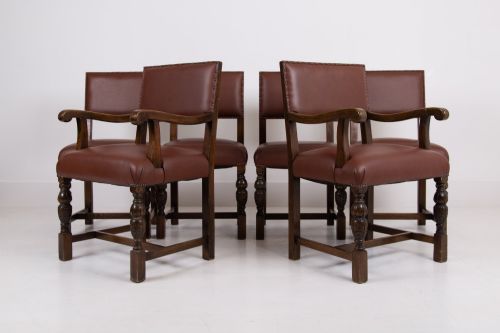
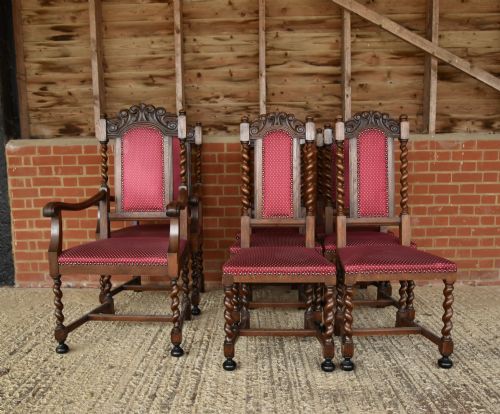



Jacobean Revival Dining Chairs
These jacobean revival dining chairs bring seventeenth-century gravity into twentieth-century rooms through solid oak and deep carving.
Jacobean Revival Dining Chairs
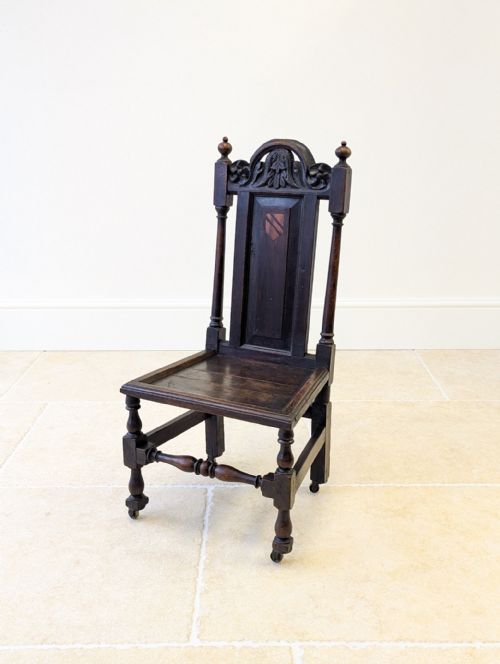
Jacobean revival dining chairs transpose seventeenth-century forms onto nineteenth and twentieth-century dining rooms, drawing heavily on vernacular styles like the Derbyshire chair and Carolean high-back designs. When searching this phrase, buyers encounter substantial seating built primarily during the Edwardian era and the interwar period, alongside nineteenth-century Victorian interpretations.
The inventory on this page consists predominantly of dining chairs, side chairs, and carver armchairs, frequently found in sets ranging from pairs up to twelve pieces. These items often accompany refectory tables or appear within larger dining suites, reflecting the enduring domestic appetite for heavy revival furniture across the Victorian and Edwardian periods.
How They Were Made
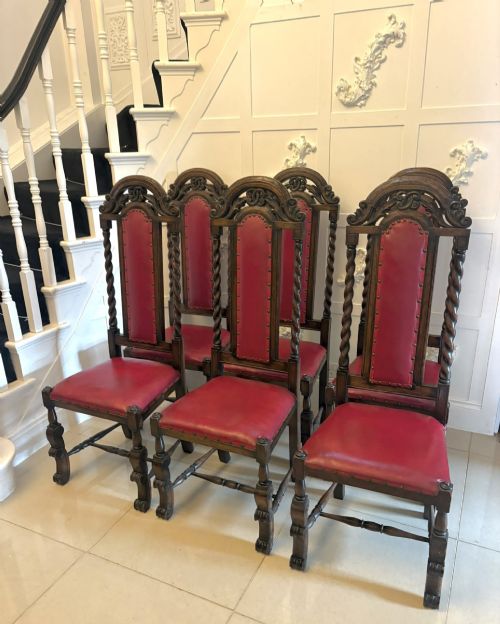
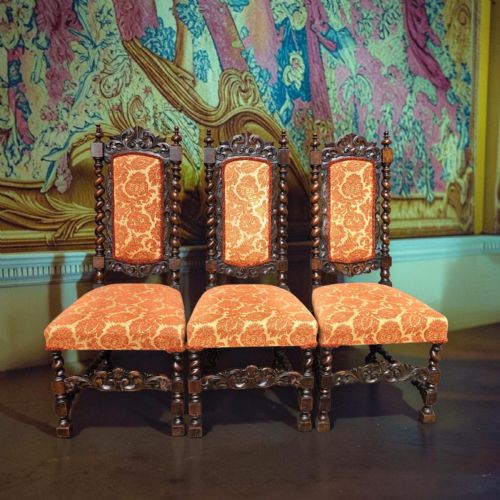
Carpenters relied firmly on English oak as the primary timber, turning structural supports on lathes to produce distinctive barley twist legs and uprights. Joinery methods prioritised durability, utilising pegged mortise and tenon joints to withstand heavy daily use around the dining table.
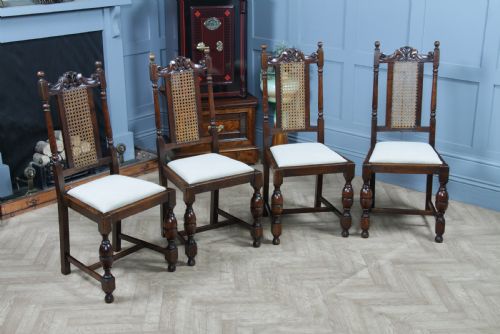
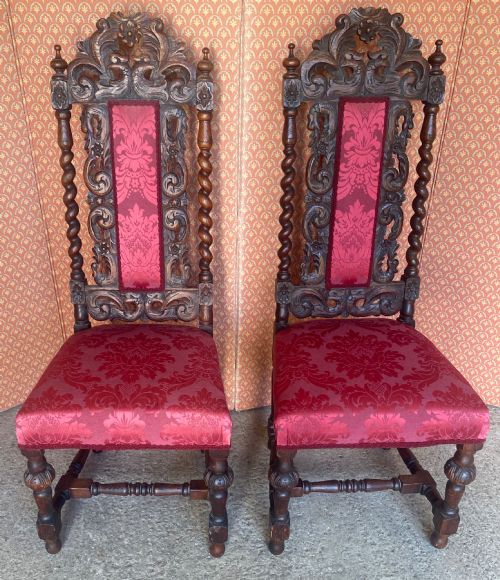
Upholstery materials varied from plain leather and robust textiles to woven cane and bergere panels, held in place by visible brass tacks. Carving was executed by hand directly into the oak framework, producing relief patterns along crest rails and high backs.
Jacobean Revival Dining Chairs Retail Price Guide 2026
Typical asking prices for jacobean revival dining chairs among the pieces listed under this phrase on Sellingantiques today, from the lower quarter to the upper quarter. They describe what is for sale here now, not the wider market.
Seventeenth-century craftsmen turned barley spindles by hand while dreaming of morning porridge, leaving microscopic oat flecks sealed beneath centuries of oak polish.
What Varies In Quality
Depth and crispness of hand-carved detail distinguish finer sets from simpler commercial production, where machine routing flattens the ornament. The structural integrity of the oak frame and the tightness of turned barley twist components determine longevity.
Completeness within larger sets dictates value, particularly when matching carver armchairs are included alongside standard side chairs. Original leather or cane surfaces command greater regard than later replacement upholstery.
The Jacobean Revival Dining Chairs Glossary
- Jacobean Revival
- A nineteenth and twentieth-century design movement imitating seventeenth-century English furnishings. It is characterised by dark oak timber, geometric paneling, and strapwork carving.
- Barley Twist
- A turned wood detail resembling a spiralling rope. This technique was popular in seventeenth-century furniture and widely copied during the Victorian and Edwardian revivals.
- Carver Armchair
- A dining chair with arms designed for the head of the table. These were often produced in smaller numbers to accompany larger sets of side chairs.
- Derbyshire Chair
- A seventeenth-century type of regional open-back wooden chair with turned posts. Revival versions replicate the characteristic arcaded crest rails and boarded seats.
- Bergere
- A type of woven cane or wicker panel used for chair backs and seats. It provides a lighter texture against heavy oak framing.
Jacobean Revival Dining Chairs: Frequently Asked Questions
How do I spot a true Jacobean chair?
Genuine seventeenth-century chairs feature joined construction methods and native timber wear patterns distinct from later revival pieces. True period examples rarely survive in matched sets of six or eight.
Revival pieces from the Victorian and Edwardian eras show nineteenth or twentieth-century tool marks and standardised turning. Examining the underside and joint construction clarifies the actual production date.
Can I mix carver chairs with side chairs?
Mixing carvers and side chairs follows historical dining suite traditions where head seats were distinguished by arms. Sets often combine two carvers with six or eight side chairs.
Ensure the timber tone and twist profile align if combining disparate pieces around one table. Height proportions must also match for comfortable knee clearance.
How should I care for antique oak?
Oak furniture benefits from occasional application of quality beeswax to nourish the dry timber. Avoid placing chairs near direct heat sources that cause wood to shrink and split.
Leather and cane elements require specific conditioning to prevent cracking. Gentle dusting with a dry cloth protects the carved surface details.
Are barley twist legs Edwardian or Victorian?
Barley twist turning appears across multiple periods, originating in the seventeenth century and returning during Victorian and Edwardian revivals. The vast majority of twist leg sets on the market date from the late nineteenth to early twentieth century.
Detailed inspection of the wood patina and internal pegging helps distinguish mid-nineteenth-century examples from later Edwardian productions.