



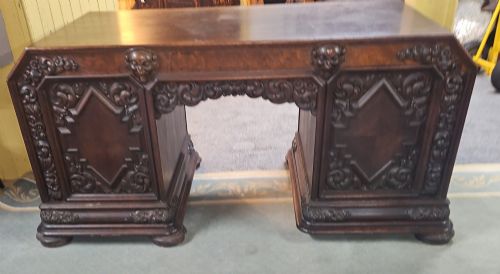

Jacobean Revival Desk
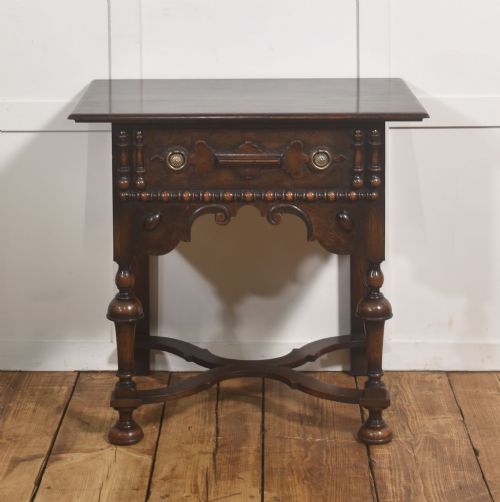
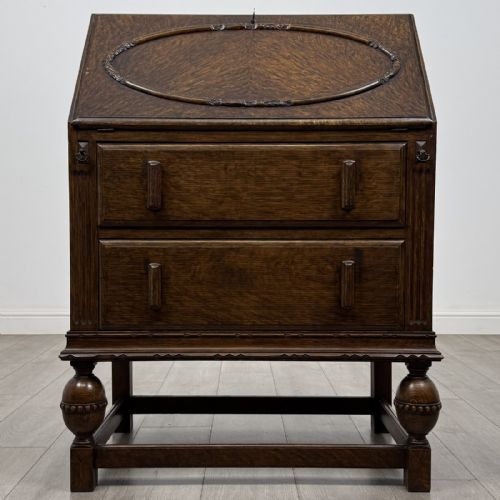
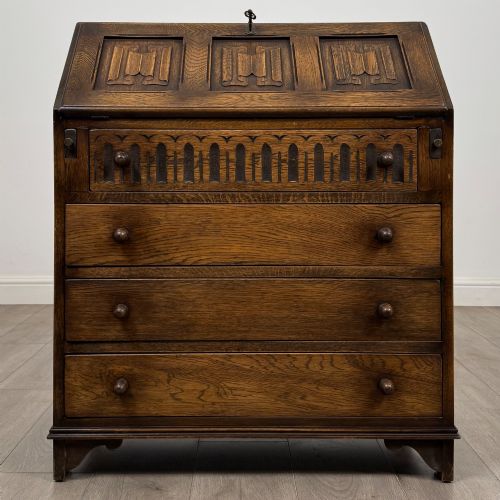
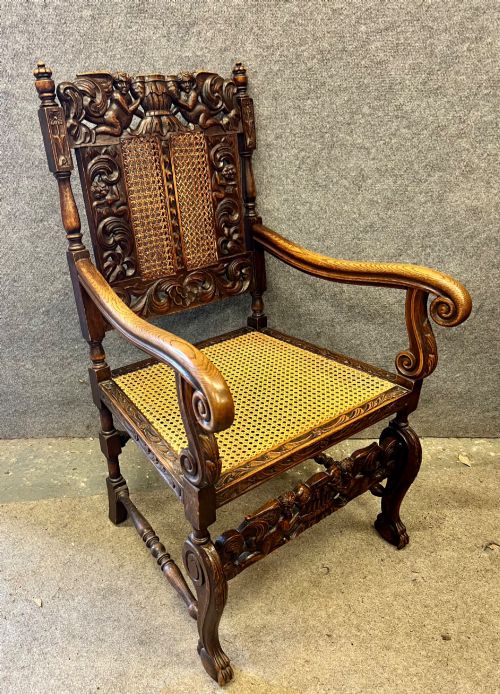
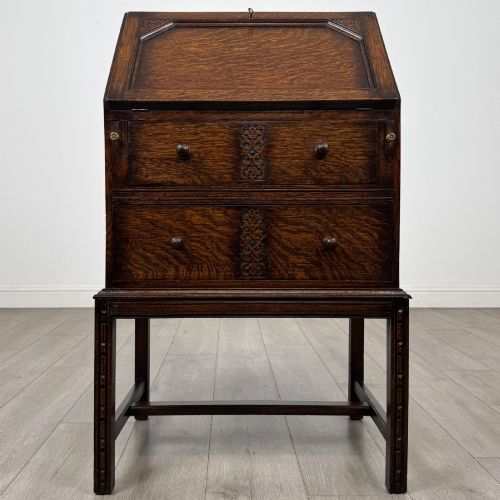
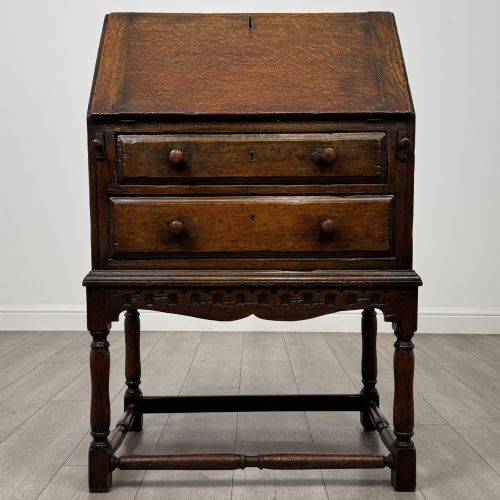
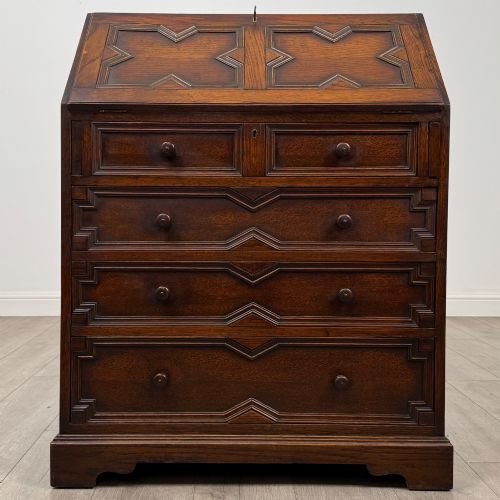
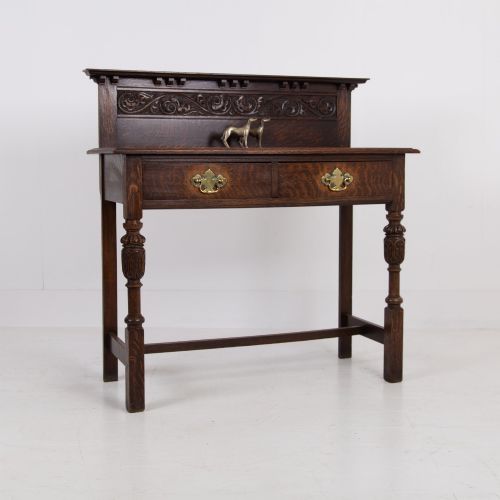
These jacobean revival desk pieces bring solid oak construction, rich carved panelling and period character to a modern room.
Jacobean Revival Desk
A jacobean revival desk brings heavy timber construction and historic ornamentation into nineteenth and twentieth-century interiors, drawing direct inspiration from seventeenth-century forms. The pieces seen on this page span the Victorian, Edwardian and later periods, capturing a persistent taste for dark wood and architectural presence.
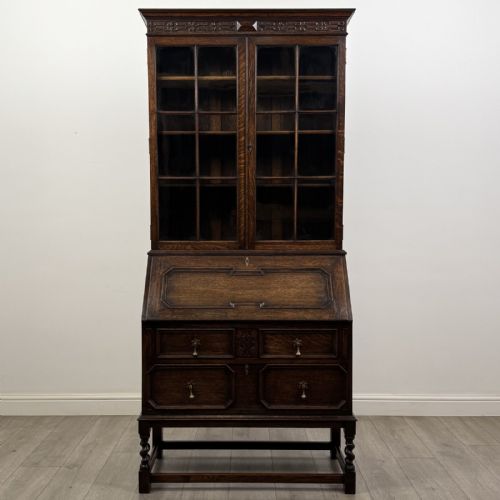
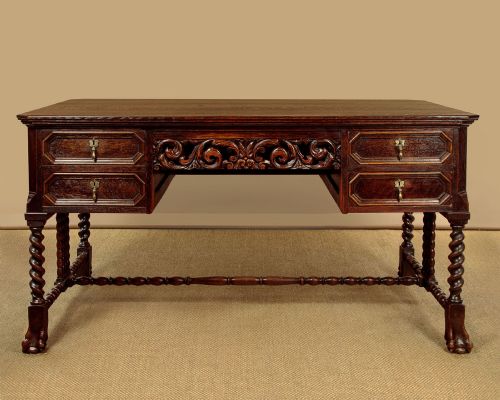
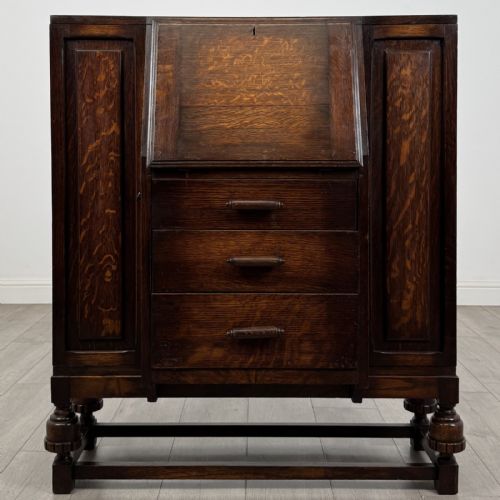
Bureau bookcases, writing tables and pedestal desks dominate the selection, often incorporating fall fronts, fitted internal compartments and drawers. Solid oak forms the primary structural foundation, frequently embellished with carved linenfold patterns, geometric moulding or figurative details such as greenman motifs.
Makers and manufacturers channel Carolean, Tudor and Elizabethan influences alongside strict Jacobean styles, resulting in sturdy furniture designed for writing, library work or formal hall placement. Buyers encounter everything from compact side tables with drawers to large architectural partner desks.
How they were made
Solid oak serves as the predominant material for these pieces, selected for its density, durability and capacity to take deep, relief carving. Workshops employed traditional joinery methods, including mortise and tenon framing, to support the heavy proportions and substantial weight of the timber.
Surface detailing relied on hand carving rather than applied ornamentation, producing crisp linenfold panels, strapwork and moulded edges. Secondary materials such as brass for drop handles and leather inserts for writing surfaces added functional contrast to the dark wood constructions.
Jacobean Revival Desk Retail Price Guide 2026
Typical asking prices for jacobean revival desk among the pieces listed under this phrase on Sellingantiques today, from the lower quarter to the upper quarter. They describe what is for sale here now, not the wider market.
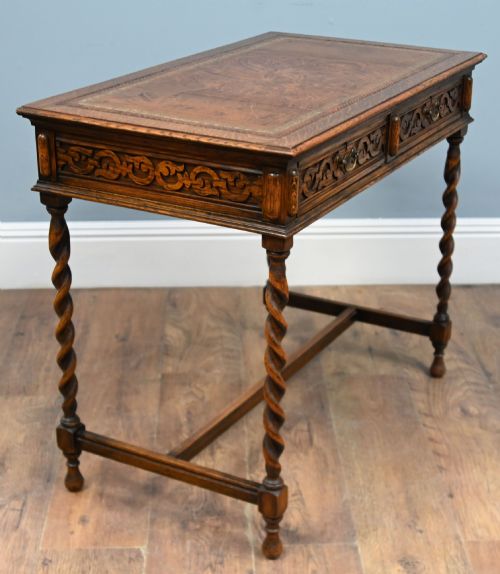
Object forms span from compact side tables with drawers to large bureau bookcases and pedestal desks incorporating linenfold panels.
What varies in quality
The depth, sharpness and execution of the hand carving dictate the aesthetic standing of each piece, distinguishing shallow mechanical tooling from crisp, deeply undercut artisan work. Superior examples demonstrate deliberate planning in the alignment of grain and the integration of panels, whereas lesser pieces rely on repetitive factory stamping.
Hardware selection and internal secondary timbers also separate standard commercial production from finer workshop commissions. Original brass fittings, well-fitted internal drawers and solid oak drawer linings indicate higher standards of original manufacture.
Gillows Of Lancaster
The Jacobean Revival Desk Glossary
- Jacobean Revival
- A nineteenth and twentieth-century design movement that reinterprets the architectural motifs, heavy turning and dark oak finishes of the early seventeenth century. This style emphasises structural mass and intricate woodwork.
- Linenfold
- A style of relief carving used on wooden panels to imitate folded fabric, resembling stiffened linen. It appears frequently on the fall fronts and doors of bureaus in this selection.
- Bureau
- A sloping writing cabinet enclosing a fitted interior of small drawers and pigeonholes, often mounted on a chest of drawers or a stand. The hinged flap serves as a writing surface when lowered.
- Pedestal Desk
- A large freestanding writing table supported by two vertical banks of drawers rather than four legs. These forms offer substantial storage and a commanding presence in a study.
- Barley Twist
- A form of woodturning resembling a rope or a twisted column, utilised for table legs and chair supports. This decorative lathework adds vertical movement to solid timber frames.
Jacobean Revival Desk: Frequently Asked Questions
How do I date a jacobean revival desk?
Dating these pieces requires examining the secondary timbers, construction methods, hardware and the specific style of the revival movement. Victorian and Edwardian iterations often combine older revival aesthetics with machine-assisted sawing or modern drawer linings.
Matching the overall proportions and decorative motifs against known production periods helps clarify whether a piece dates from the nineteenth century or the interwar decades.
Are these desks made of solid oak?
The vast majority of the pieces in this selection feature solid oak construction, chosen for its strength and historical accuracy. Workshops occasionally utilised walnut for specific desk types during certain revival phases.
Checking the drawer linings, carcase construction and underside reveals the primary timber used throughout the manufacture of the desk.
How should I care for an oak desk?
Maintaining an antique oak desk involves keeping the timber away from direct heat sources and sudden humidity fluctuations to prevent splitting. Regular dusting with a dry cloth preserves the finish without requiring heavy polishes.
Applying a traditional beeswax occasionally helps nourish the oak and maintains the natural lustre of the dark wood surface.