
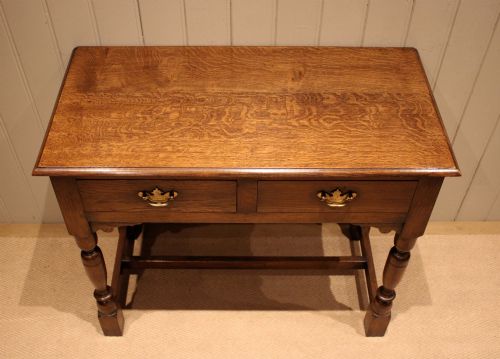


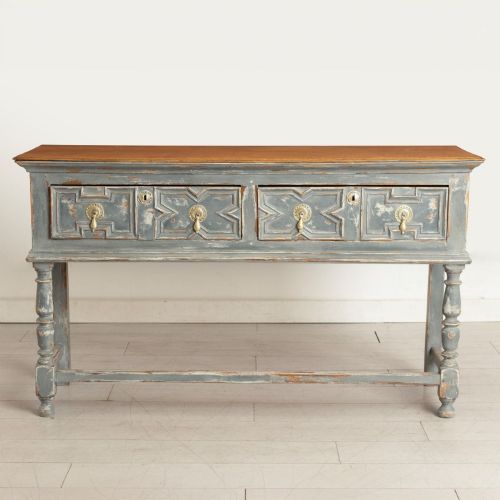
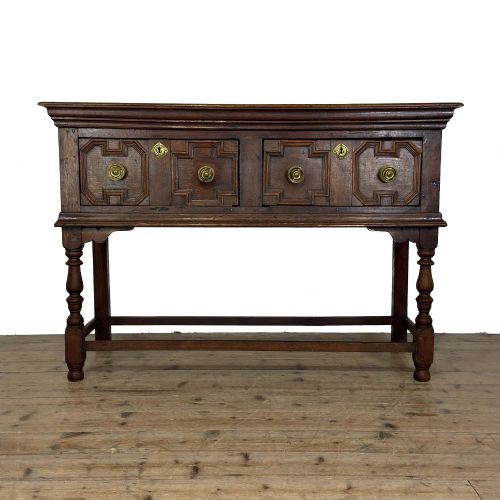
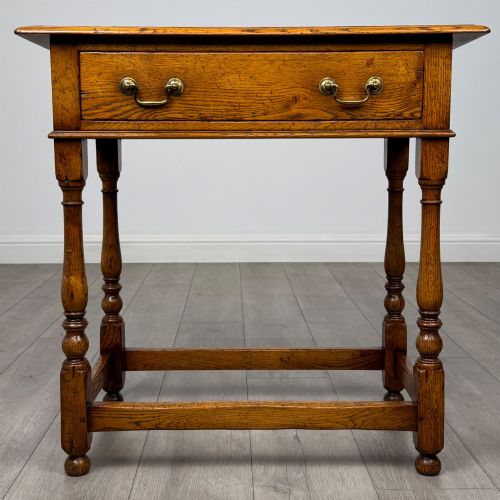
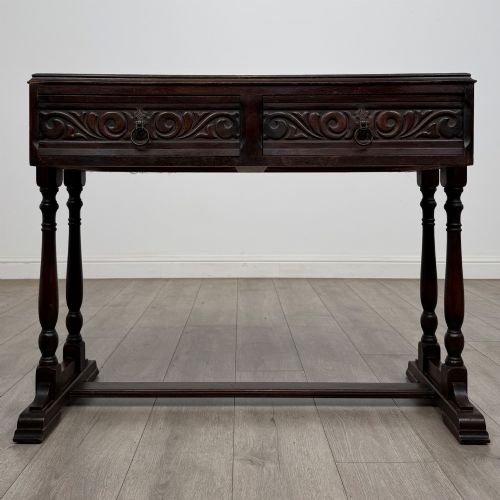
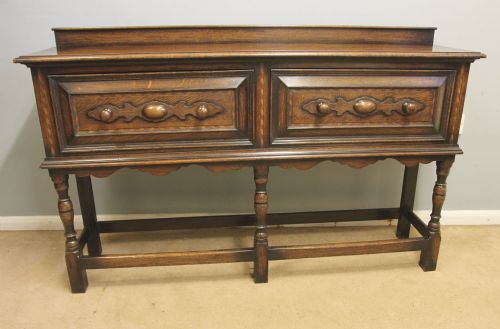
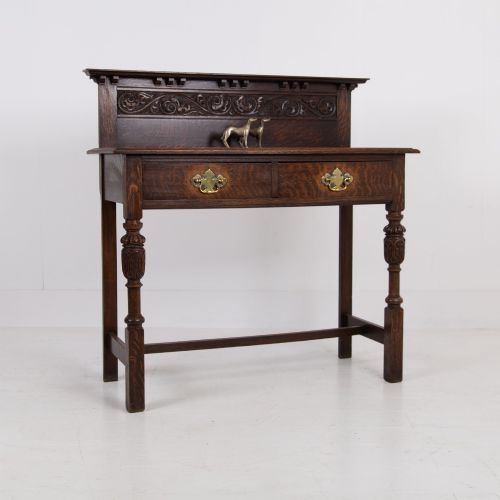

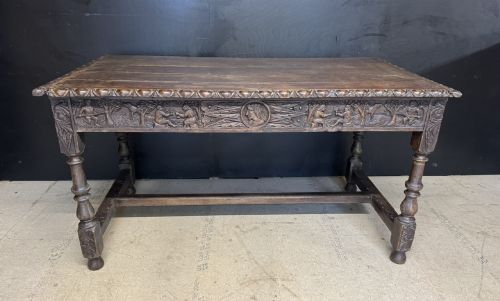
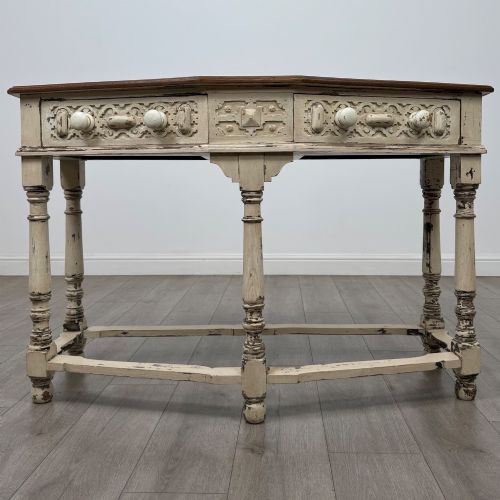

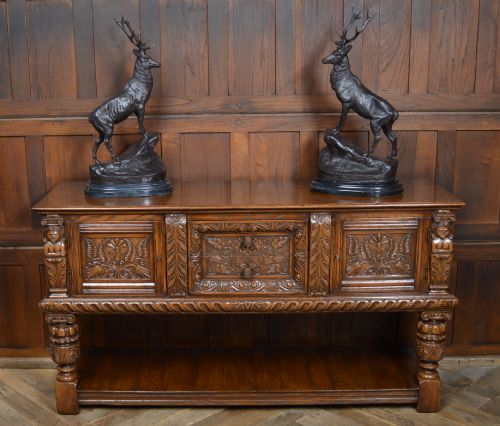
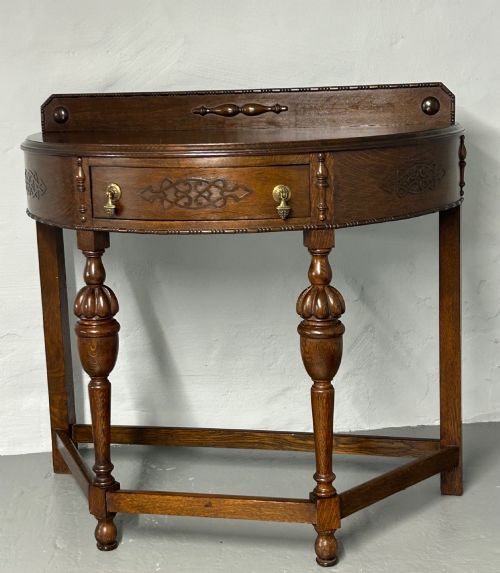

Jacobean Revival Console Table
These jacobean revival console table pieces bring heavy carved timber and period presence directly into the modern hallway.
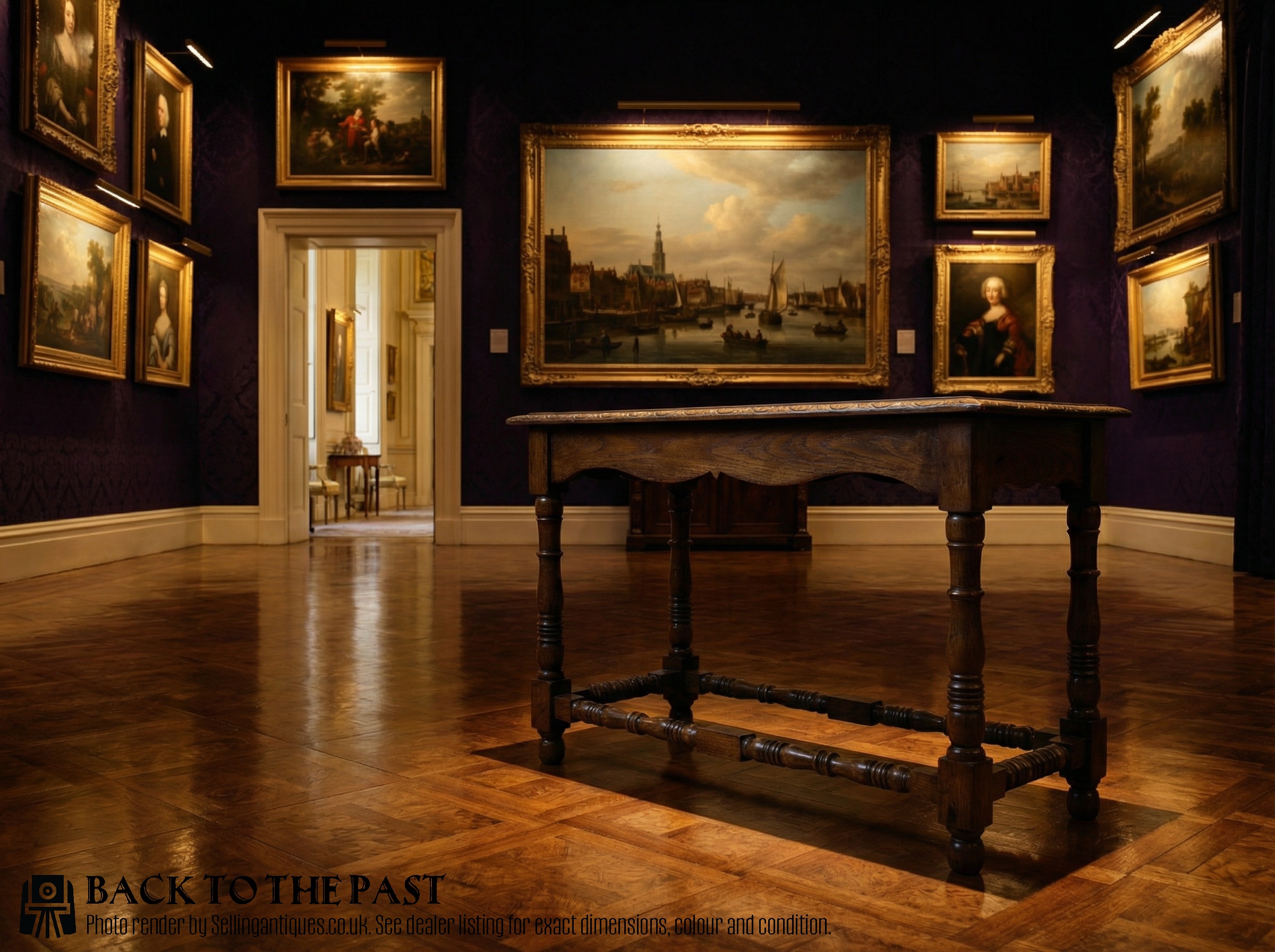
Jacobean Revival Console Table
A jacobean revival console table channels the robust proportions and deep carving of seventeenth-century English furniture into formats suitable for domestic halls and reception rooms. These items frequently appear alongside related forms such as oak side tables, dresser bases, and writing tables.
The versions most commonly found here date from the Victorian era through the nineteen-twenties, often incorporating light oak, golden oak, or dark patinated timber. They serve as practical surface furniture with drawers, pot boards, or carved tiers designed for display.
Makers working in the Victorian and Edwardian periods drew heavily on Gothic Revival and Renaissance Revival motifs alongside strict Jacobean styling. This blend creates heavy, architectural pieces intended to anchor a country house or period interior scheme.
What varies in quality
Depth and crispness of the timber carving separate standard production pieces from finer examples executed by skilled cabinetmakers. Sharp, undercut details and well-balanced proportions indicate a superior hand compared to shallow, mechanical stamping.
The selection and stability of the oak timber itself dictate the grade of the piece, with quartersawn grain showing superior figuring and resistance to warping. Drawer construction, runner smoothness, and the integration of period brass fittings further mark the tier of craftsmanship.
Listings span periods from the mid-nineteenth century through the nineteen-twenties, predominantly featuring solid oak construction in side table and console formats.
The Jacobean Revival Console Table Glossary
- Jacobean Revival
- A nineteenth and early twentieth-century design movement resurrecting the heavy carved ornament and rectilinear forms of the early seventeenth century. It emphasises dark oak, geometric moulding, and strapwork.
- Dresser Base
- A low sideboard or table fitted with drawers and frequently a lower shelf known as a pot board. These items provide substantial surface area and storage beneath.
- Green Man
- A sculptural architectural motif depicting a human face disgorged from foliage or entirely made of leaves. It symbolizes rebirth and appears frequently in carved nineteenth-century woodwork.
- Credence Table
- A folding or fixed ritual table with a semicircular or polygonal top supported on legs. These forms were adapted in revival periods for domestic side table use.
- Demi-Lune
- A half-moon shape applied to console tables designed to sit flush against a wall. This format saves floor space in narrow hallways.
Jacobean Revival Console Table: Frequently Asked Questions
Where should I place a console table?
These tables find a natural home in entrance halls, corridors, and living rooms where surface space is required against a wall. Their narrow depth allows them to fit comfortably without obstructing walkways.
Pair them with a mirror or lighting above to create a focal point upon entering the home. The lower shelves or drawers also provide practical storage for daily items.
How do I date an oak console table?
Dating relies on examining the construction methods, timber colour, and style of carving present on the frame. Pieces from the Victorian and Edwardian eras often use machine-sawn timber combined with hand-carved decorative elements.
Earlier nineteenth-century examples tend to feature darker patination and heavier proportions. Comparing the hardware and drawer linings helps narrow down the period of manufacture.
What is a dresser base?
A dresser base is a long, low table featuring multiple drawers across the upper section and frequently an open shelf below. They originate from utilitarian kitchen and dining furniture but were widely adapted during revival periods.
These pieces offer significantly more storage capacity than a standard side table. They function well in dining rooms or spacious hallways.
How do I care for antique oak furniture?
Maintenance requires keeping timber away from direct heat sources and extreme humidity fluctuations to prevent splitting. Regular dusting with a soft cloth preserves the finish.
Applying a quality beeswax periodically helps nourish the oak and maintain its sheen. Avoid using modern silicone-based polishes that can build up on the carved surfaces.