
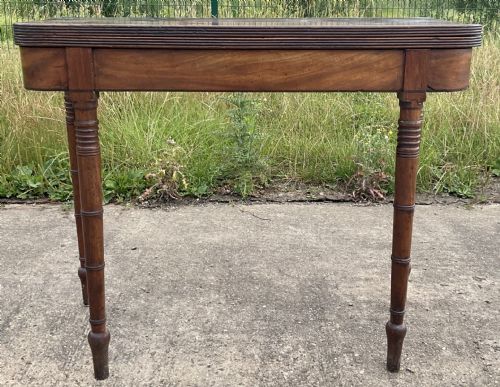
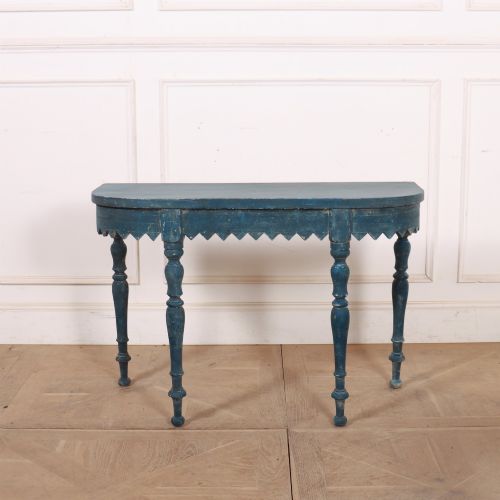
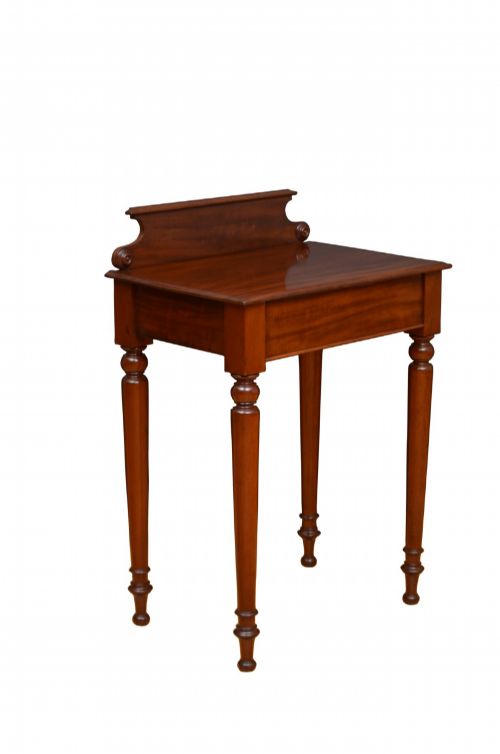


Turned Leg Entry Table
These turned leg entry table examples are sturdy hall furniture pieces designed to hold post and keys in a narrow passageway.
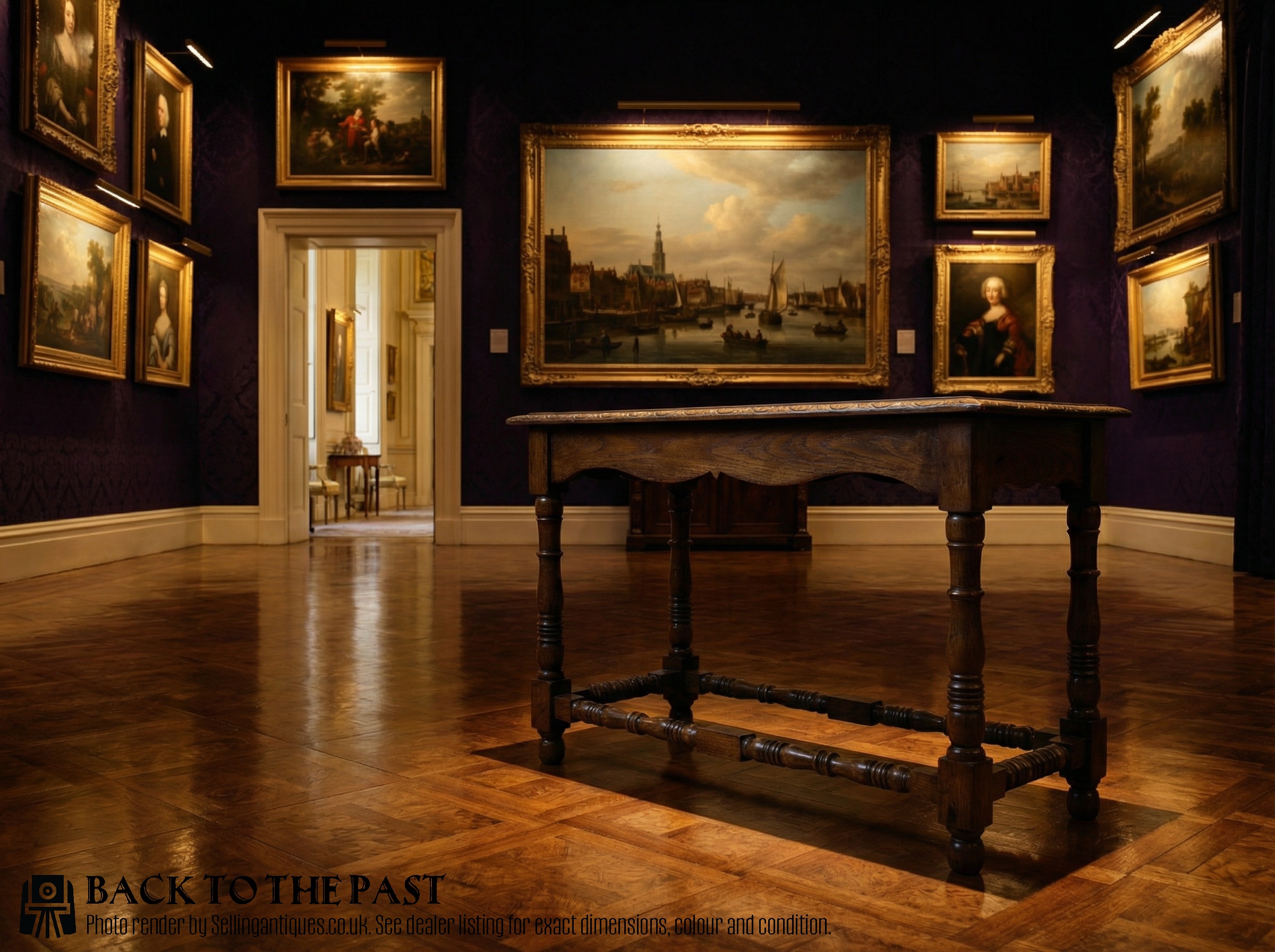
Turned Leg Entry Table
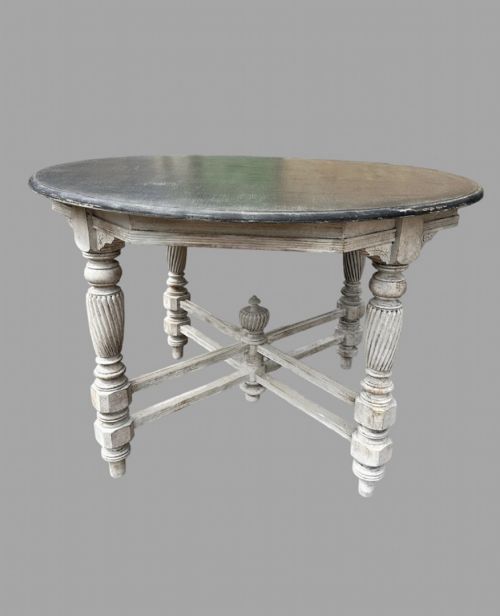
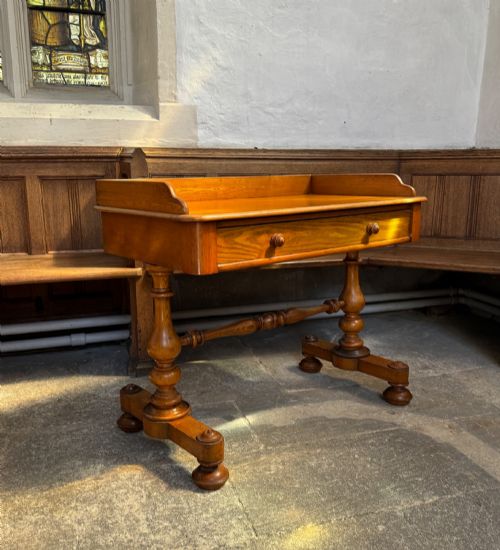
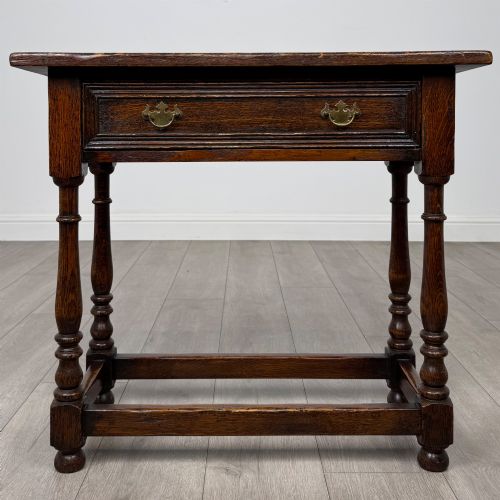
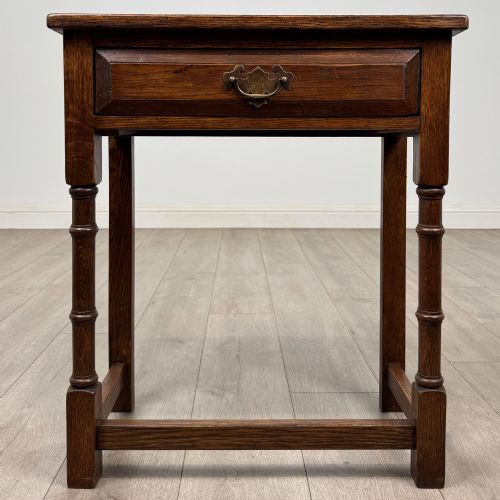
A turned leg entry table brings practical surface space to a narrow hallway, vestibule or reception area. The inventory spans several centuries and includes console tables, side tables, hall tables and washstands.
Victorian and Edwardian versions feature prominently alongside Georgian examples, utilising woods like mahogany, oak, pine and pitch pine. Many pieces incorporate single or double drawers for storage.
The form often overlaps with centre tables, foldover tea tables and bow front console tables. These pieces serve functional purposes in domestic entryways while displaying period timber characteristics.
Materials and construction
Cabinet makers utilised dense hardwoods such as mahogany and oak alongside softer timbers like pine and pitch pine. Selected pieces feature applied paint finishes or brass hardware.
Construction methods rely on traditional joinery techniques suited to domestic furniture of the Georgian, Victorian and Edwardian periods. Drawer linings and secondary woods demonstrate the period workshop practices of the era.
Pitch pine brings a wonderfully resinous coastal scent to any hallway long after the Victorian washstand has left the washroom.
Judging quality in turned leg entry table designs
Quality rests in the crispness of the timber turning, the integrity of the structural joints and the selection of figured mahogany or solid oak. Subtleties in proportion distinguish simpler country pieces from refined city cabinet work.
Original brass handles, sound drawer construction and untouched patination elevate certain examples above standard utilitarian items. The treatment of secondary timbers and the retention of original paint surfaces further separate examples.
Druce and Co
The Turned Leg Entry Table Glossary
- Console table
- A table designed to be fixed against a wall, frequently supported by brackets or legs at the front. These serve narrow spaces like hallways and reception rooms.
- Washstand
- A piece of bedroom or dressing furniture adapted over time for general hall use. They often share similar dimensions and turned supports with side tables.
- Pitch pine
- A resinous pine timber utilised during the 19th century for robust domestic furniture. It displays a prominent grain pattern.
- Foldover tea table
- A table featuring a hinged top that opens to double the surface area. Georgian examples frequently appear in mahogany.
- Bow front
- A convex curved cabinet front popular during the Georgian and Victorian periods. This shape softens the corners of narrow furniture.
Turned Leg Entry Table: Frequently Asked Questions
Where should a turned leg entry table go?
These tables fit naturally in narrow hallways, landings or reception spaces where floor space is limited. Their shallow depth allows them to sit flush against a wall without obstructing passageways.
They provide a convenient surface for post, keys and small lamps while establishing a focal point near the entrance of a home.
How do I identify a Victorian hall table?
Victorian examples often employ dense mahogany, pitch pine or honey oak with substantial turned legs. Look for characteristic 19th-century drawer construction and proportions suited to domestic hallways.
Many incorporate single drawers with brass or wooden pulls, reflecting the functional requirements of period households.
Can I use a washstand as a hall table?
Period washstands share identical dimensions with traditional side tables and fit well in narrow entryways. Their timber construction and turned supports match the aesthetic of dedicated hall furniture.
Buyers frequently repurpose these washstands for modern hallway use while retaining their original aesthetic character.
What is the difference between a console and a side table?
Console tables traditionally anchor against a wall and may rely on the wall for stability, whereas side tables stand independently on four legs. In modern listings, these terms often describe similar narrow furniture forms.
Both variants appear with turned legs and drawers suited to placement in hallways and reception rooms.