
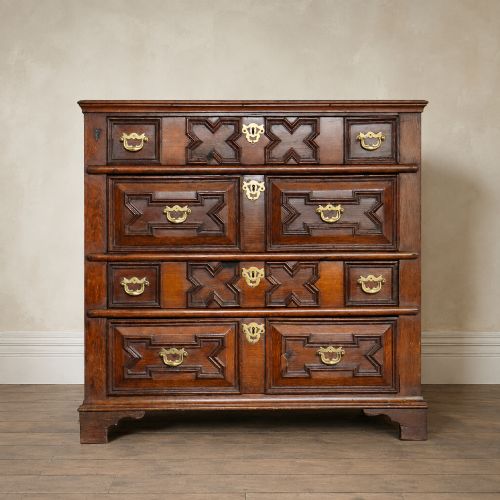
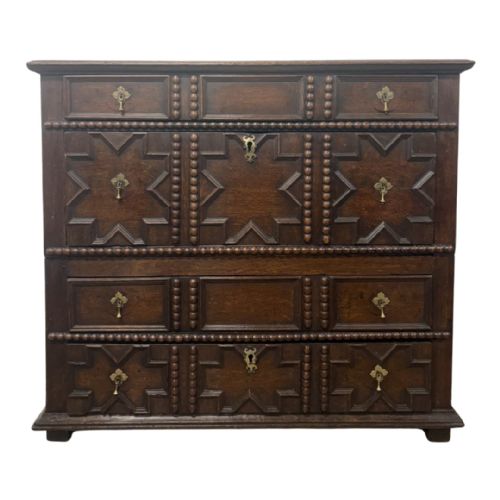
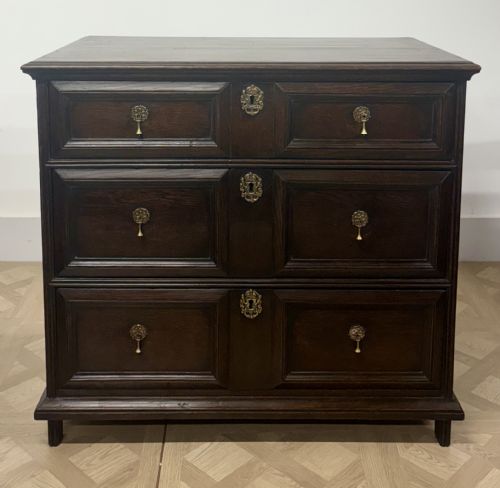
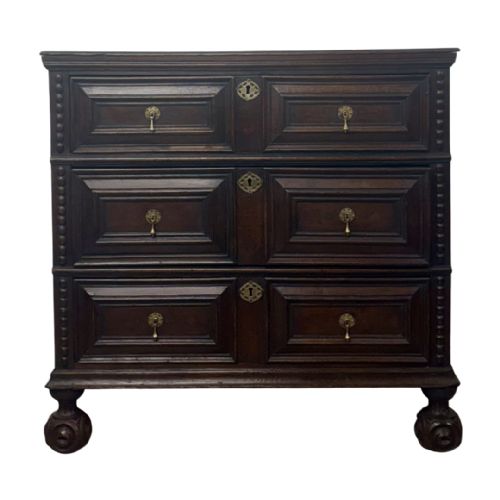
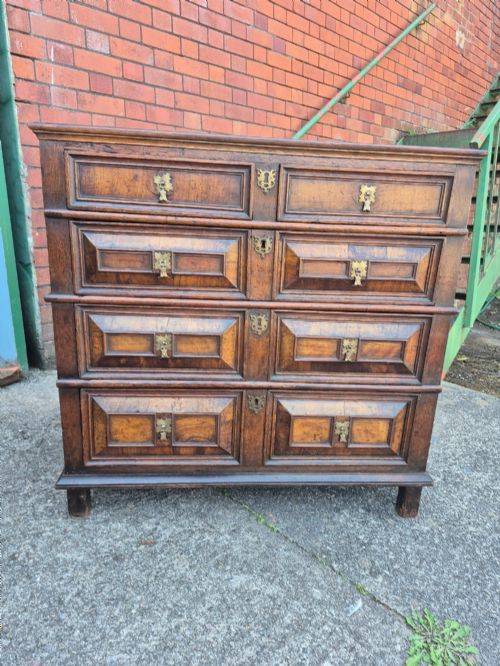

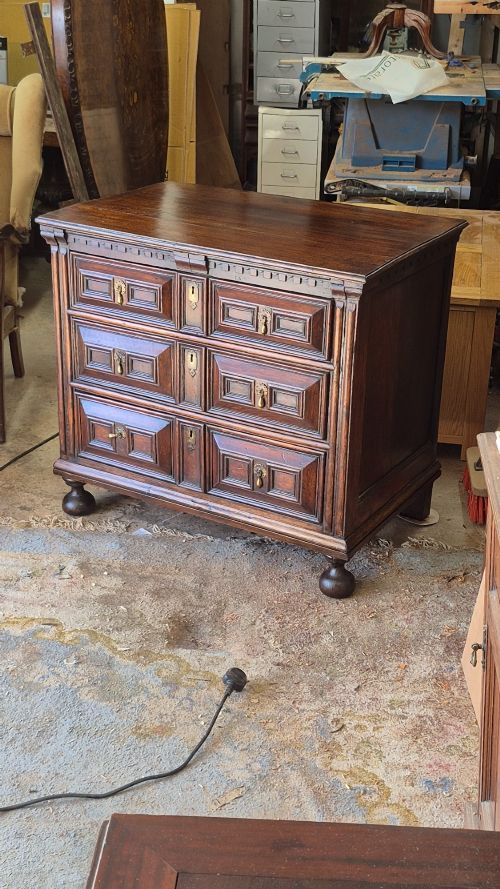
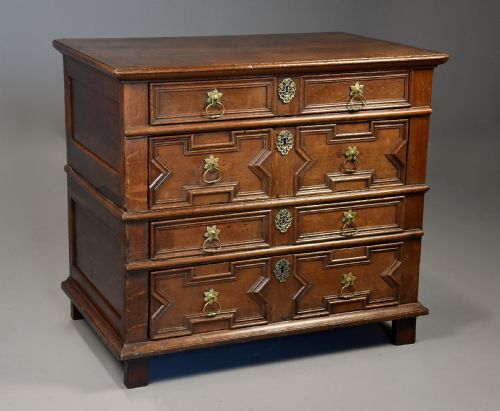
Jacobean Geometric Moulding Drawers
These jacobean geometric moulding drawers combine 17th-century craftsmanship with striking geometric drawer fronts, offering authentic storage for period interiors.
Jacobean Geometric Moulding Drawers
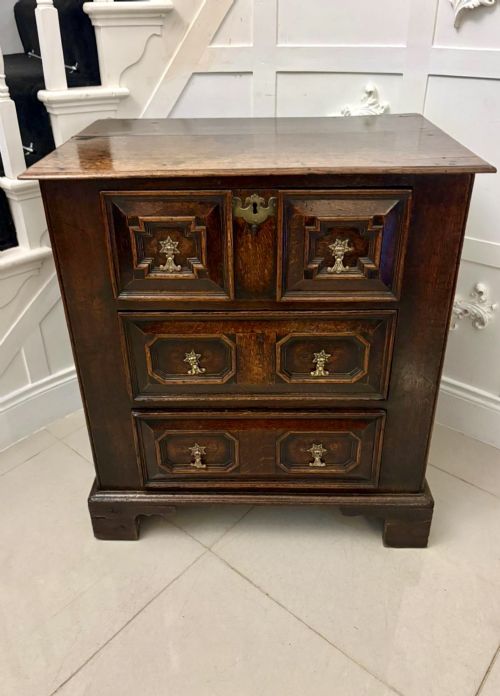
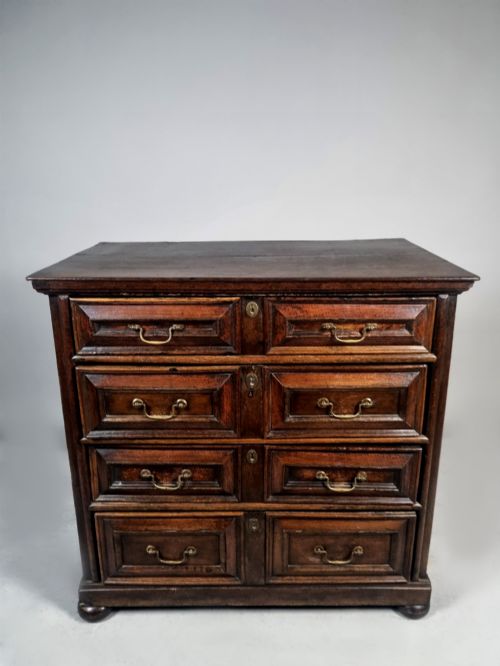
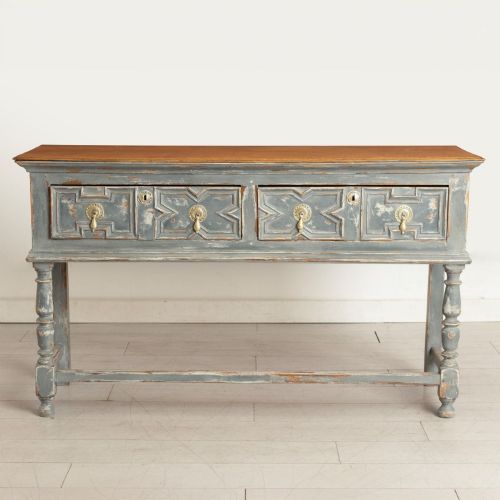
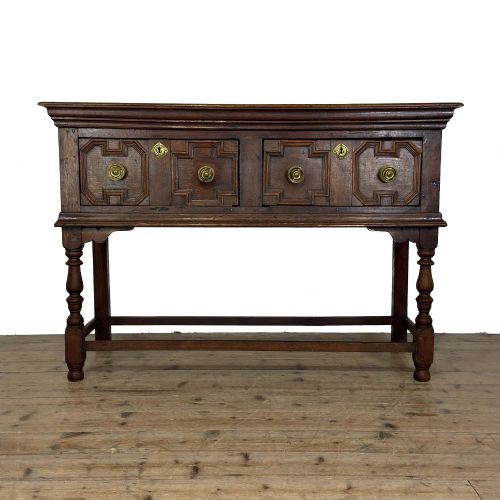
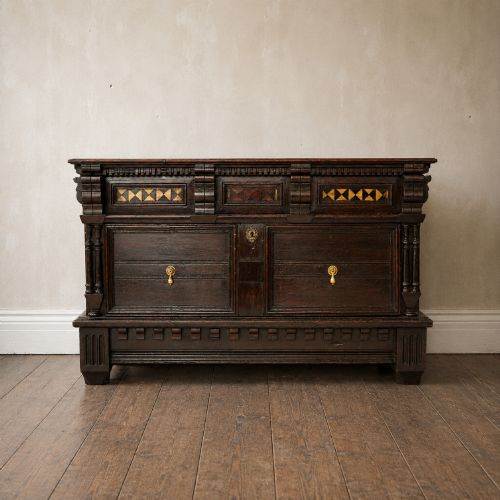
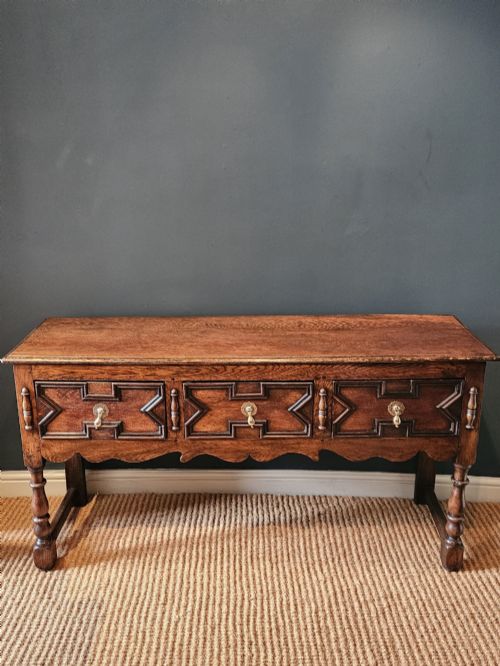
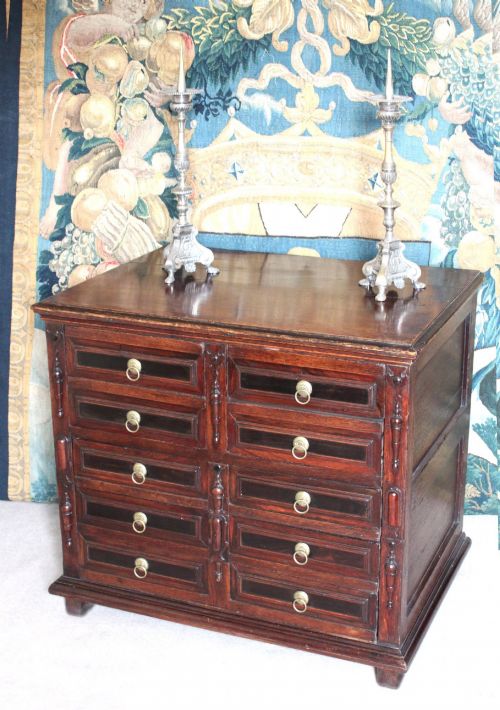
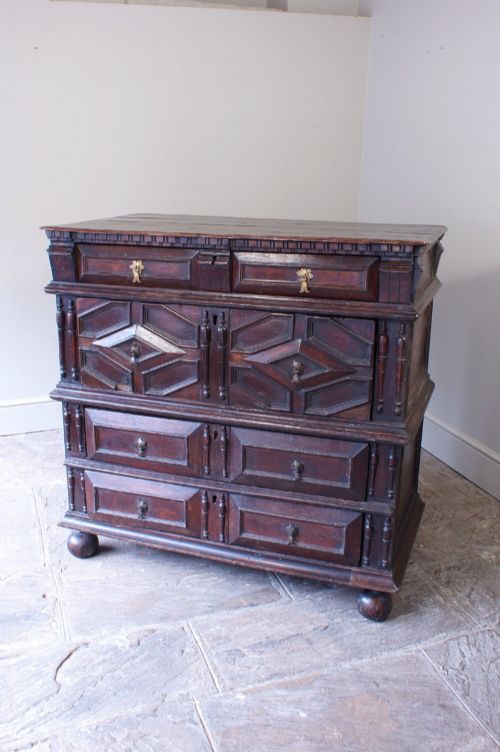
Jacobean geometric moulding drawers primarily appear as sturdy chests of drawers and dresser bases dating from the seventeenth century and the Charles II period. These pieces showcase applied timber mouldings arranged in geometric patterns across the drawer faces.
Buyers also encounter later interpretations, including pieces produced during the Georgian era and revival periods around nineteen hundred. Oak remains the predominant timber, occasionally accompanied by walnut, fruitwood, and oyster veneers.
How they were made
Cabinet makers constructed these pieces predominantly from solid oak, utilising panels and frames joined by traditional methods. Drawer fronts received their characteristic depth through applied mouldings of contrasting wood, sometimes incorporating walnut or fruitwood.
Hardware such as brass handles and iron fittings completed the construction, with many period examples retaining their original brasses.
Listings span multiple centuries, ranging from seventeenth-century originals and Georgian interpretations to twentieth-century revival pieces.
What varies in quality
Quality rests in the crispness of the geometric mouldings and the integrity of the timber. Examples retaining original brasses and a faded patina stand apart from pieces with extensive later alterations or replacement elements.
The choice of secondary timbers, such as walnut or snakewood decoration applied to the oak carcase, also distinguishes finer examples from standard workshop production.
The Jacobean Geometric Moulding Drawers Glossary
- Geometric moulding
- Applied strips of wood arranged in repeating geometric patterns on drawer fronts. This technique created visual depth and texture on seventeenth-century case furniture.
- Oyster veneer
- Thin cross-sections of branches or small logs arranged to resemble the pattern of oyster shells. This decorative surface treatment appears on select seventeenth-century pieces.
- Dresser base
- A low sideboard or table fitted with drawers beneath the top surface. These forms often share the moulded drawer fronts found on contemporary chests.
- Patina
- The surface sheen and colour developed by wood over centuries of handling and exposure to light. A faded patina indicates natural ageing without harsh chemical stripping.
Jacobean Geometric Moulding Drawers: Frequently Asked Questions
Are these drawers from the seventeenth century?
Many examples date directly to the seventeenth century and the Charles II period, constructed with traditional oak framing and hand-cut joinery.
Other pieces originate from later revival periods or the Georgian era, adopting the same distinct moulding styles.
What wood are these pieces made from?
Oak serves as the primary timber across the vast majority of these chests and dresser bases. Walnut, fruitwood, and oyster veneers appear as supplementary materials on specific geometric drawer fronts.
Metal components incorporate brass for drop handles and iron for internal fixings.
How do I care for an oak chest?
Keep wooden furniture away from direct heat sources and sudden humidity changes to prevent timber movement. Dust gently with a dry cloth and avoid modern silicone polishes.
Allow the natural wax or oil finish to maintain the surface over time.
What is a two-part chest?
A two-part chest consists of an upper and lower cabinet stacked together to form a single tall storage unit. This construction method helped transport heavy timber furniture safely.
Each section retains its own structural frame.