
Period Oak Storage Drawers
Period oak storage drawers bring centuries of functional craft into a room, offering sturdy timber housing for daily belongings.
Period Oak Storage Drawers
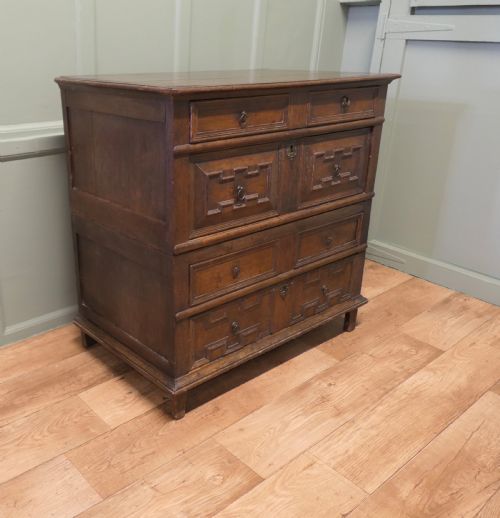
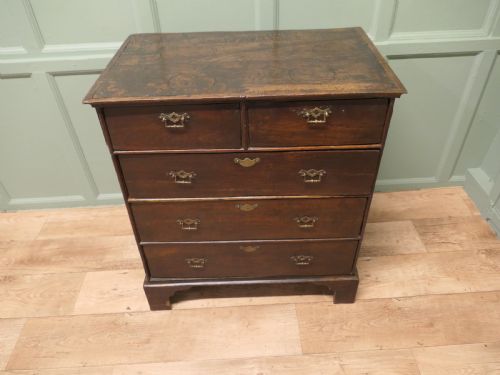
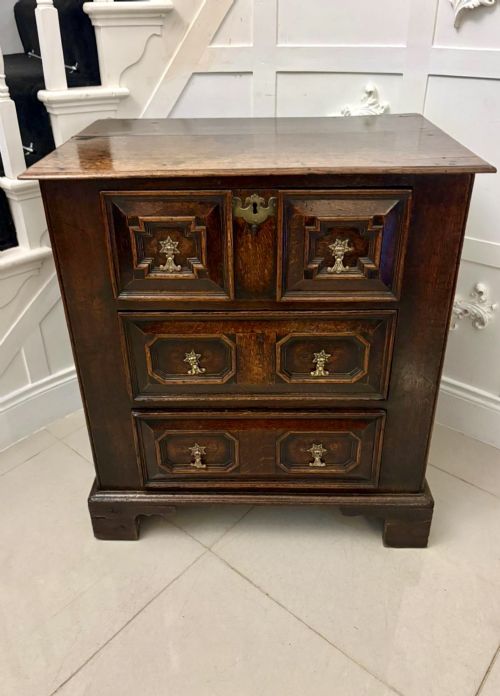
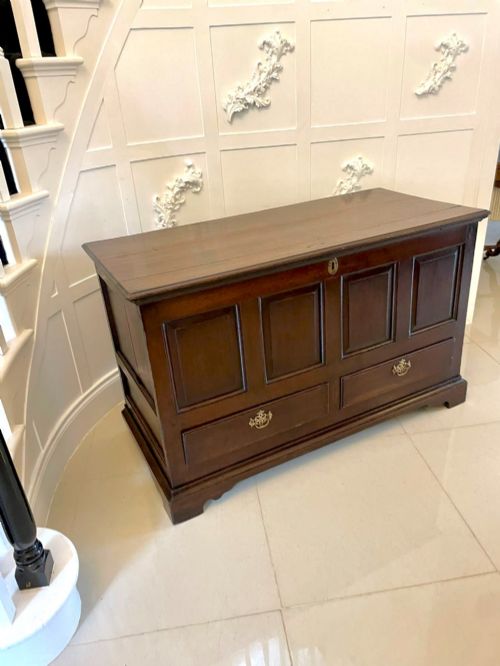
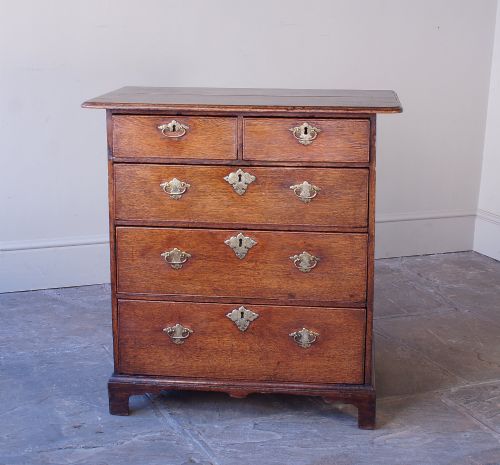
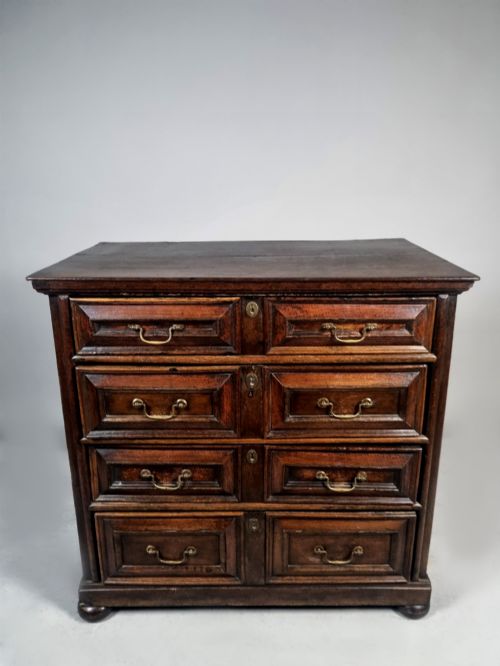
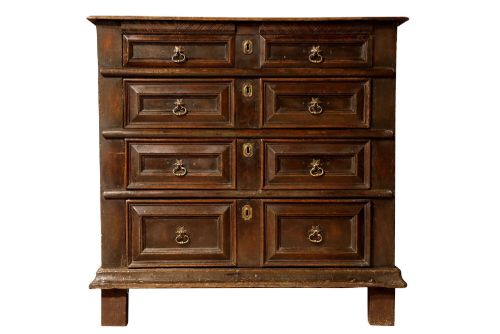
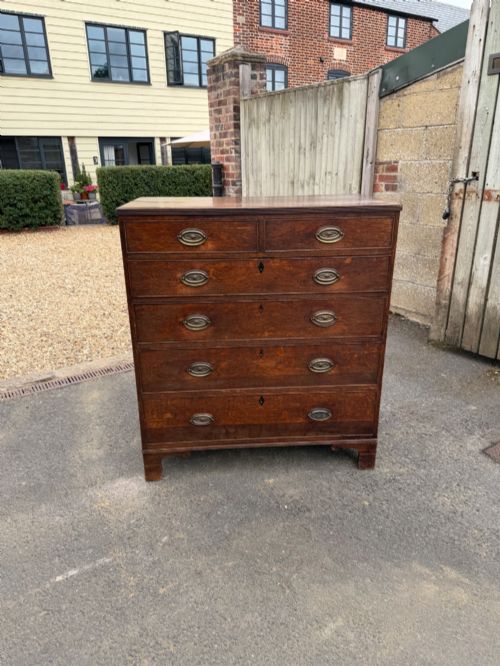
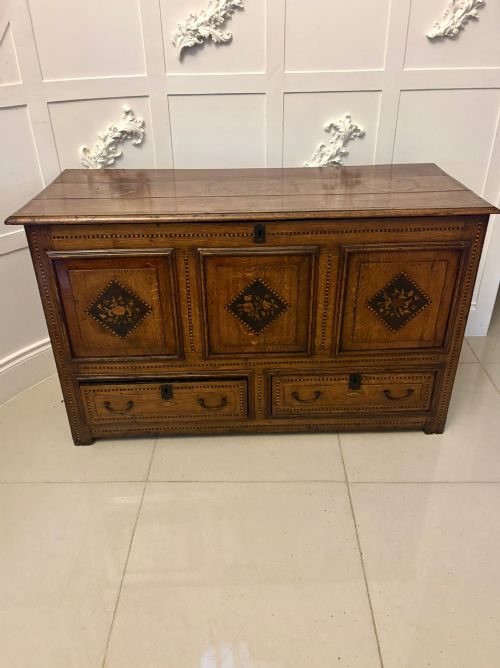
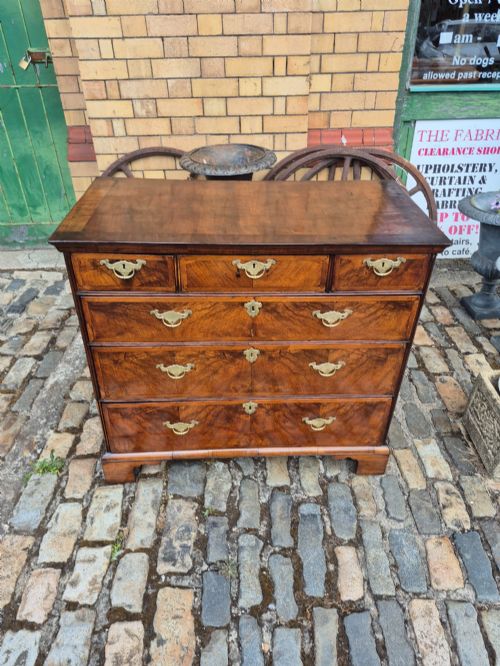
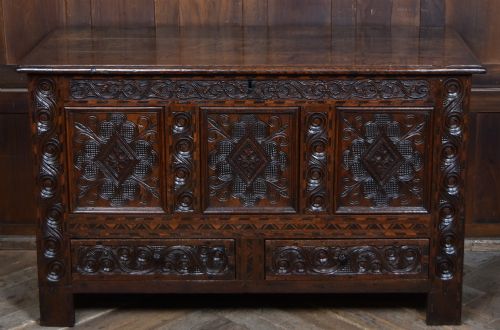
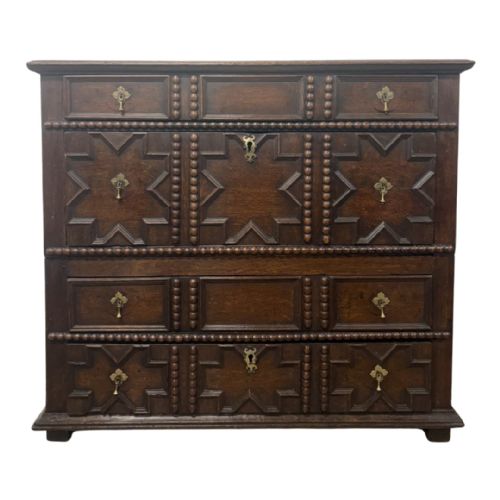
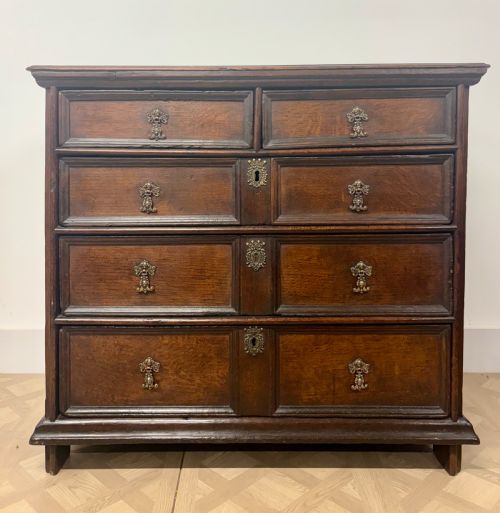
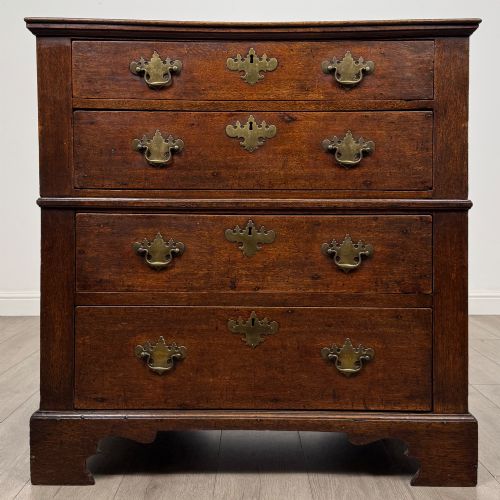
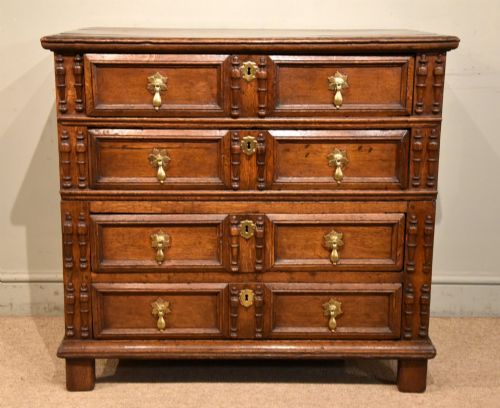
These items encompass period oak storage drawers ranging from seventeenth-century chests to eighteenth-century dressers and mule chests. Pieces span multiple eras including the Jacobean, Charles II, William and Mary, and Georgian epochs.
Originating largely from British workshops, the inventory reflects traditional regional furniture making across centuries of domestic use. Pieces demonstrate the evolution from early geometric fronts to later polished drawer configurations.
Distinctions in Quality
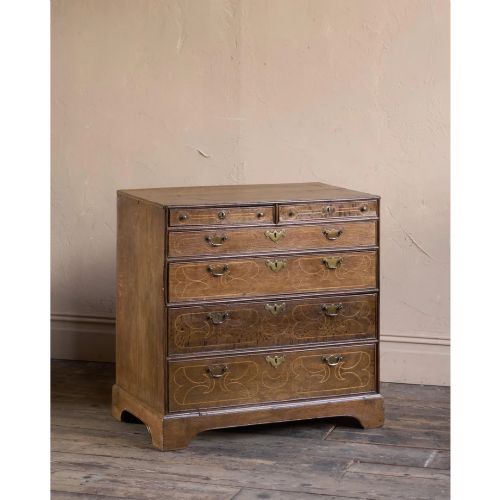
Differentiation across the range rests on the crispness of geometric mouldings and the complexity of inlay work. Finer examples display figured grain patterns and carefully preserved patinas developed over centuries.
Integrity of original brass handles and feet separates standard utilitarian pieces from highly finished cabinet work. The precision of joinery in drawer construction dictates the standing of an individual item.
Materials recorded across the inventory include solid oak, walnut, mahogany, brass, iron, and fruitwood inlay.
The Period Oak Storage Drawers Glossary
- Mule chest
- A storage chest featuring one or two drawers at the base beneath a hinged lid compartment. This form bridges the traditional coffer and the modern chest of drawers.
- Marquetry inlay
- Decorative patterns formed by fitting contrasting veneers into precise cutouts on the timber surface. Artisans used fruitwood and various coloured woods to build intricate geometric or floral designs.
- Geometric design
- Raised moulding applied to drawer fronts in repeating rectilinear patterns typical of seventeenth-century joinery. This technique created deep relief and visual shadow across the facade.
- Oyster veneer
- Thin circular slices cut transversely from small branches to produce concentric rings of grain. The technique appeared on high-status surfaces during the late seventeenth century.
- Cross-banding
- A border of veneer laid with the grain running perpendicular to the main panel. It frames drawer fronts on Georgian pieces to provide a neat decorative edge.
Period Oak Storage Drawers: Frequently Asked Questions
How do I date a seventeenth century oak chest?
Dating relies on examining construction methods, timber selection, and decorative motifs such as geometric mouldings or panel arrangements. Early pieces often utilise hand-split boards and pegged frame joints.
Hardware placement and lock mechanisms also provide chronological clues, alongside the presence of original brasses or ironwork characteristic of the period.
What is the difference between a coffer and a mule chest?
A coffer is a simple storage chest with a top-opening lid, whereas a mule chest incorporates one or more drawers beneath the main compartment.
This drawer addition evolved during the seventeenth and eighteenth centuries to allow access to stored items without lifting the heavy lid contents.
How do I care for antique oak furniture?
Maintain antique oak by keeping it away from direct heat sources and rapid humidity fluctuations which can cause timber to split. Regular dusting with a dry cloth preserves the finish.
Occasional application of traditional wax helps nourish the wood and maintain the historical patina without sealing the surface.
Can I use period drawers in a modern bedroom?
Period oak storage drawers offer deep timber compartments well suited for contemporary clothing and linen organisation. Their robust construction ensures daily domestic utility.
Placing these items in modern interiors creates a contrast of textures while providing practical storage capacity.