



Jacobean Fall Front Bureau
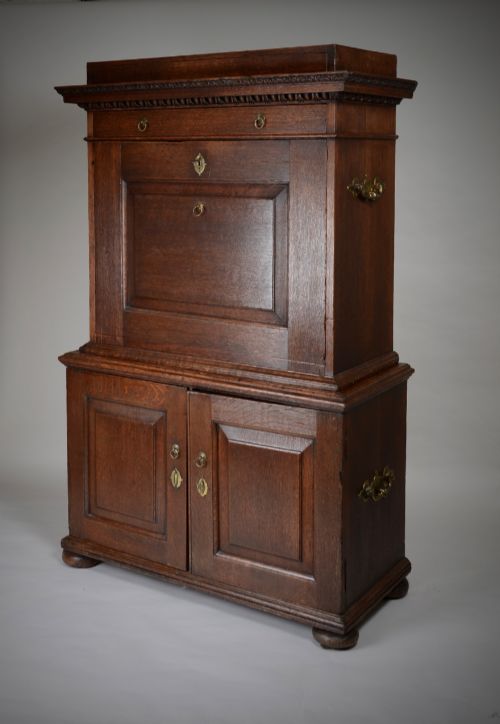
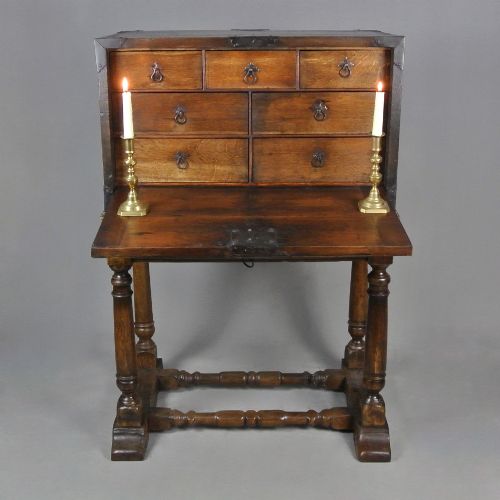
A jacobean fall front bureau brings sturdy construction and historical weight into a room, offering a sloping writing flap that drops down to reveal fitted internal compartments.
Jacobean Fall Front Bureau
A jacobean fall front bureau combines a sloping writing surface with concealed storage compartments, appearing across periods from the seventeenth century through to the early twentieth century. Buyers seeking this form will encounter genuine seventeenth-century examples alongside later revivals from the Edwardian era and the nineteen-twenties.
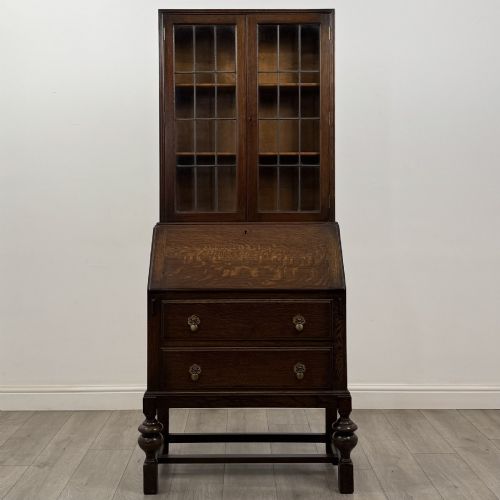
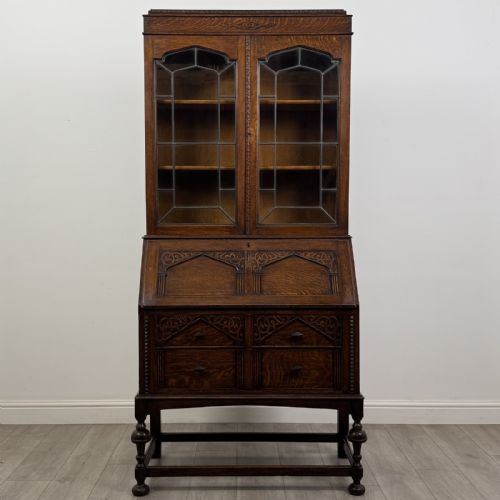
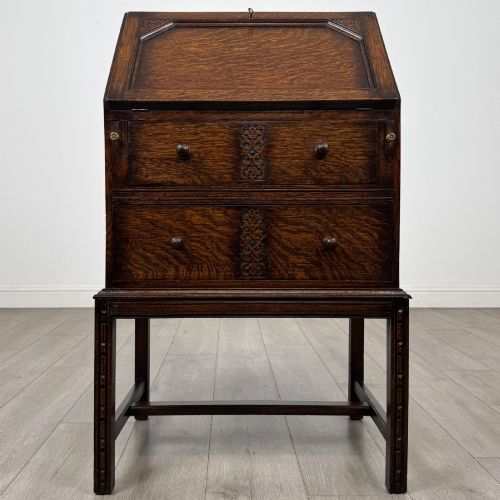
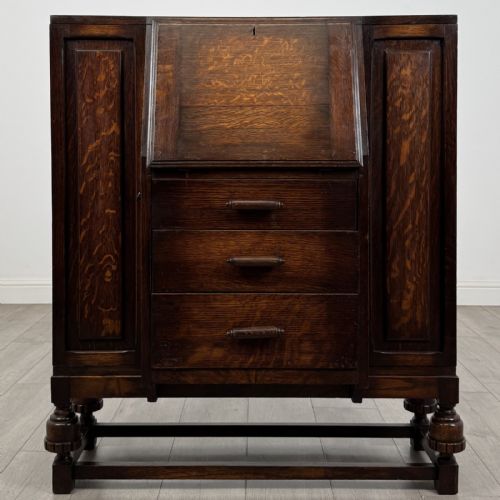
The prevailing form on this page is the Jacobean style oak bureau, often constructed as a bureau bookcase or writing desk. These pieces generally feature dark oak timber, fitted interiors, and occasionally side cupboards or carved detailing reflecting earlier craftsmanship.
Originating as practical writing furniture, these desks span centuries of cabinet-making traditions, including seventeenth-century pieces and later interpretations in solid oak and oak veneer. The selection balances early period items with robustly built twentieth-century revivals.
Materials and construction
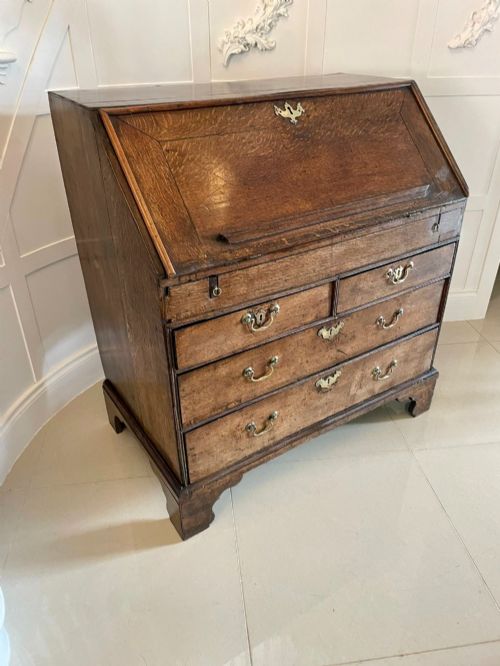
Construction relies heavily on oak, utilising solid timber alongside oak veneer to build the main bodies and writing flaps of these desks. Cabinet-makers incorporated brass handles, glass panels in bookcase sections, and wrought iron hardware to complete the pieces.
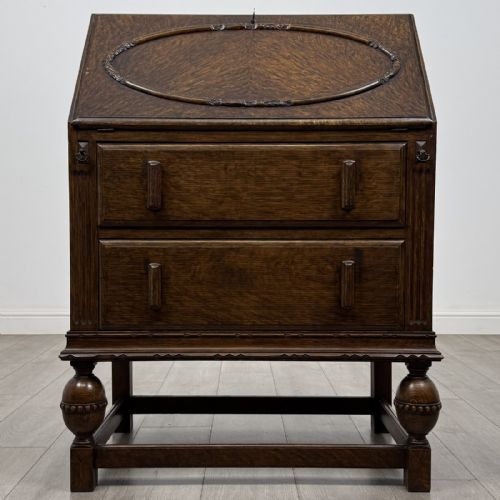
Wood inlay and surface carving frequently embellish the exterior panels, particularly on revival pieces from the early twentieth century. Interiors are systematically fitted with small drawers and pigeonholes to organise writing materials and correspondence.
Jacobean Fall Front Bureau Retail Price Guide 2026
Typical asking prices for jacobean fall front bureau among the pieces listed under this phrase on Sellingantiques today, from the lower quarter to the upper quarter. They describe what is for sale here now, not the wider market.
Listings feature pieces spanning from the seventeenth century through Edwardian times and into the nineteen-twenties, constructed in oak with glass and brass elements.
Grading quality and craftsmanship
Quality separates period originals from later revivals through the depth of timber grain, the crispness of hand-carving, and the complexity of the internal fittings. Superior examples demonstrate exceptional internal arrangement and heavier solid oak construction.
The integrity of the fall front mechanism and the quality of the wood veneer influence the overall execution. Pieces designated as superior or outstanding display careful attention to detail in their joinery and fitted compartments.
The Jacobean Fall Front Bureau Glossary
- Fall front
- A hinged writing flap that drops down to provide a horizontal surface for writing. When closed, it conceals the fitted interior and vertical pigeonholes.
- Bureau bookcase
- A combination furniture form featuring a writing bureau base beneath an upper glazed cabinet for books. These taller pieces offer expanded storage and display space.
- Jacobean Revival
- A nineteenth and twentieth-century style that copies the heavy proportions, dark finishes, and geometric paneling of seventeenth-century English furniture. Makers utilised these older motifs to create substantial domestic desks.
- Fitted interior
- The collection of small drawers, secret compartments, and pigeonholes revealed when the fall front is lowered. This internal arrangement organises letters and small documents.
- Oak veneer
- A thin layer of oak timber applied over a secondary wood base to provide a decorative surface figure. This technique allows for striking grain patterns on flat panels.
Jacobean Fall Front Bureau: Frequently Asked Questions
What is a fall front bureau?
A fall front bureau is a writing desk with a hinged flap that pulls down to serve as a desk surface. This design hides internal compartments when closed.
Such desks were used for correspondence and record-keeping, keeping personal papers secure and out of sight.
How do I date an oak bureau?
Dating relies on examining construction methods, wood types, and decorative styles like carving or inlay. Seventeenth-century pieces show distinct hand-tool marks and timber ageing compared to twentieth-century revivals.
Hardware styles and secondary woods also provide clues to the exact period of manufacture.
Where should I place a bureau bookcase?
A bureau bookcase requires sufficient wall space and clearance in front to allow the writing flap to drop down fully. Placing it in a study, library, or living room keeps the desk functional.
Avoid positioning the piece in direct sunlight to protect the dark oak finish and any wood veneer.
How do I maintain an oak writing desk?
Maintaining an oak writing desk involves dusting regularly with a dry cloth and occasionally applying suitable furniture wax to nourish the timber. Keeping the environment stable prevents the wood from drying out or cracking.
Hardware such as brass pulls and hinges should be left untouched unless mechanical adjustment is necessary.