


Jacobean Chair Table
These jacobean chair table pieces are versatile convertible oak seat furniture designed to double as a table when needed.
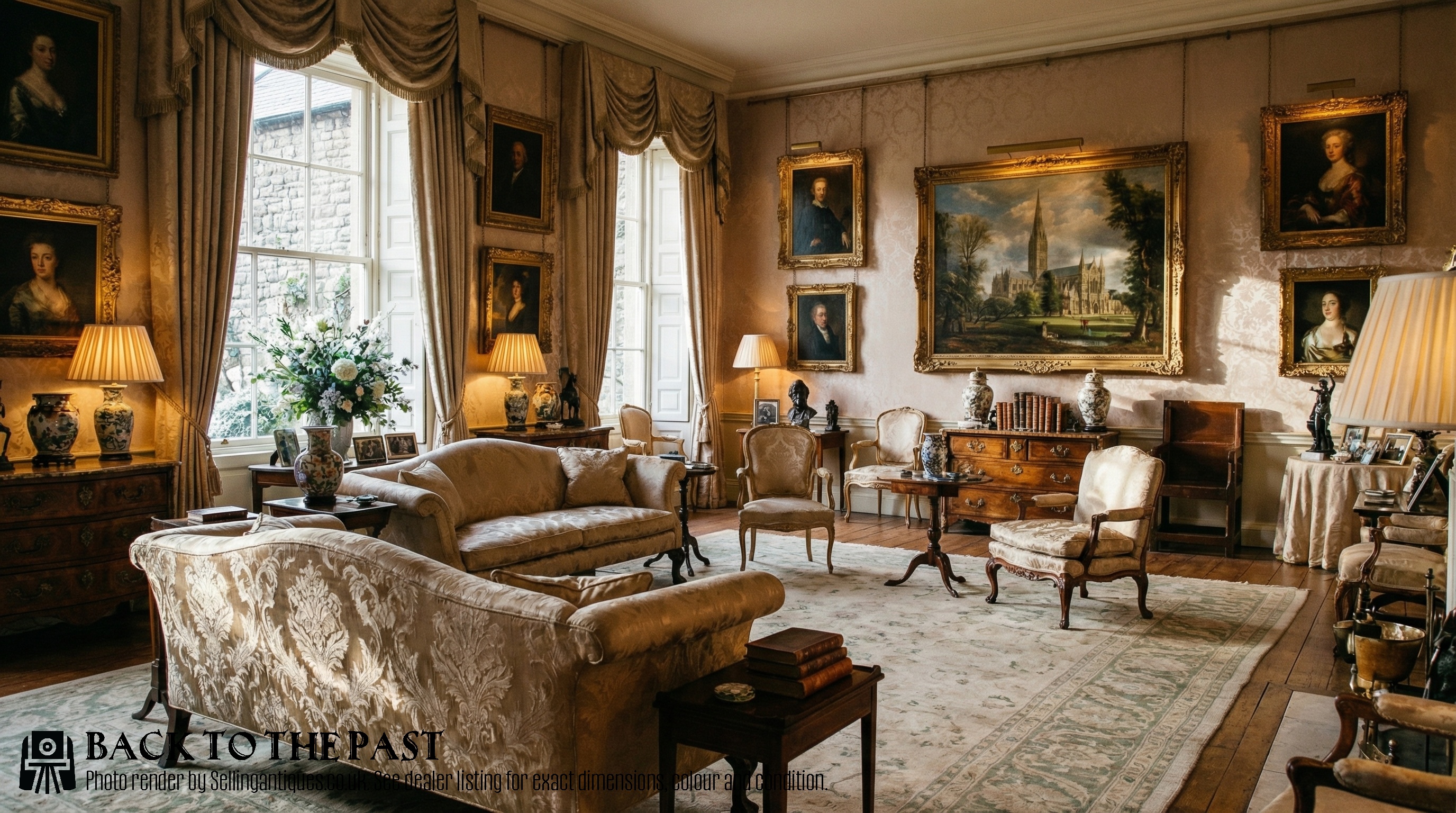
Jacobean Chair Table
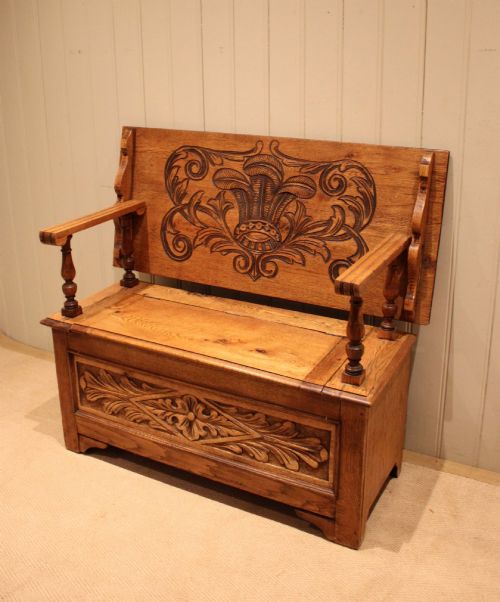
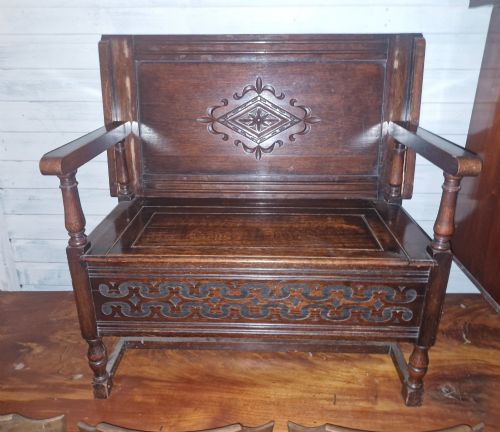
A jacobean chair table serves as an ingenious dual-purpose item, functioning primarily as a sturdy seat with a high back that tilts forward to form a flat table surface. The selection spans authentic seventeenth-century examples alongside revival pieces produced during the Victorian and Edwardian eras.
Materials and construction
Solid oak forms the primary structural material across these pieces, frequently paired with iron hardware such as hinges and brackets to facilitate the tilting tabletop mechanism. Carpenters relied on traditional joinery methods to ensure the frame endured the constant transition between seating and table modes.
Surface decoration relies on hand-carved panels, moulded edges, and turned legs executed in styles ranging from seventeenth-century vernacular to later revival interpretations.
Early craftsmen engineered these benches so dinner could be served directly off the back of the chair.
Judging quality and execution
Quality reveals itself in the integrity of the timber selection and the precision of the pivoting mechanism that converts the backrest into a table surface. Superior pieces exhibit crisp, hand-executed carving on the panels rather than shallow, machine-routed decoration.
The weight and stability of the frame during transformation indicate a higher standard of original carpentry, distinguishing master-built seating from simpler utilitarian items.
The Jacobean Chair Table Glossary
- Monks Bench
- A form of dual-purpose seating featuring a hinged back that folds down over the arms to create a table. This clever space-saving design remained popular from the seventeenth century through to the twentieth-century revival periods.
- Metamorphic
- Furniture engineered to transform from one functional object into another, such as a chair converting into a table. The term covers any piece with an integrated mechanical or pivoting shift in form.
- Refectory Table
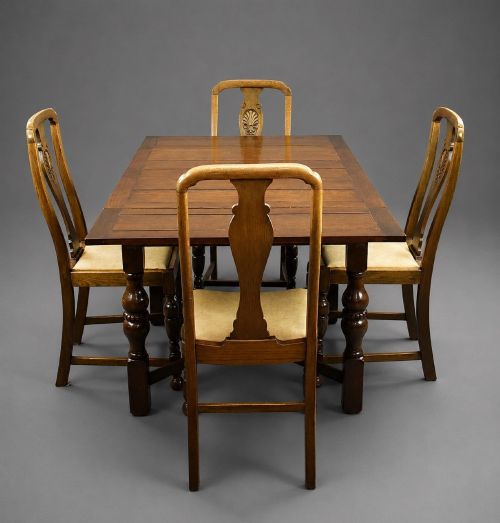
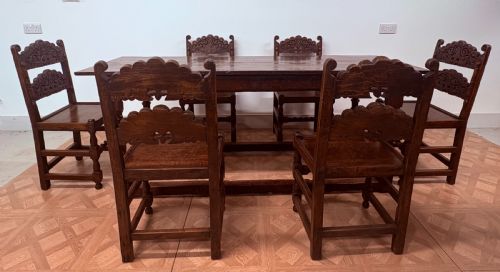
- A long dining table traditionally used in communal dining halls and constructed from solid timber with sturdy stretcher bases. Revival versions frequently accompany matching dining suites in the listings.
- Jacobean Revival
- A nineteenth and early twentieth-century design movement that reinterpreted the robust forms, dark oak surfaces, and carved ornamentation of the early seventeenth century. Makers utilised these historical motifs for Edwardian dining sets and hall furniture.
Jacobean Chair Table: Frequently Asked Questions
What is a chair table?
A chair table is a piece of convertible furniture where the wooden backrest tilts forward on pivots to rest upon the armrests, creating a flat surface for dining or writing.
In its upright position, the item serves as an enclosed armchair or hall bench, offering hidden storage beneath the lift-up seat in many instances.
How do I date a piece?
Dating relies on examining the timber grain, tool marks, ironwork fixings, and overall style relative to the documented periods spanning from the seventeenth century to the early twentieth century.
Revival pieces from the Victorian and Edwardian eras often display softer patination and standardised mechanical joints compared to seventeenth-century originals.
Are these comfortable to sit in?
These wooden seats were built for utility and durability rather than plush lounging, featuring solid timber panels and high upright backs.
Many users add loose cushions or pads to the seat base for daily domestic comfort while retaining the historical aesthetic.
Where should I place one?
A chair table functions well in a hallway, entryway, or living space where its dual nature provides both a seating area and a compact tabletop surface.
Because the back must tilt forward fully to convert, position the piece with adequate clearance in front to allow the transformation.