
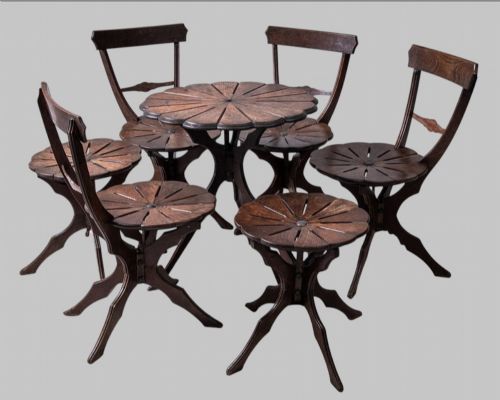


Dark Oak Table Chairs
Dark oak table chairs bring heavy timber and sturdy construction into domestic spaces, offering both seating and surface from centuries past.
Dark Oak Table Chairs
When you search for dark oak table chairs, you encounter a mix of functional seating and multi-purpose furniture designed for domestic use. The pieces span periods from the seventeenth century through the Edwardian era, Victorian times, and the nineteen-twenties and thirties.
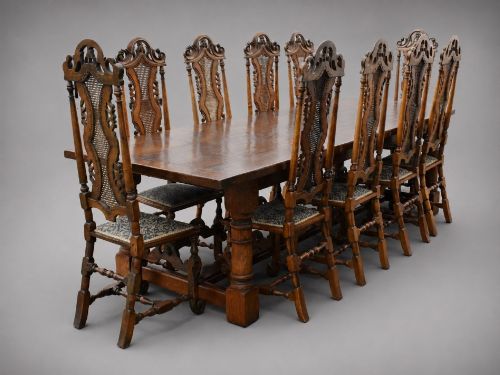
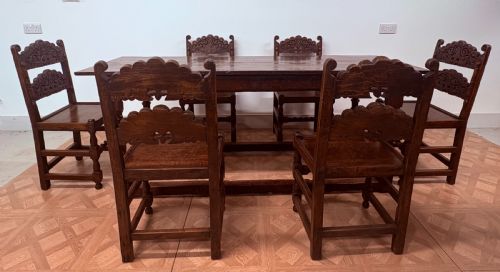
You are most likely to meet monks benches, dining sets, chair tables, and hall seats on this page. These forms range from large refectory dining tables with high-back chairs to compact convertibles that double as tables and seats.
The aesthetic draws heavily on traditional British and European styles, incorporating Jacobean Revival, Gothic Revival, and Alpine Folk Art influences. Dark oak forms the core material across almost every listed item.
How they were made
Makers utilised solid oak as the primary structural timber, often shaped and joined by hand with traditional framing techniques. Timber surfaces received carving, paneling, and darkening treatments to accentuate the grain.
Secondary materials such as iron, brass, leather, fabric, cane, and upholstery appear on seats, hinges, and decorative elements. These components support the heavy wooden frames and provide functional movement or comfort.
Some seventeenth-century chair-tables allowed the head of the house to sit in comfort while keeping the tabletop safely tilted away from stray tankards.
What varies in quality
The standard of carving and timber selection dictates the distinction between standard items and finer examples. Deep, crisp hand-carved detailing on backrests and panels shows greater maker skill than shallow machine work.
The integrity of the timber and the retention of original hardware, such as brass fittings and iron mechanisms, influence the character of each piece. Surviving upholstery or cane work also marks out better-preserved historic examples.
The Dark Oak Table Chairs Glossary
- Monks Bench
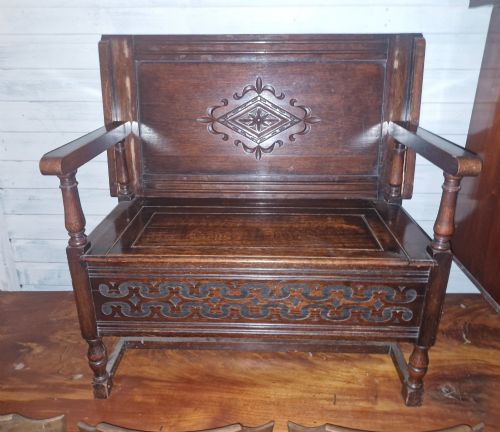
- A multi-functional piece of furniture featuring a hinged top that converts a seat back into a table surface. These often include a lift-up seat storage compartment.
- Refectory Table
- A long, narrow dining table traditionally used in monastic dining halls and later adopted in domestic English houses. They utilise heavy oak legs connected by low stretchers.
- Chair-Table
- An early form of convertible furniture where a large chair back folds down flat over the arms to form a table top. Surviving examples date back to the seventeenth century.
- Jacobean Revival
- A nineteenth and early twentieth-century style imitating the heavy, geometric carved oak furniture of the early seventeenth century. It utilises dark finishes and symmetrical strapwork motifs.
- Draw Leaf Table
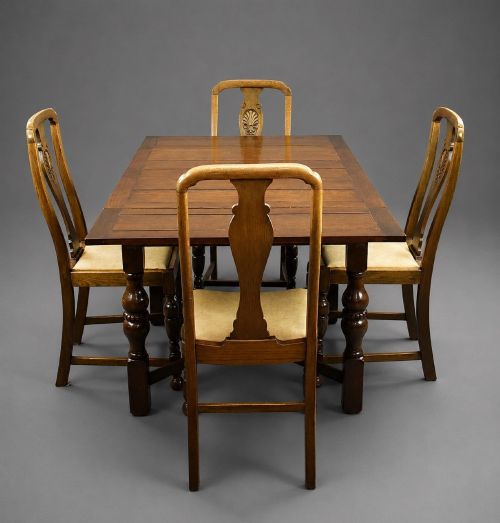
- A dining table with pull-out leaves stored beneath the main top that extend the surface area when needed. This mechanism allows a compact table to accommodate larger dining groups.
Dark Oak Table Chairs: Frequently Asked Questions
What is a monks bench?
A monks bench is a dual-purpose wooden seat with a hinged back that folds down flat to create a small table surface. Many versions include a cavity beneath the lift-up seat for storing household goods.
These versatile items served utility rooms, hallways, and living spaces in traditional homes. They provide both a compact seating option and an occasional surface without requiring separate furniture pieces.
How do I date dark oak furniture?
Dating dark oak furniture involves examining construction methods, joint types, hardware, and stylistic carving motifs. Seventeenth-century pieces typically show pegged mortise and tenon joints with hand-planed timber surfaces.
Later Victorian and Edwardian revival items often incorporate machine-cut elements, brass hinges, and historical revival styles. Comparing the wear patterns and timber oxidation helps confirm the age of the piece.
Can I use a refectory table daily?
Refectory tables use heavy solid oak construction designed for continuous dining and domestic utility. Their robust frames handle daily use well when placed in stable indoor environments.
Maintaining the wood with appropriate wax or oil prevents the surface from drying out. Protecting the timber from excessive moisture keeps the historic finish intact over time.