




Ivory Porcelain Jar
An ivory porcelain jar brings understated Victorian and Edwardian elegance to a room, offering tactile warmth through soft cream glazes and gilding.
Ivory Porcelain Jar
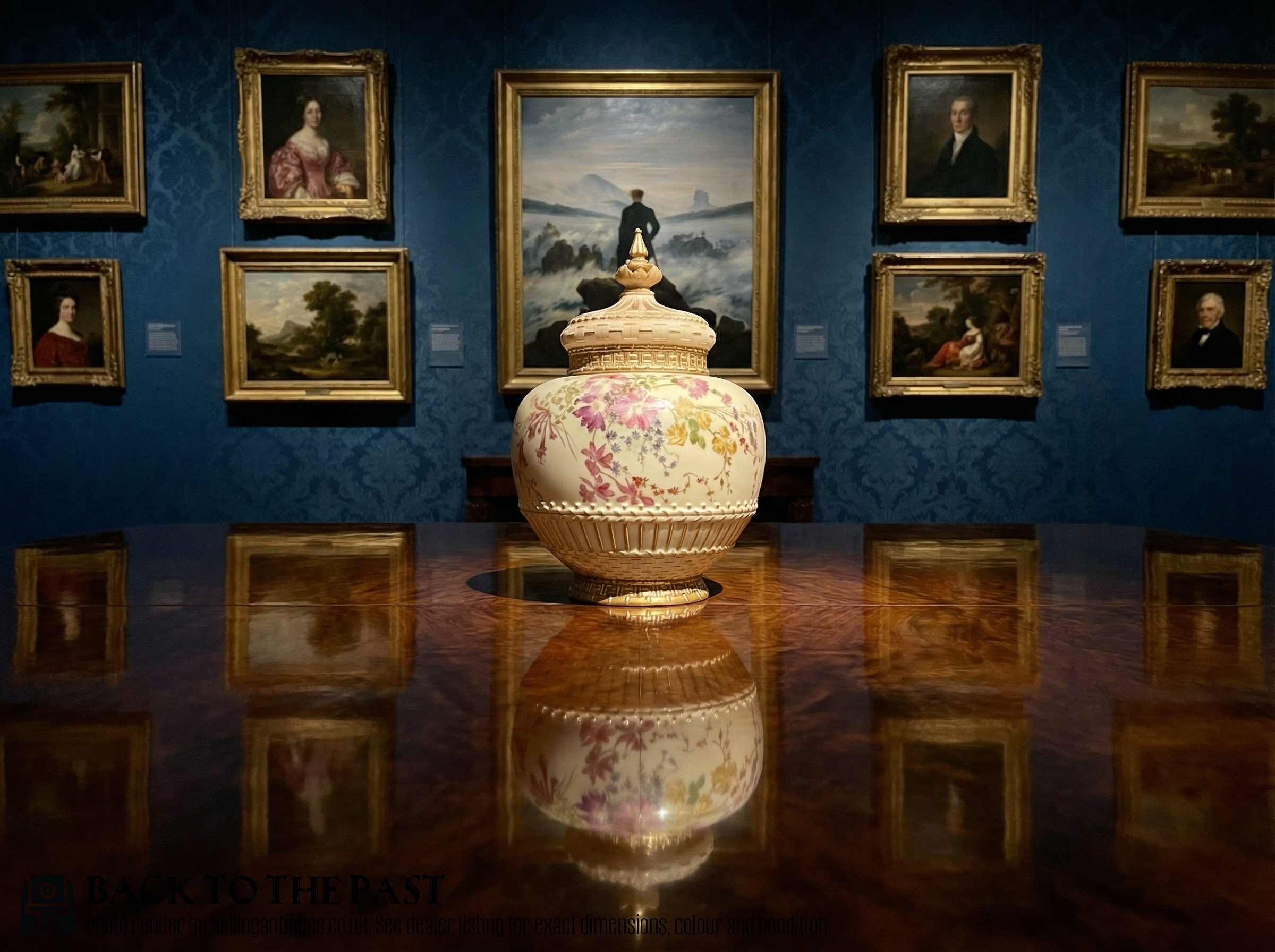
When you search for an ivory porcelain jar, you encounter lidded vessels, potpourri pots, and biscuit barrels created across the Victorian and Edwardian eras. These pieces typically take the form of ovoid jars, pedestal vases, and lidded urns designed for display or domestic use.
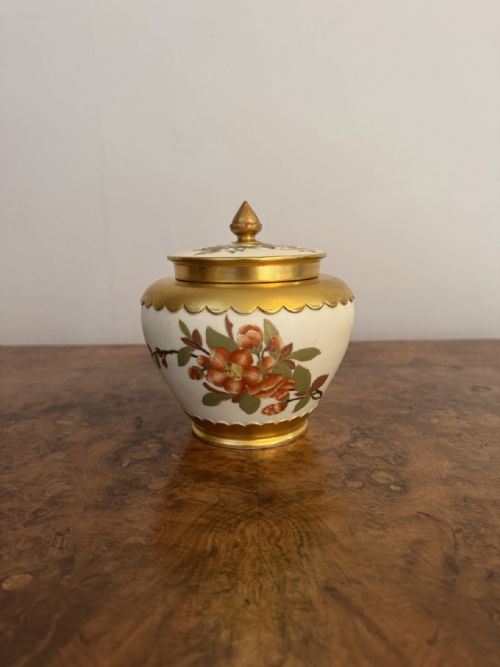
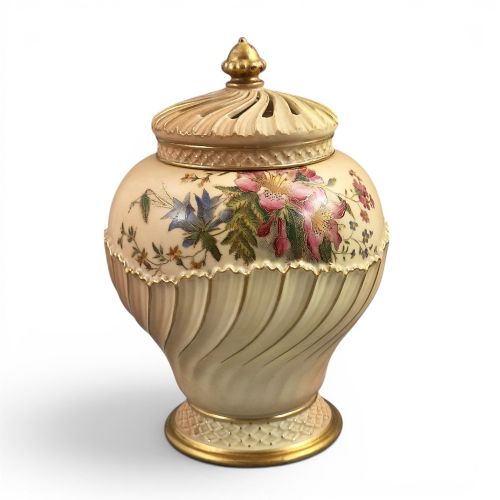
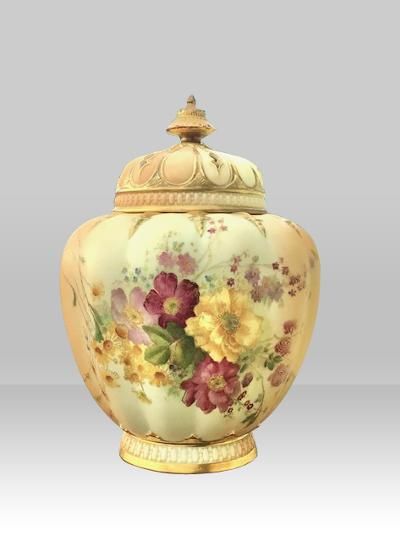
The version you meet most often on this page is the Royal Worcester blush ivory jar from around 1900 to 1910, often complete with its crown cover. These creations frequently feature hand-painted florals, gilding, and specific shape numbers that define their origin.
How they were made
Potters shaped these vessels from ceramic and porcelain bodies, applying soft ivory glazes that created a characteristic matte or satin ground. Artisans then hand-painted botanical motifs, predominantly roses, directly onto the porous ceramic surface.
Makers finished the pieces with gilding, gold leaf, and enamel highlights, often pairing the porcelain with silver plate mounts on functional items like biscuit barrels. Lidded jars and potpourri pots received pierced crown covers to allow scented contents to diffuse.
Some potpourri jars feature pierced crown covers designed to let out the scent of dried rose petals.
What varies in quality
The distinction between standard production and top work lies in the hand-painted artistry and the crispness of the porcelain moulding. Pieces bearing signatures from notable artists command greater attention due to the individuality of the brushwork.
Preservation of the delicate blush ivory glaze and intact gilding determines the standing of a jar. The presence of original matching covers and pierced lids elevates the integrity of the piece.
Royal Worcester·Crown Devon
The Ivory Porcelain Jar Glossary
- Blush ivory
- A softly tinted cream porcelain glaze developed by potteries to mimic the warmth of real ivory. This finish provided a muted background for floral painting and gilt highlights.
- Potpourri jar
- A lidded vessel pierced to release the fragrance of dried flowers and spices kept within. These jars often featured intricate crown covers.
- Biscuit barrel
- A covered ceramic container used on the dining table to store dry biscuits. They frequently incorporated silver plate mountings and handles.
- Gilding
- The application of gold leaf or gold paint to ceramic surfaces for decorative emphasis. It outlines panels and highlights moulded details on Victorian wares.
- Ovoid
- An egg-shaped form frequently utilised for decorative jars and vases. This silhouette balances stability with curved grace.
Ivory Porcelain Jar: Frequently Asked Questions
What is an ivory porcelain jar used for?
These jars were primarily designed to hold scented potpourri or biscuits in the Victorian and Edwardian drawing room. Today, collectors use them as decorative mantel or table centerpieces.
Their lidded forms make them versatile display objects that bring period character to traditional and contemporary interiors alike.
How do I date an ivory porcelain jar?
Dating relies on maker backstamps underneath the base, shape numbers, and stylistic markers such as the blush ivory glaze popular around 1900. Victorian and Edwardian examples often carry impressed or printed codes specific to the pottery.
Matching the floral style and artist signatures helps narrow down the decade of production.
What does blush ivory mean?
Blush ivory refers to a specific matt cream ceramic ground introduced in the late nineteenth century. It provides a warm, non-reflective surface that enhances painted floral decorations.
Potteries utilised this finish to evoke the appearance and tactile quality of genuine elephant ivory.
Are these jars fragile?
As ceramic and porcelain antiques, these jars require careful handling, particularly around pierced crown covers and delicate handles. The fine earthenware bodies and applied gilding can chip if bumped against hard surfaces.
Displaying them away from high-traffic areas protects the painted glaze from accidental damage.