
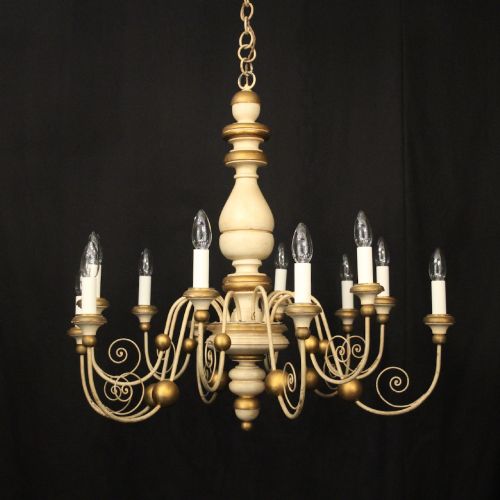
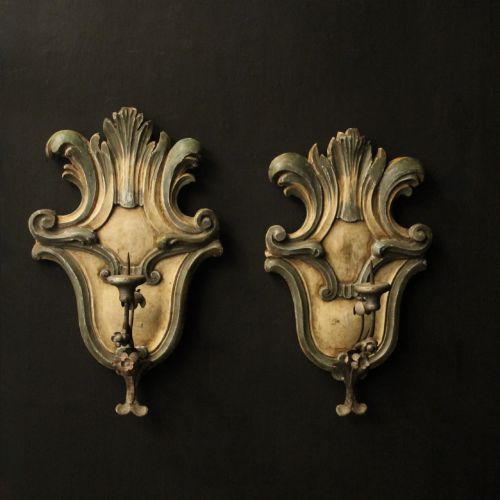
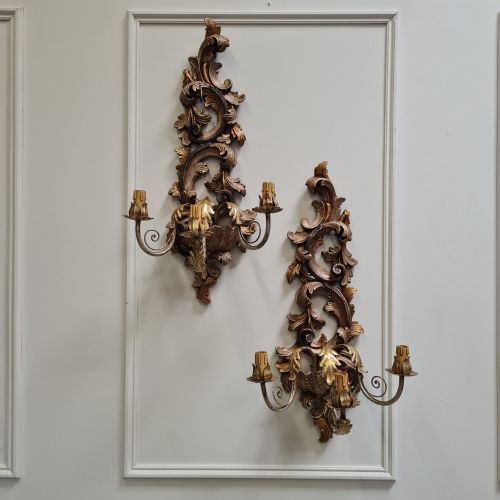
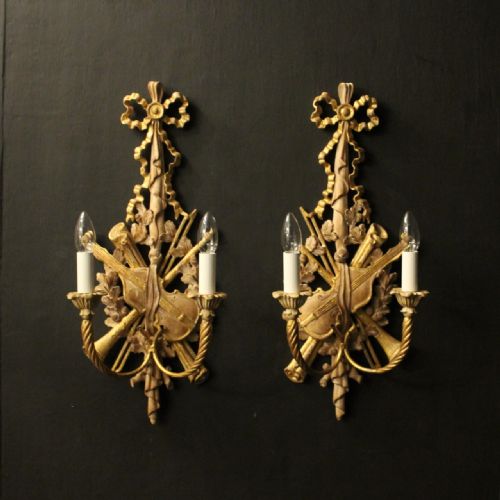


Italian Wooden Light
When you search for an italian wooden light, you find carved and gilded pieces that bring warmth and historic craft to a room.
Italian Wooden Light
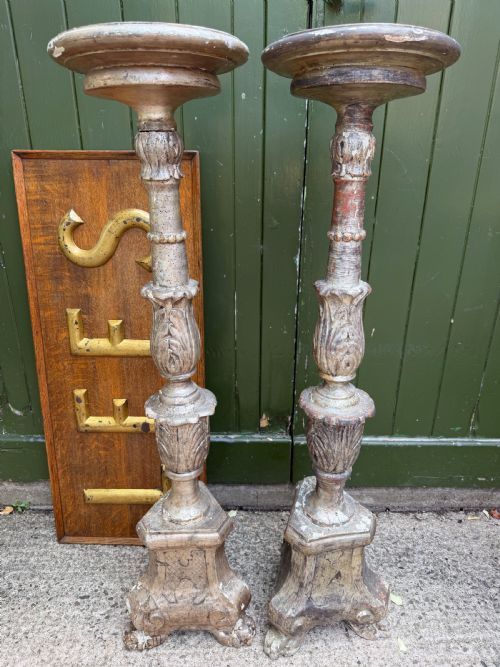
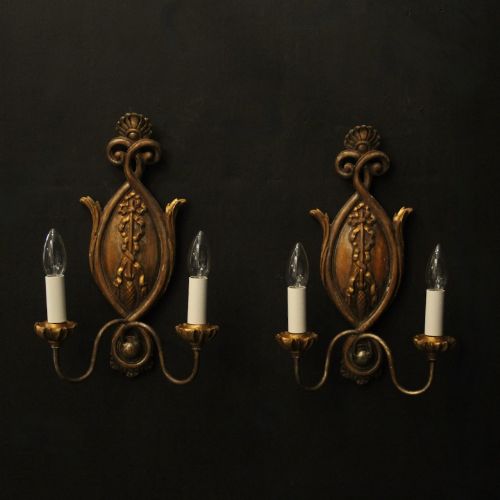
An italian wooden light encompasses wall sconces, large multi-arm chandeliers, standard lamps, and table-standing torcheres that originate from Italian workshops across several centuries. The selection ranges from eighteenth-century carved candle stands to twentieth-century Florentine giltwood chandeliers.
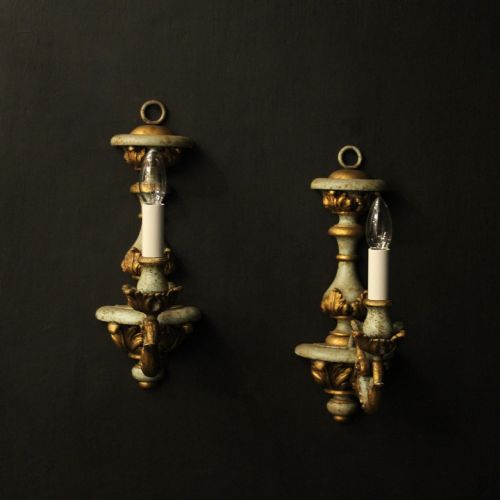
Buyers most frequently meet pairs of wall lights and multi-light chandeliers finished with giltwood, gesso, or polychrome paint. These items draw on traditional regional designs, including baroque and neoclassical styles, adapted for illuminating domestic interiors.
Materials and construction methods
Makers carved timber bases by hand, utilising woods such as walnut, pine, and oak to form structural shapes for torcheres, lamps, and wall sconces. Artisans then applied layers of gesso to smooth the wooden surface before adding detail.
Surfaces received gold leaf, silver leaf, or polychrome paint to achieve the luminous finishes characteristic of Florentine and Venetian work. This layered application allowed artisans to create rich textures that catch candlelight and electric illumination alike.
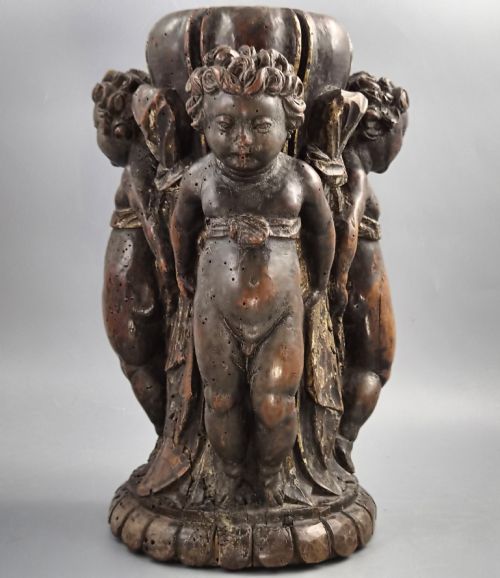
Certain candelabras take the form of carved figures, holding candle arms aloft with permanent wooden hospitality.
Distinctions in execution and finish
Quality rests in the crispness of the hand carving and the depth of the gilding or polychrome paint layers applied over the gesso. Pieces with sharply defined foliage, figures, or scrollwork demonstrate superior artisan skill compared to softer, more uniform modern castings.
The preservation of the original surface finish determines the character of an item. Examples retaining their untouched historic leaf and paint layers carry greater decorative integrity than those with heavy later repainting.
The Italian Wooden Light Glossary
- Giltwood
- Wood carved and coated with a thin layer of gold leaf over gesso. This technique creates a radiant surface that reflects light warmly.
- Polychrome
- Painted in several colours. This finish often combines pigments with metallic leaf to produce ornate decorative effects on figures and fittings.
- Torchiere
- A tall stand designed to hold a light or candle. These tall supports elevate the flame to project illumination higher into a room.
- Gesso
- A plaster mixture applied to wood as a base for gilding or painting. It provides a smooth white ground that holds fine carved details.
- Pricket
- A sharp metal spike on a candle holder designed to secure a candle in place. This fitting appears frequently on older ecclesiastical pieces.
Italian Wooden Light: Frequently Asked Questions
How do I install antique wall lights?
Most wall lights require professional wiring to integrate safely with modern domestic electrical circuits. Electricians can adapt older backplates to fit standard wall junction boxes.
For pieces converted from candles, internal channels or discreet external wiring paths bring power to the lamp holders while preserving the visible historic woodwork.
Are these chandeliers heavy to hang?
Large wooden and giltwood chandeliers possess substantial weight due to the dense timber cores and layers of gesso. Proper ceiling joist anchoring is essential for secure suspension.
Installers should use rated hooks and chains capable of supporting the combined weight of the timber frame and multiple arms.
How do I clean giltwood and polychrome surfaces?
Dust these items gently with a soft, dry brush or a feather duster to remove loose particles. Avoid liquid cleaners, damp cloths, and chemical solvents, which strip delicate gold leaf and paint.
Preserving the dry finish protects the historic layers beneath from accidental damage during routine maintenance.
What rooms suit a standard lamp?
Tall floor-standing lamps provide flexible ambient lighting in sitting rooms, studies, or hallways. They place illumination at a lower level than ceiling fixtures to create pools of warm light.
Their decorative carved shafts serve as sculptural vertical elements when positioned in empty corners or beside seating.