



Gold Leaf Pendant
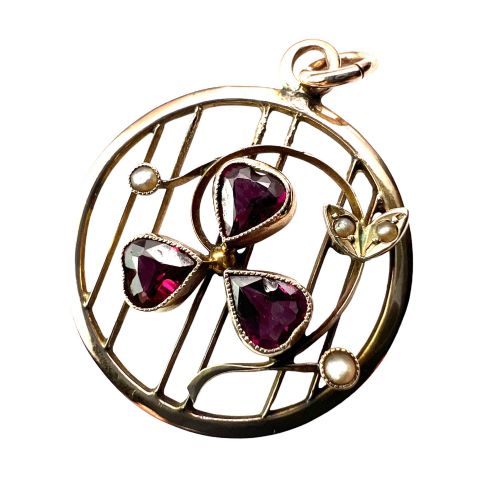
A gold leaf pendant brings together organic botanical motifs and precious metals to create a striking piece of jewellery.
Gold Leaf Pendant
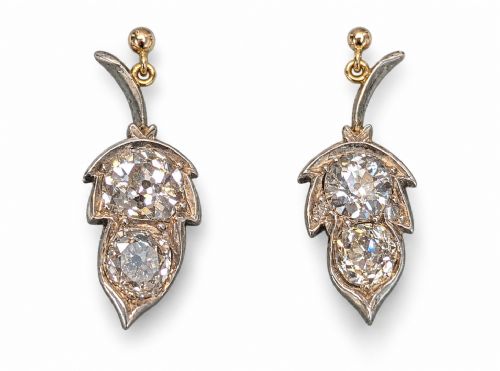
When you search for a gold leaf pendant, you encounter pieces that translate natural foliage into durable metal forms. These items range from delicate Edwardian drop designs featuring oak or acorn motifs to ornate French gold charms depicting clover and shamrocks.
The versions most frequently met on this page span the Victorian, Edwardian and mid-century periods, often incorporating pearls, garnets or diamonds alongside the golden leaf structure. Many items merge botanical shapes with symbols of good luck, such as ladybirds perched on foliage or four-leaf clovers.
Beyond necklaces, the broader category recorded in the evidence includes earrings and charms that share the same dedication to leaf-shaped goldwork. Collectors find that these pieces capture the botanical interest of the late nineteenth and early twentieth centuries in wearable miniature.
How they were made
The pieces utilise yellow gold, ranging from nine-carat to eighteen-carat standards, often shaped through casting and hand-finishing techniques. Goldsmiths of the Victorian and Edwardian eras frequently combined sheet gold with wirework to form realistic veins on individual leaves.
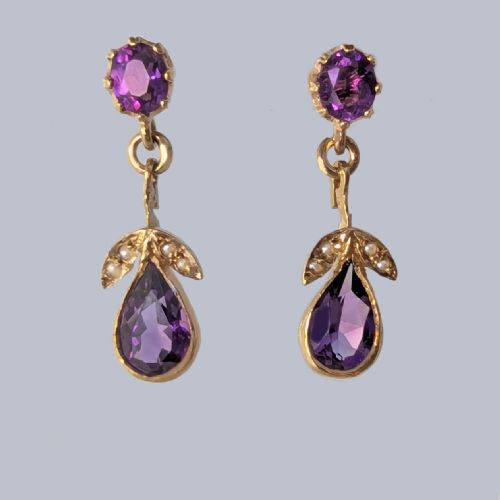
Many designs incorporate chased or engraved details to give texture to the metallic foliage, complemented by applied seed pearls, amethysts, peridots or diamonds. Rolled gold and gilt metal also appear in the record, demonstrating alternative methods for achieving a rich golden surface.
A lucky ladybird frequently finds a home resting upon a golden leaf pendant.
What varies in quality
The standard of a gold leaf pendant depends on the crispness of the botanical casting and the subtlety of the hand-engraved veining on the metal. Superior examples display realistic contours and secure gemstone settings that integrate harmoniously with the organic design.
Maker attribution and hallmark clarity also elevate certain pieces, distinguishing mass-produced items from signed works of art by notable makers. The weight and purity of the gold, alongside the matching quality of any suspended pearls or stones, define the upper tier of the range.
Arthur & Georgie Gaskin
The Gold Leaf Pendant Glossary
- Pendant
- A piece of jewellery designed to hang from a chain or cord around the neck. They appear in various geometric and botanical shapes across the Victorian and Edwardian periods.
- Seed pearl
- A very small, natural or cultured pearl often utilised in clusters or borders on antique jewellery. They frequently accent floral and leaf designs from the early twentieth century.
- Rolled gold
- A material formed by bonding a thin sheet of gold to a base metal core with heat and pressure. It provides the appearance of solid gold at a different manufacturing level.
- Hallmark
- An official stamp applied to precious metals indicating purity and origin. British pieces often display marks for specific assay offices and dates.
Gold Leaf Pendant: Frequently Asked Questions
What periods do these pendants come from?
The pieces span the nineteenth century, the Victorian era, the Edwardian period and into the mid-twentieth century. Each era brings distinct manufacturing techniques and stylistic interpretations of natural foliage.
Items from the nineteen-hundreds and nineteen-tens frequently showcase detailed botanical work, while later mid-century examples maintain the enduring appeal of gold leaf and charm motifs.
How were these leaf pendants worn?
They were suspended from fine gold chains or ribbons around the neck, often serving as daily personal talismans or commemorative tokens. Some versatile examples double as brooches, allowing the wearer to pin them to garments.
Charms were frequently added to split rings or charm bracelets alongside other symbolic tokens like horseshoes and lucky numbers.
What gemstones accompany the gold leaves?
Pearls, diamonds, garnets, peridots, opals and turquoises frequently appear alongside the gold foliage. These stones serve as dew drops, flower centres or contrasting highlights within the botanical arrangement.
Enamel is also utilised in certain pieces to add naturalistic colour to the leaves, stems and accompanying insects.
How can I tell the gold standard?
British pieces often feature hallmarks stamped directly onto the metal, indicating the carat weight, such as nine-carat or fifteen-carat gold. These marks may also reveal the assay office and the year of manufacture.
Where hallmarks are absent or the piece originates from abroad, the colour and weight of the metal, along with professional testing, provide guidance on the gold purity.