



Italian Tin Glazed Ceramic
When you handle italian tin glazed ceramic, you hold centuries of earthenware shaped into pharmacy jars, chargers, and flasks painted with pigment.
Italian Tin Glazed Ceramic
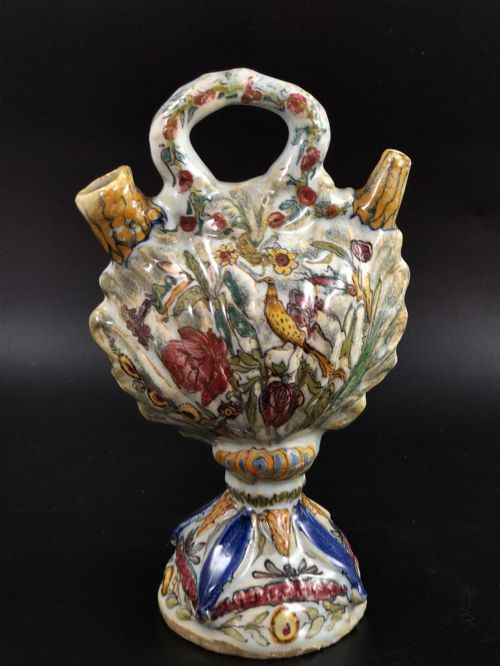
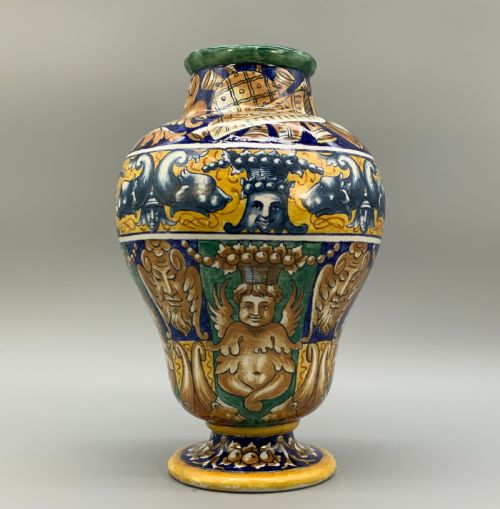
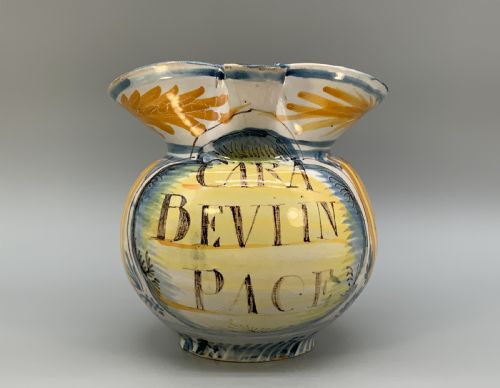
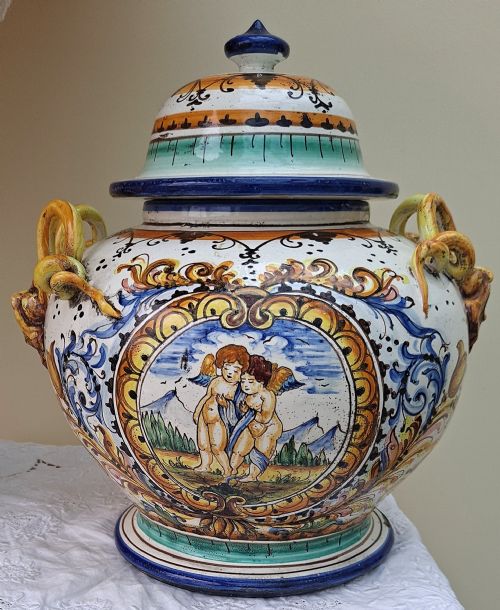
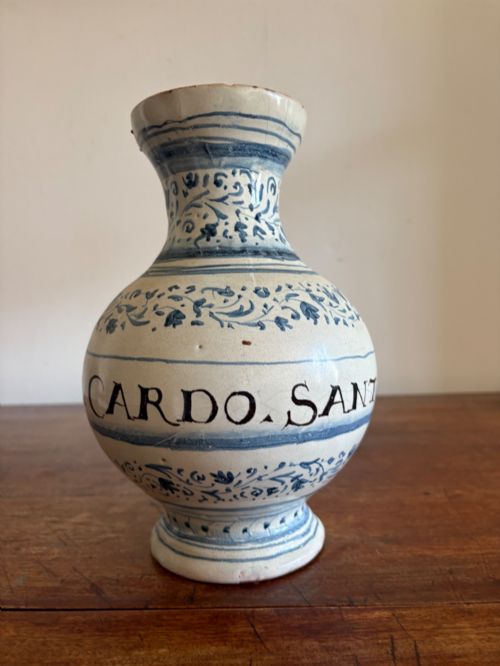
Collectors seeking italian tin glazed ceramic encounter earthenware vessels and wall art spanning from the seventeenth century through the twentieth century. The forms range from apothecary jars and albarelli to large chargers, ewers, and pilgrim flasks.
The inventory on this page draws heavily from eighteenth-century production and nineteenth-century revivals. Pieces take the shape of drug jars, lidded vases, and devotional plaques, reflecting both domestic use and grand decorative traditions.
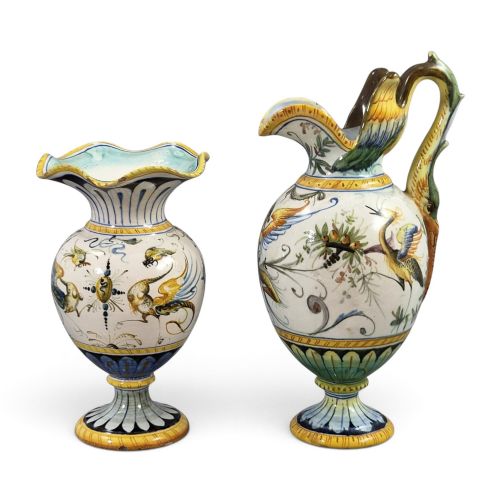
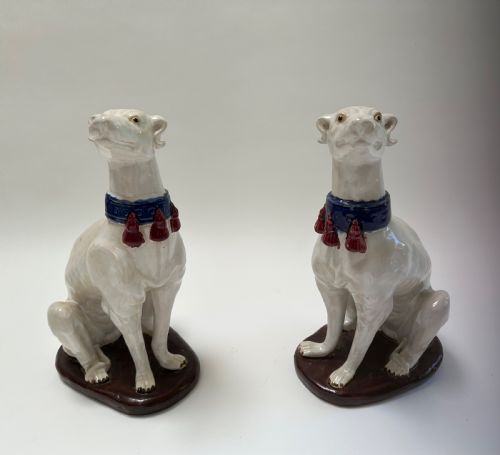
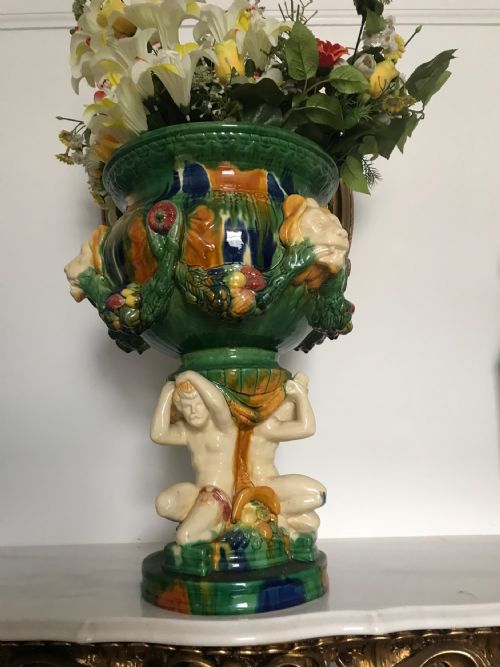
Regional styles such as Savona, Urbino, and Pesaro dominate the selection, alongside notable nineteenth-century Florentine revivals. Buyers find functional pharmacy vessels sitting alongside decorative mantel pieces and sculptural figures.
How they were made
Potters shaped local earthenware or terracotta on the wheel or pressed clay into moulds to create vases, chargers, and figures. Once formed, the dried body received an opaque white tin glaze that provided a smooth canvas for painting.
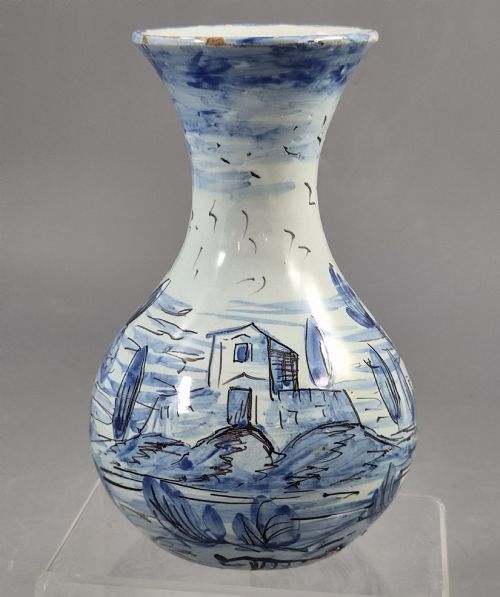
Artisans applied mineral pigments directly onto the porous tin glaze before firing. Palettes varied from simple blue and white designs to rich polychrome schemes featuring manganese and yellow tones.
Listings feature earthenware bodies covered in opaque tin glaze, spanning seventeenth-century origins through nineteenth-century revival styles.
What varies in quality
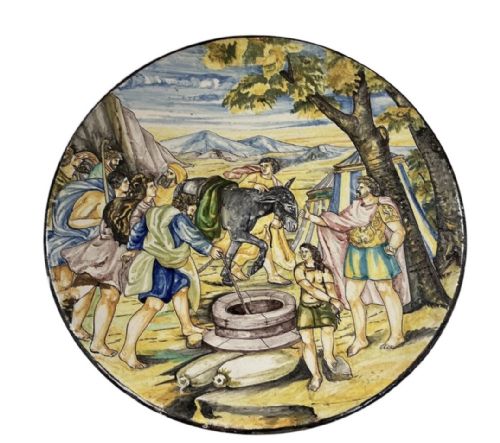
Quality rests upon the crispness of the hand-painted decoration and the confidence of the brushwork. Istoriato scenes and complex armorial or historical motifs executed by skilled hands distinguish finer examples from standard production.
The smoothness of the tin glaze and the stability of the fired body dictate the physical preservation of each object. Superior pieces display even glazing without excessive pooling, allowing the underlying earthenware to remain completely sealed.
Cantagalli·C Ravier
The Italian Tin Glazed Ceramic Glossary
- Albarello
- A cylindrical earthenware jar designed to hold dry drugs and apothecary preparations in a pharmacy. These vessels typically feature a waisted centre for easy handling.
- Maiolica
- Italian tin-glazed earthenware decorated with colourful pigments. The technique reached its peak during the Renaissance and inspired numerous revivals in the nineteenth century.
- Istoriato
- Narrative painting style depicting historical, mythological, or biblical scenes across the surface of ceramics. Artisans utilised this technique on large chargers and display pieces.
- Pilgrim Flask
- A flattened, round vessel with lug handles designed for carrying liquids during travel. Ceramic versions often functioned as ornamental table pieces.
- Faience
- European tin-glazed earthenware originating from or emulating Italian traditions. The term frequently appears interchangeably with maiolica in historical descriptions.
Italian Tin Glazed Ceramic: Frequently Asked Questions
What is an albarello used for?
An albarello served as a cylindrical storage jar in historic apothecary shops and pharmacies. These vessels held dry herbal remedies, ointments, and medicinal powders.
Potters shaped them with an indented waist so chemists could grip them securely on crowded shelves. Later collectors prize them for their painted pharmacy labels and decorative blue and white patterns.
What distinguishes istoriato decoration?
Istoriato decoration covers the entire surface of a ceramic piece with a continuous narrative scene. Artists painted historical, classical, or biblical stories across chargers and large plaques.
This technique demands precise brushwork and a deep understanding of perspective. Pieces featuring this style represent the most ambitious output of Italian pottery workshops.
How should I display majolica chargers?
Majolica chargers require sturdy wall hangers or dedicated plate stands designed for heavy earthenware. Their broad, painted surfaces function best where adequate light reveals the pigment details.
Keep them away from direct edges where accidental knocks might cause damage. Pairing them with simpler furniture lets the polychrome or blue and white designs stand out.