


Italian Souvenir Bronze
An italian souvenir bronze brings the classical sculpture and architecture of Rome, Naples and Florence directly into domestic spaces.

Italian Souvenir Bronze
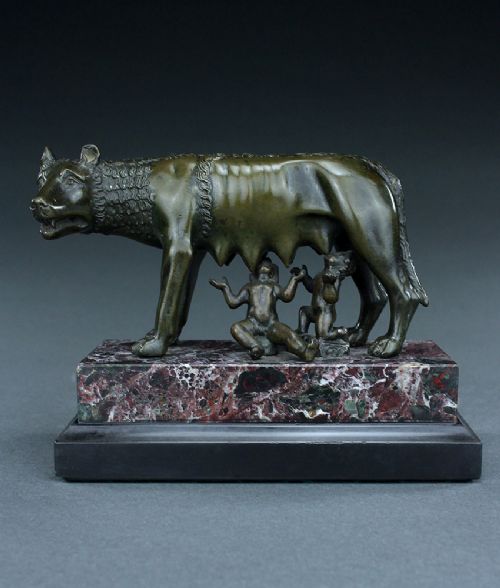
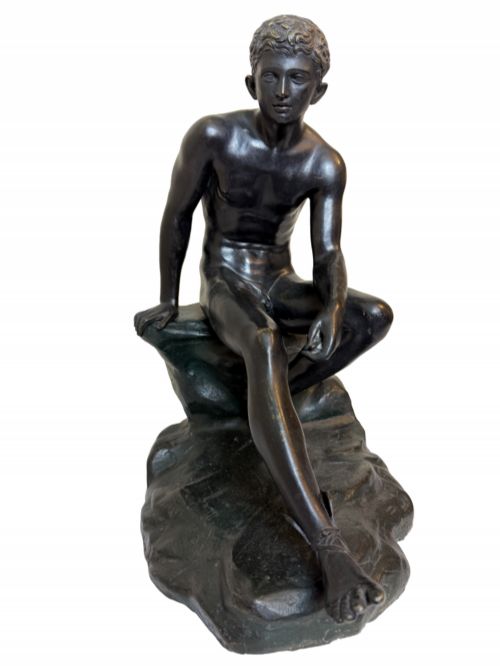
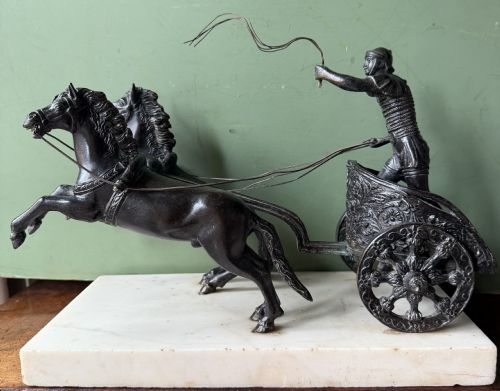
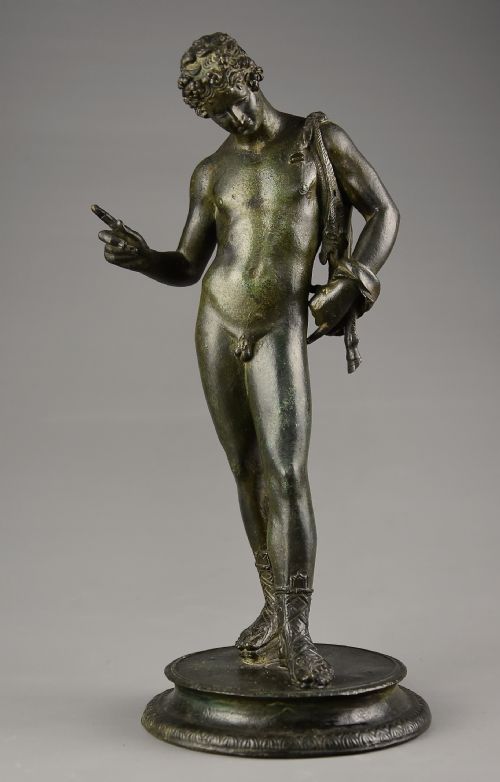
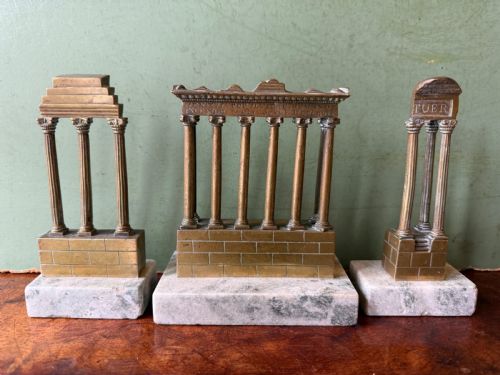
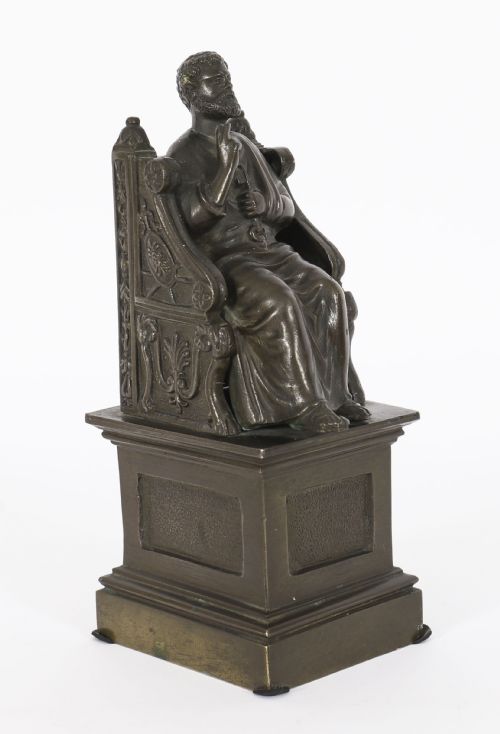
An italian souvenir bronze represents the portable classical art purchased by wealthy travellers on the Grand Tour during the nineteenth century. These items include miniature reductions of famous ancient statues, architectural models of ruins, and decorative vessels like urns and tazzas.
Most examples found here date from the Victorian period, roughly spanning from eighteen-fifty to nineteen-hundred. They translate monumental public sculptures from Italian museums and archaeological sites into cabinet-sized bronzes for domestic display.
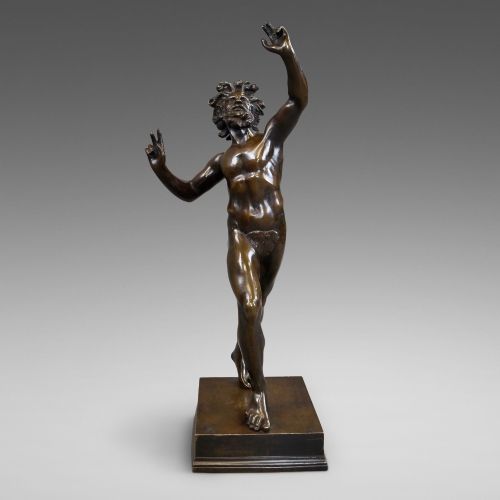
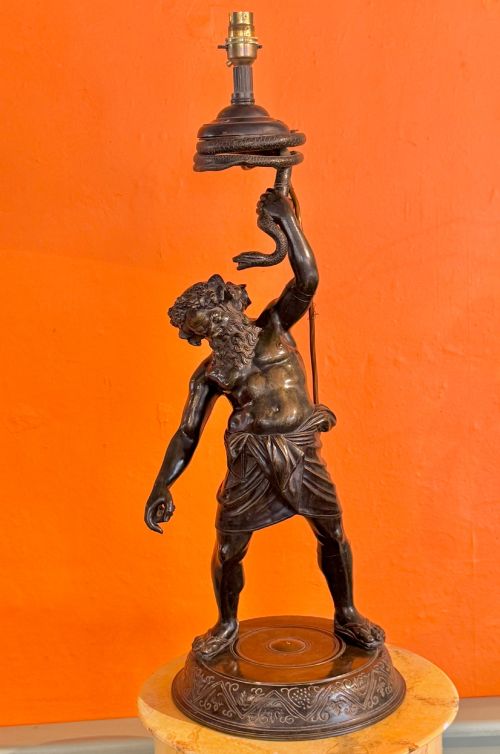
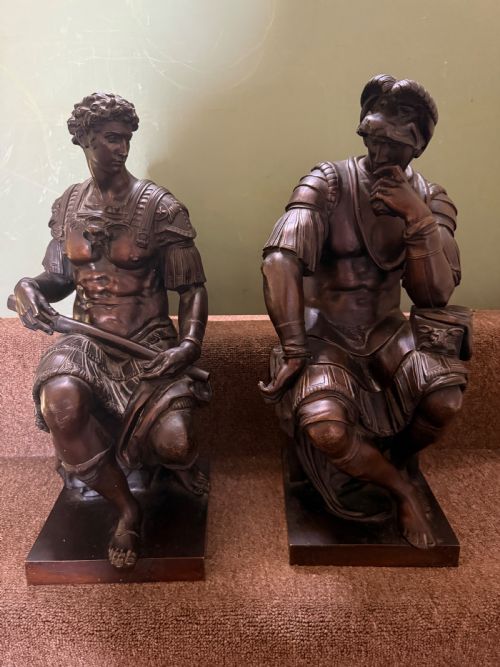
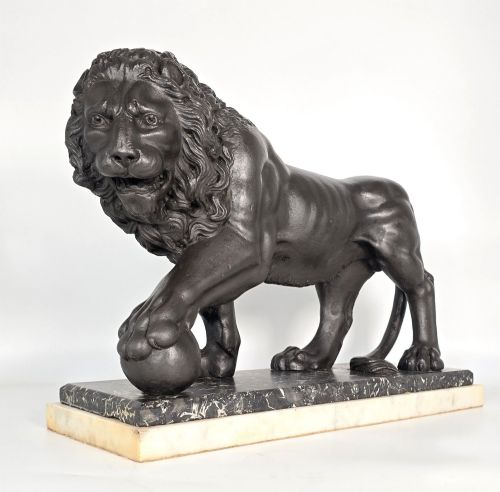
The subjects draw heavily from Greek and Roman mythology, alongside well-known antiquities such as the Dancing Faun of Pompeii and the Medici Lion. Buyers encounter everything from individual mythological figures to pairs of decorative campana urns mounted on marble plinths.
How they were made
Foundries utilised the lost-wax casting method or sand casting to achieve the fine detail required for these sculptural reductions. Artisans then applied various chemical patinations to the bronze surfaces, ranging from dark brown and black to deep green and verdigris.
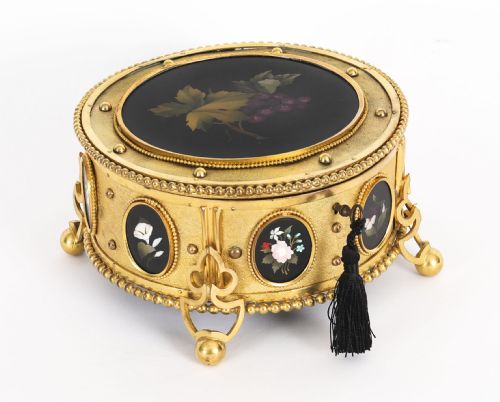
Many bronzes are permanently mounted on heavy bases made of white marble, rouge griotte marble, or slate to provide stability and contrast with the metal. Ormolu mounts, brass details, and inlaid pietra dura panels occasionally supplement the primary bronze work on caskets and decorative vessels.
Materials recorded across the inventory include patinated bronze, white marble, rouge griotte, ormolu, and pietra dura.
What varies in quality
The precision of the chasing work separates superior castings from ordinary commercial productions. Master founders spent hours hand-chiseling the cooled bronze to sharpen hair, musculature, and facial expressions after the mould was removed.
The richness and depth of the chemical patination indicate the skill of the workshop. Superior examples show subtle tonal variations across the metal surface, whereas lesser pieces often display a flat, uniform lacquer.
The quality of the mounting materials also dictates overall value, particularly the weight and selection of the marble plinth. Fine pieces utilise dense, polished natural stone that complements the proportions of the bronze figure above.
G Amodio Naples·Benedetto Boschetti·Sommer Foundry
The Italian Souvenir Bronze Glossary
- Grand Tour
- A traditional trip through Europe undertaken by upper-class European young men of sufficient means to flourish their cultural education. This travel custom directly generated the market for these miniature bronzes and architectural models.
- Patination
- The process of applying chemical treatments to the surface of bronze to produce intentional colours and finishes. Artisans used specific acids and heat to create dark brown, green, or verdigris tones.
- Reduction
- A scaled-down sculptural copy of a much larger public monument or antique marble statue. These permitted collectors to display famous museum pieces within private rooms.
- Campana Urn
- A bell-shaped vessel form derived from ancient pottery and marble designs discovered in Italy. These shapes were frequently reproduced in bronze for decorative table display.
- Pietra dura
- An artistic technique using cut and fitted polished coloured stones to create geometric or pictorial designs. It appears frequently on nineteenth-century Italian caskets alongside ormolu and bronze.
Italian Souvenir Bronze: Frequently Asked Questions
What is an italian souvenir bronze?
These are small-scale metal sculptures and architectural models bought by travellers visiting Italy during the nineteenth century. They served as physical reminders of classical art seen during European travel.
Foundries in Naples, Rome, and Florence cast these pieces after famous museum antiquities. Collectors displayed them in libraries and studies to demonstrate their classical education and refined taste.
How were these bronzes displayed?
Nineteenth-century collectors typically placed smaller bronzes on desks, mantelpieces, or dedicated display cabinets. Figures were often screwed securely onto heavy marble plinths to protect them and provide visual weight.
Architectural models and pairs of urns anchored the ends of sideboards or bookshelves. They functioned as conversation pieces within Victorian interior design schemes.
How do you date an antique bronze?
Dating relies heavily on the casting technique, the style of the marble base, and the depth of the metal patination. Nineteenth-century examples often exhibit hand-chiseled surface details that differ from later mass-produced twentieth-century castings.
Signatures or foundry marks stamped into the bronze can also narrow down the production period. Comparing the subject matter to known nineteenth-century workshop catalogues helps confirm the era.
Why do some bronzes have green patination?
Foundries applied chemical patinas to mimic the appearance of ancient excavated bronzes recovered from archaeological sites like Pompeii. Green verdigris treatments simulated centuries of natural oxidation.
Other workshops preferred dark brown or nearly black patinas to highlight the metallic sheen of the bronze. The choice of finish depended on the aesthetic preferences of the nineteenth-century buyer.