

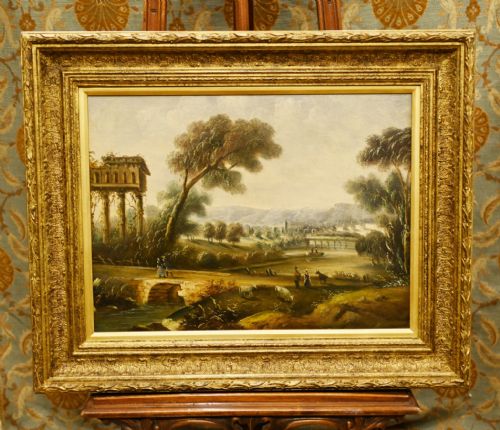


Italian School Landscape
An italian school landscape brings the light and topography of the Mediterranean directly into a room, offering windows onto classical ruins and coastal bays.
Italian School Landscape
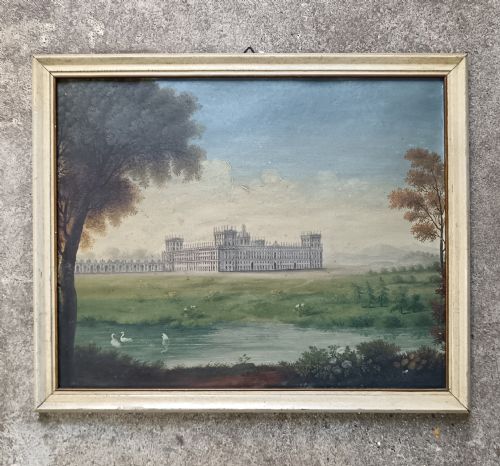
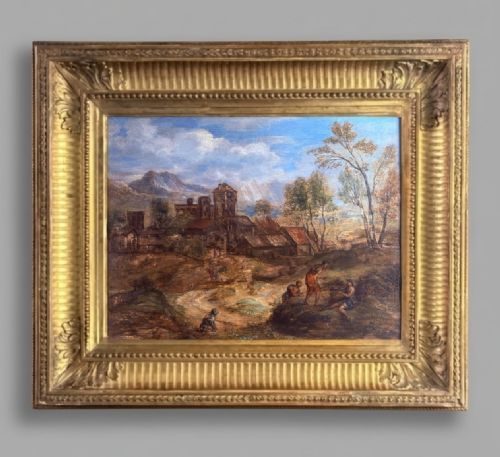
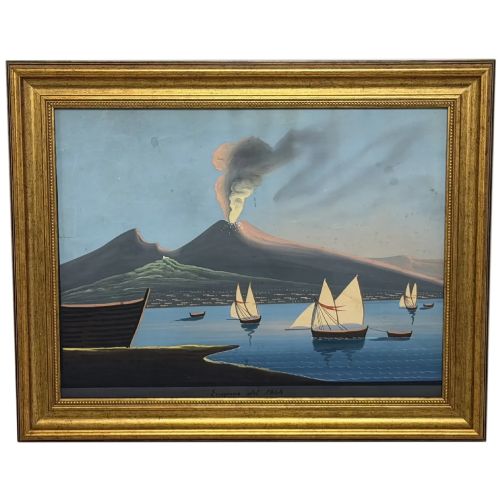
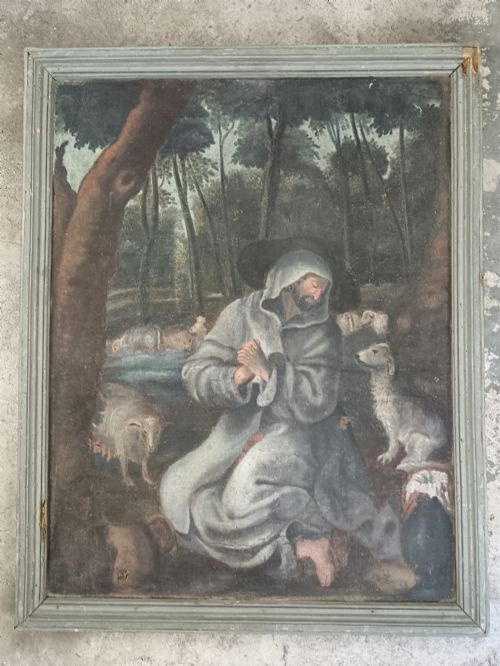
An italian school landscape captures the scenery of the peninsula, ranging from the volcanic drama of Vesuvius to quiet pastoral scenes with mountains and lakes. Buyers searching this phrase encounter works executed in oil paint or gouache across various centuries, often framed in wood with gold leaf.
The selection includes paintings stretching from the seventeenth century through to the mid twentieth century, encompassing Grand Tour souvenirs and academic studies. Many pieces focus on specific regions such as Naples, Sorrento, Rome, and Tuscany, depicting architectural ruins, coastal harbours, and fishermen by the shore.
How they were made
Artists painted primarily with oil paint or gouache, applying pigment onto supports of canvas, wood panels, or paper. These materials interact to hold fine brushwork and pigment density, capturing atmospheric lighting effects from bright coastal glare to deep shadows.
Frames are constructed from wood and frequently finished with gold leaf to complement the painted compositions. Panel paintings utilise prepared wooden supports, while later works typically employ stretched canvas or heavy paper for gouache applications.
Italian School Landscape Retail Price Guide 2026
Typical asking prices for italian school landscape among the pieces listed under this phrase on Sellingantiques today, from the lower quarter to the upper quarter. They describe what is for sale here now, not the wider market.
Listings span from the seventeenth century to the mid twentieth century, featuring oil paint and gouache on wood, canvas, and paper.
What varies in quality
Quality rests upon the handling of light, atmospheric perspective, and the precision of architectural or figurative details within the composition. Masterful works demonstrate confident brushwork that defines distant mountains and shimmering water with clarity and depth.
The integrity of the original surface, including the stability of the oil paint or gouache and the preservation of the wooden frame, distinguishes superior examples. Works displaying distinct regional character and accomplished draughtsmanship stand apart from generic decorative pieces.
Fernando Del Basso·Giulio Cecchini·Giacomo Nani·Thomas Brabazon Aylmer
The Italian School Landscape Glossary
- Gouache
- An opaque water-based paint that dries to a matte finish. It was frequently utilised for detailed nineteenth-century views of Naples and Vesuvius on paper.
- Grand Tour
- A traditional trip through Europe undertaken by upper-class young men in the eighteenth and nineteenth centuries. Travellers purchased local views and pastoral art as mementos.
- Pentimento
- A visible trace of earlier painting beneath the layers of paint, showing where the artist changed their mind. This phenomenon appears in older works and indicates genuine hand-painted adjustments.
- School of Posillipo
- A nineteenth-century group of artists based in Naples who painted plein-air coastal landscapes. They focused on naturalistic depictions of the Bay of Naples and local light.
- Oil on Panel
- A painting technique where oil paint is applied directly to a prepared wooden board. This method provides a rigid and durable support found in seventeenth-century works.
Italian School Landscape: Frequently Asked Questions
What subjects do these paintings show?
The works depict a range of Italian subjects, from erupting volcanoes and bustling coastal harbours to serene pastoral views with mountains and lakes. Architectural ruins and classical gardens also feature prominently.
Many pieces record specific locations such as Sorrento, Rome, and the Bay of Naples, capturing the topography and light observed by artists travelling through the region.
How do I identify the period of a painting?
Dating relies on stylistic markers, framing, and the physical materials used, such as wood panels for seventeenth-century works or canvas and paper for later periods. Inscriptions, signatures, and subject matter often point to specific decades.
Earlier pieces show seventeenth-century Venetian or pastoral conventions, while nineteenth-century items frequently reflect Grand Tour tastes and Neapolitan gouache traditions.
What is the difference between oil and gouache?
Oil paint utilises a drying oil binder that allows for luminous blending and thick impasto textures on canvas or wood. It offers deep colour saturation and long-term durability.
Gouache is water-based with added chalk, creating an opaque medium that dries quickly on paper to produce matte, vibrant architectural and landscape views.
How should I hang and care for these works?
Paintings and works on paper require placement away from direct sunlight and excessive moisture to protect the pigments, canvas, and gold leaf frames. Stable indoor temperatures prevent warping in wooden panels.
Displaying pieces at eye level on interior walls ensures they remain clear of heat sources while providing a natural focal point in a room.