



Grand Tour Landscape
A grand tour landscape captures the classical ruins, sunlit canals and sweeping vistas that travellers brought home from Italy.
Grand Tour Landscape
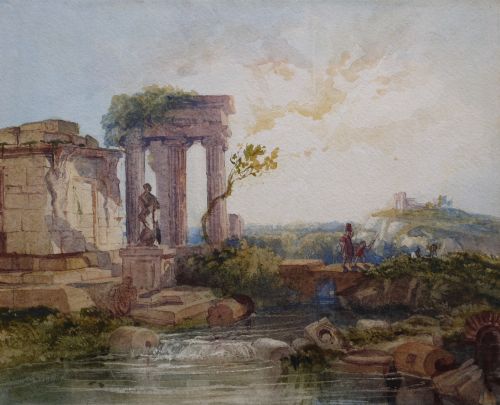
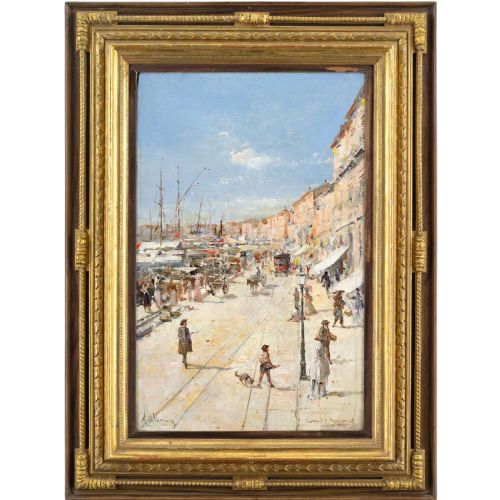
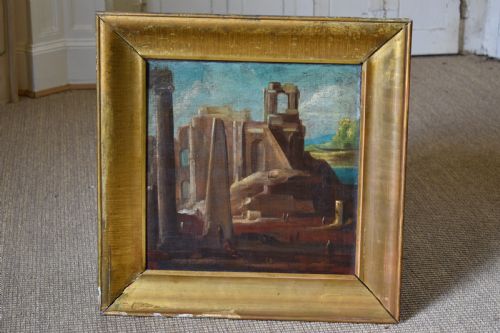
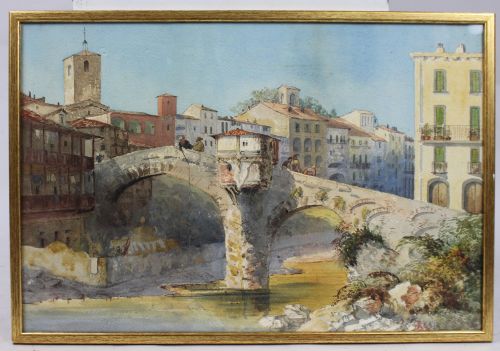
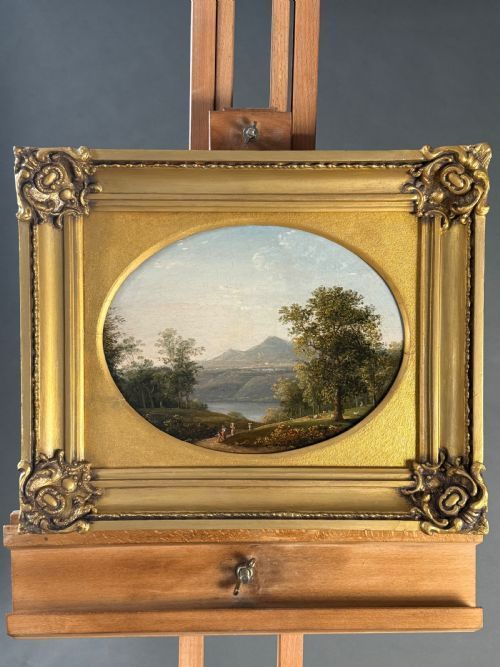
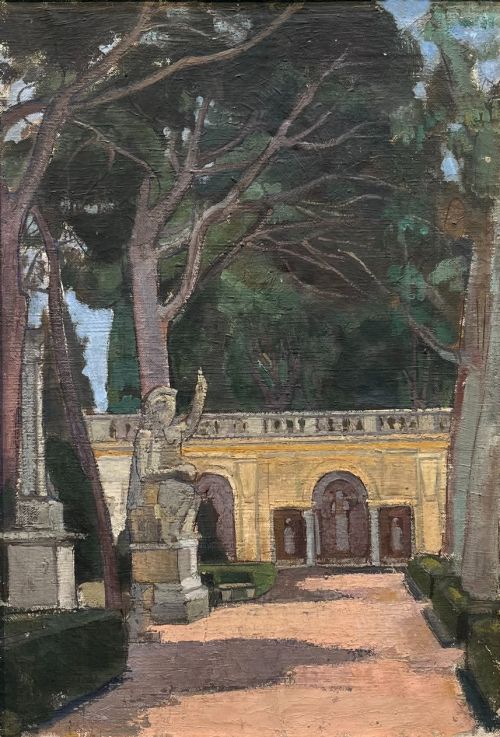
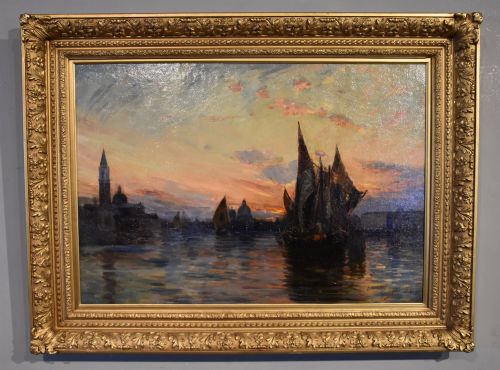
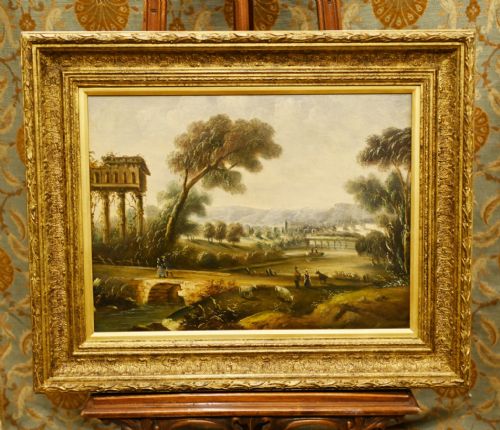
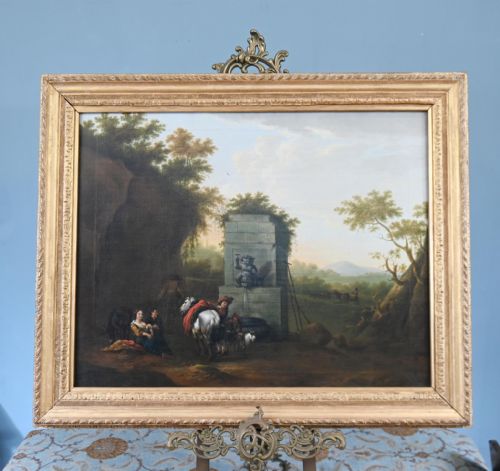
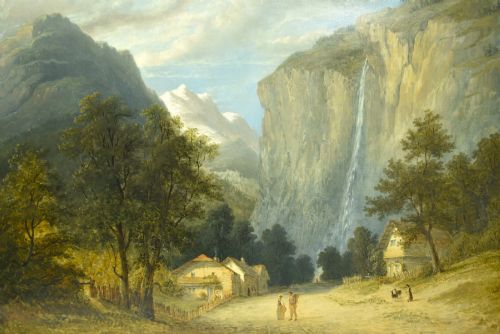
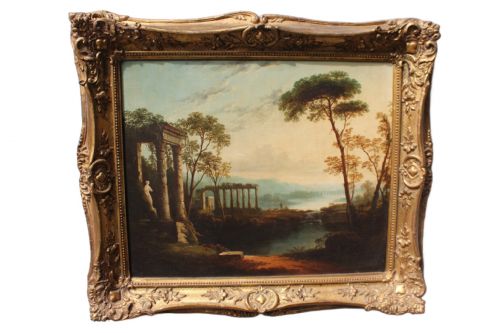
When you search for a grand tour landscape, you encounter framed watercolours, gouaches and oil paintings depicting classical ruins, Italian lakes and Venetian canals. These works span the eighteenth, nineteenth and early twentieth centuries, recording the travels of artists and tourists across Rome, Venice, Naples and Sicily. Most examples date from the nineteenth century, often appearing in period giltwood frames that reflect their classical aesthetic.
The subjects range from architectural views of the Colosseum and the Forum to pastoral scenes featuring classical figures and rustic ruins. You find both finished cabinet paintings by named British and continental artists and intimate souvenir watercolours collected during travels abroad. Some pieces adopt the romantic or neoclassical styles popular among European schools working in Rome and Venice.
Materials and methods
Artists painted these scenes using oil on canvas, watercolour and gouache on paper, capturing the bright light of the Mediterranean. Many works incorporate detailed brushwork to delineate architectural landmarks, ancient aqueducts and detailed townscapes.
Framing forms an integral part of the survival of these pieces, utilising wood, glass, and gold leaf to protect the delicate pigments on paper or canvas. Giltwood and carved frames often date to the period of creation, enhancing the visual depth of the paintings.
Several artists braved the Italian sun simply to paint the laundry hanging near the Bridge of Sighs.
Variations in quality
Quality rests upon the handling of light and perspective, distinguishing skilled topographical observation from routine souvenir production. The distinction lies in the precision of the architectural draughtsmanship and the atmospheric rendering of Italian skies and water.
The framing also influences the presentation, with original giltwood frames or exceptional period surrounds adding considerable presence to the painted canvas or watercolour beneath.
Richard Principal Leitch·Augusto Alberici·Jacob Philipp Hackert·Thomas Hodgson Liddell·Franz Knebel·Antoine Bouvard Senior·Alfred Pollentine·Jane Vivian·Ettore Ascenzi·Charles H Poingdestre
The Grand Tour Landscape Glossary
- Grand Tour
- A traditional trip through Europe, notably Italy, undertaken by upper-class European young men and other travellers in the eighteenth and nineteenth centuries to study the arts and classical antiquity.
- Capriccio
- An architectural fantasy placing together classical ruins, buildings and other architectural elements in a fictional and pleasing compositional arrangement. Artists frequently employed this style for Italianate landscape paintings.
- Gouache
- An opaque water-based paint consisting of pigment, water, and a binding agent such as gum, producing a matte finish. It frequently appears in nineteenth-century topographical views of Naples and Rome.
- Neoclassical
- A Western cultural movement drawing on the art and culture of classical antiquity, which heavily influenced the subject matter and style of these landscapes.
Grand Tour Landscape: Frequently Asked Questions
What is a grand tour landscape?
These works are paintings and watercolours depicting Italian views, classical ruins, and Venetian canals created as mementos for travellers.
They record the picturesque sights encountered by artists and visitors during extended European journeys in past centuries.
How were these paintings displayed?
Owners typically hung these framed artworks in domestic reception rooms and libraries to display their cultural education and travels.
They often featured in decorative groupings alongside architectural prints and classical sculptures.
How do I care for watercolour landscapes?
Paper works require protection from direct sunlight and excessive moisture to prevent fading of the pigments and degradation of the paper.
Displaying them under glass with acid-free mounts preserves the integrity of the original medium.
How can I tell the period?
Stylistic clues, framing materials, and artist signatures help date these works to specific decades within the eighteenth and nineteenth centuries.
Subject matter such as specific archaeological excavations also provides a reliable terminus post quem for the creation date.