



Classical Architectural Painting
Classical architectural painting captures ruined temples and grand colonnades, offering buyers a romantic window into ancient Rome and eighteenth-century Grand Tour landscapes.
Classical Architectural Painting
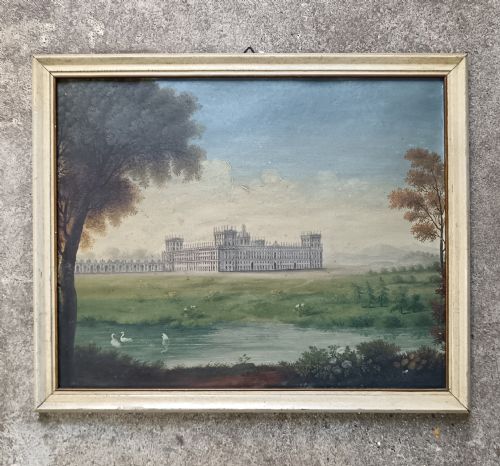
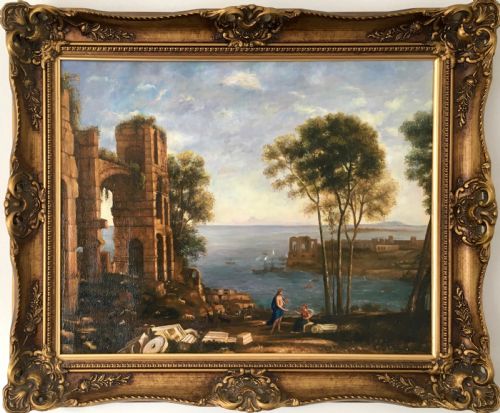
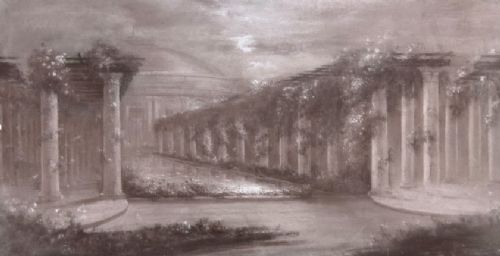
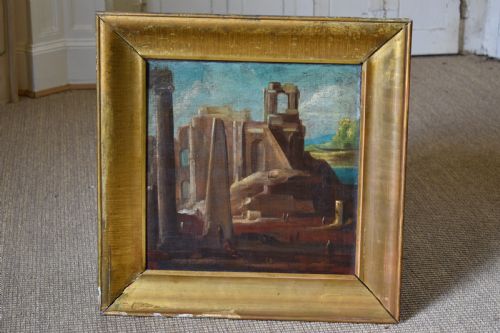
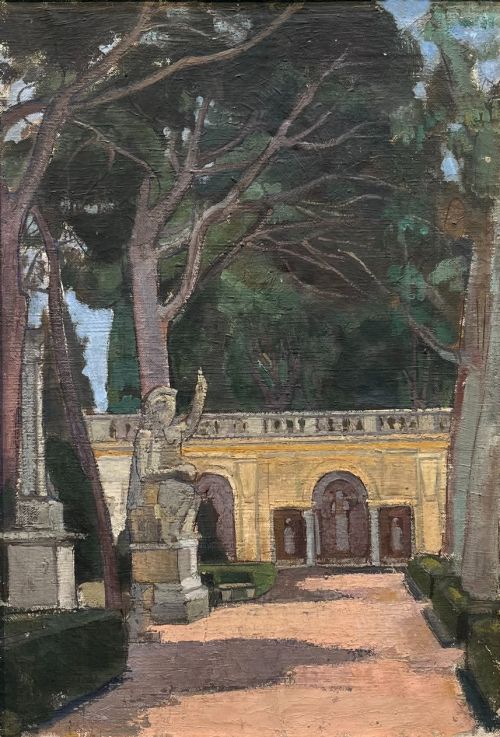
A classical architectural painting presents composed ruins, classical facades, and urban vistas rooted in eighteenth- and nineteenth-century traditions. Buyers encounter oil paintings, watercolours, and framed artwork spanning the Georgian era, the nineteenth century, and the 1930s. These works frequently depict Italianate landscapes, Roman forums, and classical scenes influenced by the Grand Tour.
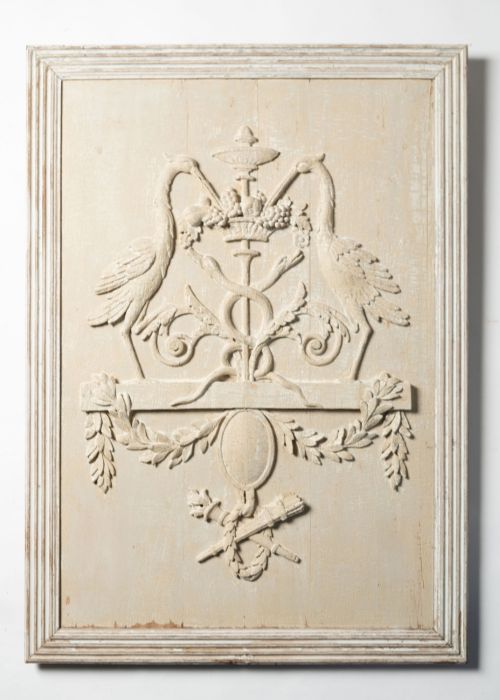
The selections on this page range from intimate watercolours of archaeological sites to large oil canvases of Venetian canals and urban landscapes. Alongside framed paintings, related pieces encompass painted panels, overmantle mirrors, and architectural columns reflecting neoclassical and Regency tastes.
Materials and Medium
Artists executed these works primarily using oil on canvas or delicate watercolours on paper, often supported by wood stretchers and framed in carved giltwood, gesso, or painted wood. The underlying preparation relied on traditional grounds, while associated items incorporate painted plaster, stone, terracotta, and verre eglomise.
The integration of painted finishes extends beyond canvas into architectural elements, utilising faux marble effects and gilt details to echo ancient stonework. Pigments were applied with careful attention to perspective, capturing the precise geometry of classical arches, columns, and entablatures.
Classical Architectural Painting Retail Price Guide 2026
Typical asking prices for classical architectural painting among the pieces listed under this phrase on Sellingantiques today, from the lower quarter to the upper quarter. They describe what is for sale here now, not the wider market.
Listings feature works from the seventeenth century through the 1930s, executed in oil, watercolour, and charcoal.
Quality and Execution
The distinction between ordinary and exceptional works rests upon the precision of perspective, the handling of light, and the anatomical accuracy of any figures populating the ruins. Masterful compositions demonstrate a deep understanding of classical proportion, whereas lesser examples rely on formulaic repetition.
Framing and medium preservation further define the upper tier. Original giltwood frames and well-preserved watercolours with minimal fading elevate a piece above compromised surfaces or later restorations.
Giovanni Paolo Panini·Claude Lorrain·Pio Panfili
The Classical Architectural Painting Glossary
- Grand Tour
- A cultural journey undertaken by wealthy young Europeans through France and Italy to study classical antiquities. This educational travel generated a vast demand for topographical paintings and watercolours.
- Verre Eglomise
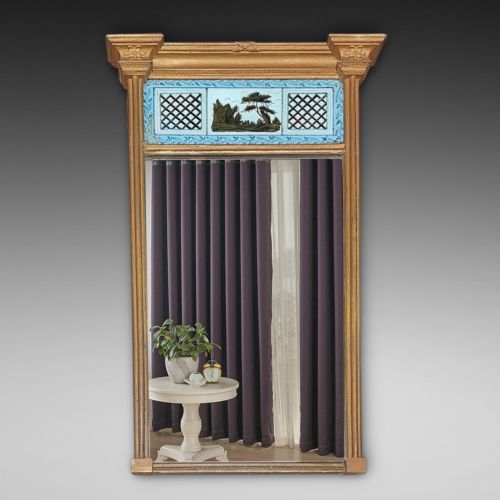
- A process of cold gilding and painting on the reverse side of glass panels. It produces a reflective, metallic sheen frequently utilised in Regency and classical pier mirrors.
- Neoclassical
- A style originating in the mid-eighteenth century inspired by the classical art and architecture of ancient Greece and Rome. It emphasises strict proportion, symmetry, and classical motifs such as columns and urns.
- Gesso
- A plaster-like mixture applied to wood surfaces as a smooth base for painting or gilding. It provides the foundation for intricate, moulded frame decoration.
- Triptych
- A picture or carving divided into three painted or panelled sections. In mirror and painting design, it refers to a tripartite composition separated by mullions or frames.
Classical Architectural Painting: Frequently Asked Questions
What is a Grand Tour painting?
A Grand Tour painting is a topographical view or architectural scene acquired by travellers exploring classical sites in Italy during the eighteenth and nineteenth centuries.
These artworks served as sophisticated souvenirs documenting famous ruins like the Colosseum or the Forum of Nerva.
How do I hang a heavy oil painting?
Heavy oil canvases require secure wall anchors fixed directly into structural studs rather than plaster alone. Using robust brass picture wire and rated hooks ensures the weight is distributed safely.
Position the centre of the painting at eye level for optimal viewing balance within the room.
How do I clean an antique giltwood frame?
Dust the intricate carved surfaces gently using a soft, dry artist brush or feathered duster. Avoid applying water or chemical cleaners, which dissolve delicate water-gilding and gesso.
Professional conservators should handle any lifting gesso or tarnished metal leaf.
What distinguishes watercolour from oil in these scenes?
Watercolour paintings offer translucent washes on paper, typically capturing bright, detailed archaeological studies on site during travels. They require protective glass framing to prevent fading.
Oil paintings utilise heavier pigments on canvas, delivering deeper tonal contrast and durability for larger interior displays.