







Italian Rococo Wall Table
An italian rococo wall table brings flamboyant curves and sculptural weight to a room, anchoring a hallway or drawing room with undeniable presence.
Italian Rococo Wall Table
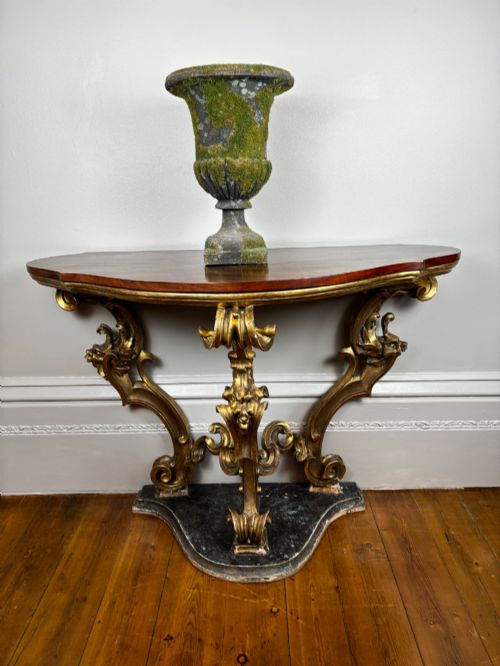
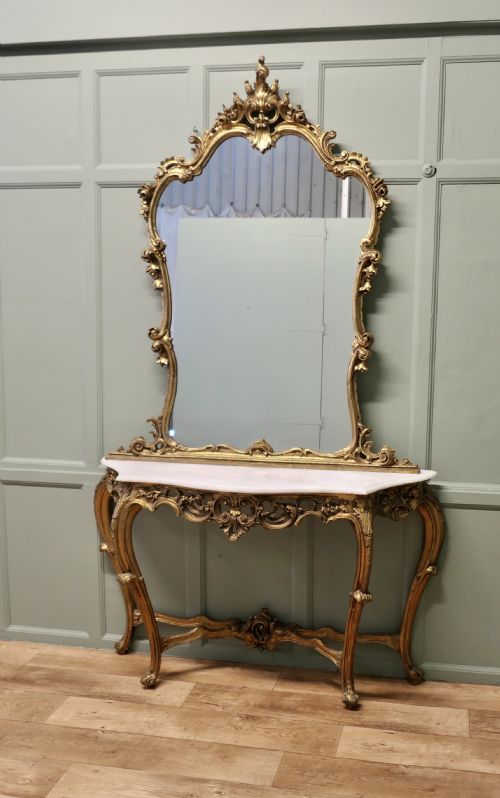
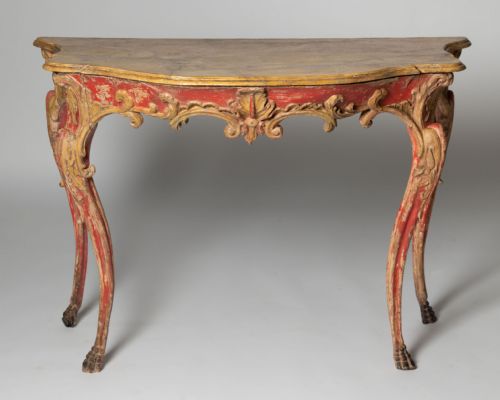
An italian rococo wall table typically takes the form of a console or wall console designed to be fixed against a partition, often accompanied by a matching mirror set. These pieces rely on wall support rather than standing freely, balancing architectural ambition with decorative purpose.
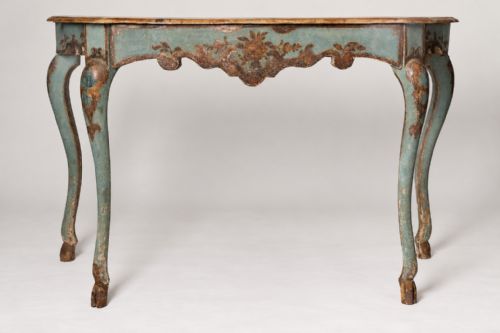
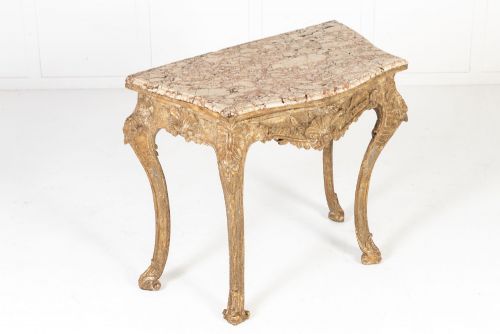
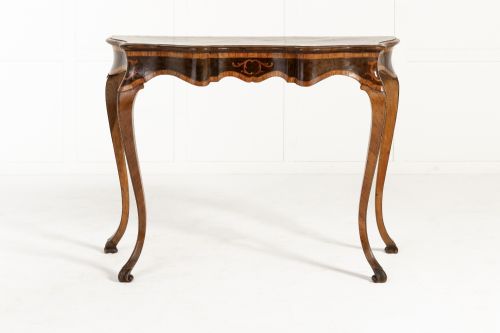
The selections span from authentic eighteenth-century Venetian creations to later nineteenth-century revival iterations, alongside twentieth-century interpretations. Walnut, painted wood, and heavily gilded surfaces dominate the forms, frequently topped with shaped marble.
Materials and Construction
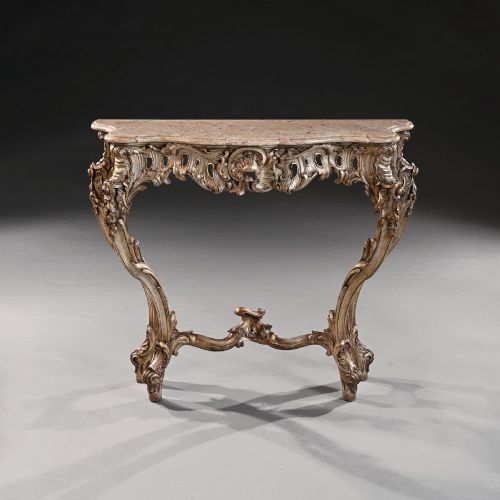
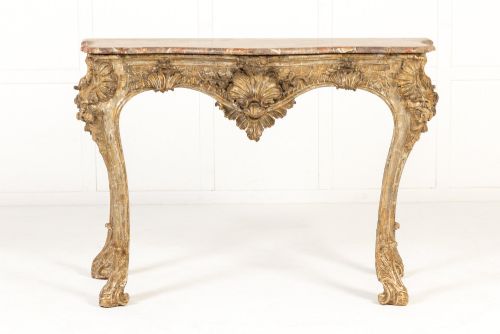
Carved wood provides the structural framework for these tables, employing gesso to build up intricate scrollwork, putti, and asymmetrical motifs before the application of gold leaf or silver gilt. The underlying timber often utilises walnut or softer painted woods shaped into serpentine lines.
Heavy marble tops, cut to follow the undulating contours of the wooden frieze, rest upon the console without mechanical fastening. The mastery of carving dictates how successfully the wooden apron appears to float beneath the weight of the stone.
Italian Rococo Wall Table Retail Price Guide 2026
Typical asking prices for italian rococo wall table among the pieces listed under this phrase on Sellingantiques today, from the lower quarter to the upper quarter. They describe what is for sale here now, not the wider market.
Carved wooden rams and maiden heads peer out from beneath the marble, keeping watch over centuries of hallway gossip.
Assessing Quality and Execution
Depth and sharpness of the hand-carving separate exceptional pieces from simpler productions, particularly in figurative elements like maidens, rams, or putti heads. Crisply rendered gesso under the gilding retains its definition over centuries, whereas secondary work often appears flattened or rounded off.
The integration between the marble slab and the wooden base reveals the maker's precision, where superior tables feature stone shaped to exact proportions rather than generic slabs. Original gilding and untouched painted surfaces hold greater visual harmony than later interventions.
The Italian Rococo Wall Table Glossary
- Console Table
- A table supported against a wall by consoles or legs, historically designed to display decorative objects rather than for dining.
- Giltwood
- Timber coated with gold leaf over a prepared gesso ground, creating a brilliant reflective surface characteristic of high-status eighteenth-century furniture.
- Serpentine
- A furniture form characterised by a wave-like line with a convex centre flanked by concave sides, frequently seen on these table fronts.
- Gesso
- A plaster-like mixture applied to wood surfaces as a smooth base for painting or gilding.
Italian Rococo Wall Table: Frequently Asked Questions
How do I secure a wall console?
These tables require direct fixing to the wall through the back frame or via concealed brackets to ensure stability, as many rely on the wall for part of their balance.
Consult a professional restorer or structural specialist to ensure the masonry can support the weight of both the wooden frame and the heavy marble top.
Are these tables meant for dining?
Console tables were strictly designed for display and architectural ornamentation in grand halls or reception rooms rather than utilitarian tasks.
Using them to serve heavy items or placing them in high-traffic zones without wall anchoring risks destabilising the antique structure.
How do I clean marble tops?
Dust the marble regularly with a soft, dry cloth and clean spills immediately with a damp cloth using mild, pH-neutral soap.
Avoid acidic cleaners like vinegar or lemon juice, which permanently etch the polished stone surface.
How do I distinguish eighteenth-century pieces?
Look for hand-cut joinery, aged patination in the timber beneath the gesso, and the organic asymmetry typical of period Venetian craftsmanship.
Revival pieces from the nineteenth and twentieth centuries often display machine-tooled elements or heavier, more standardised construction methods.