




Italian Renaissance Table
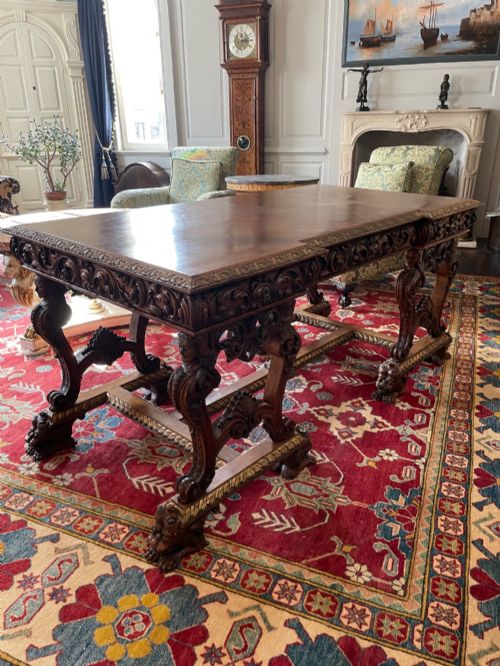
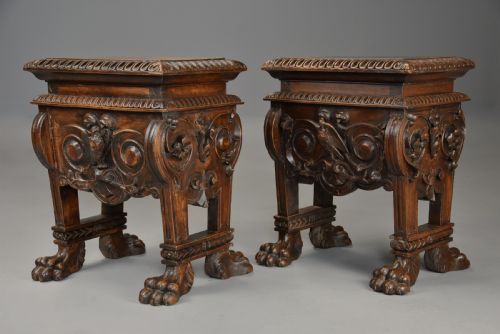
These walnut trestle, centre and side tables carry the grand architectural forms and rich ornamentation of an italian renaissance table into domestic spaces.
Italian Renaissance Table
An italian renaissance table brings heavy architectural dignity and historic gravitas into a room through substantial timber construction and classical ornament. When searching for an italian renaissance table, buyers encounter walnut side tables, trestle formats, and centre pieces spanning centuries from original 16th century examples down to later 19th century revivals.
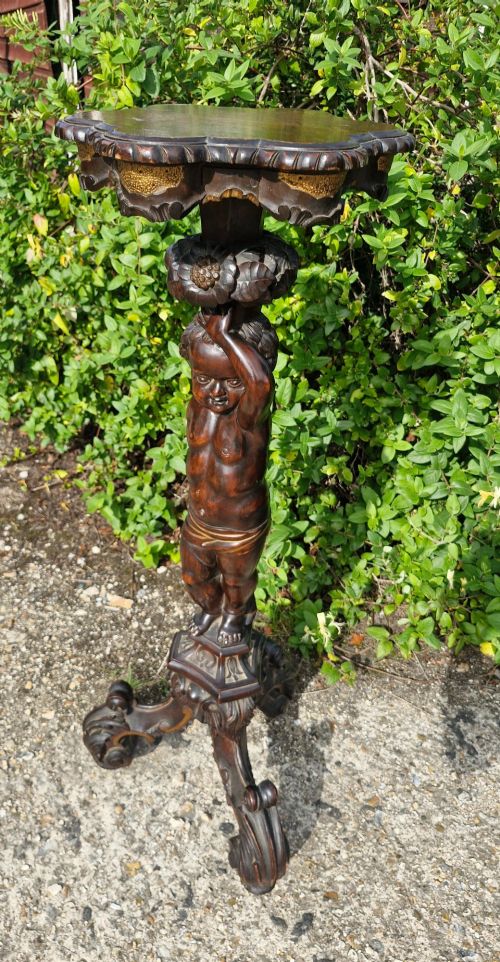
The objects listed show a strong presence of walnut as the primary timber, often enriched with bone inlay, ebony, and fruitwood. These furnishings frequently borrow the decorative vocabulary of Florentine workshops, displaying carved details, parcel-gilt highlights, and polychrome finishes.
While original pieces survive from early centuries, the selection is heavily populated by later revivals made during the 19th and early 20th centuries. These revival iterations capture the monumental scale and ornamental discipline of earlier eras while adapting to domestic room proportions.
What varies in quality
Quality rests significantly upon the crispness of the wood carving and the precision of the inlay work. Pieces displaying deeply articulated acanthus leaves, figures, and geometric bone inlays demonstrate superior workshop execution compared to softer, shallower decorative stampings.
The selection of timber grain and the integrity of the structural joinery dictate longevity and aesthetic power. Superior items exhibit harmonious proportions, careful timber matching, and well-preserved surface treatments that respect the historic idiom without appearing crude.
Italian Renaissance Table Retail Price Guide 2026
Typical asking prices for italian renaissance table among the pieces listed under this phrase on Sellingantiques today, from the lower quarter to the upper quarter. They describe what is for sale here now, not the wider market.
The listings demonstrate a strong preference for walnut across multiple centuries, accompanied by specialised decorative elements like bone inlay and cast bronze.
Angiolo Barbetti Firenze
The Italian Renaissance Table Glossary
- Renaissance Revival
- A 19th-century stylistic movement that drew direct inspiration from the art and architecture of the 15th and 16th centuries. It manifests in furniture through heavy cornices, carved caryatids, and classical symmetry.
- Trestle Table
- A form featuring a horizontal beam supported by two vertical trestles or feet. This format provides stable footing and clear floor space beneath the surface.
- Bone Inlay
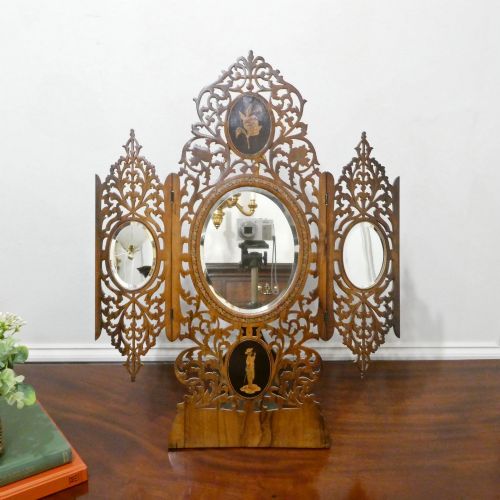
- The technique of recessing small pieces of carved bone into timber surfaces to create contrasting geometric or figurative patterns. It appears frequently on panels and table caskets.
- Parcel-gilt
- A finish where specific decorative areas are partially gilded with gold leaf while other surfaces display the natural wood grain. This technique highlights carved details and mouldings.
- Majolica
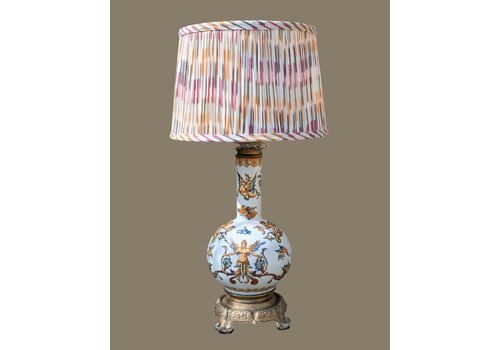
- Tin-glazed earthenware produced in Italy, known for its vibrant polychrome painted decoration. It frequently appears on table lamps and decorative vessels associated with these interiors.
Italian Renaissance Table: Frequently Asked Questions
How do I spot a reproduction?
Examine the timber shrinkage, tool marks, and construction joints to determine the age of the piece. Genuine older walnut acquires a dry, dense patina that modern machining struggles to replicate.
Look closely at the inlay and carving work. Hand-carved elements display subtle irregularities and tool nuance, whereas modern reproductions often reveal mechanical uniformity.
Where should I place a centre table?
A centre table commands attention when positioned prominently in the middle of a spacious room or large hallway. It serves as a natural focal point for displaying lamps, books, or decorative bowls.
Ensure there is adequate clearance around the piece for movement. These tables are visually heavy and require surrounding breathing room to showcase their architectural bases.
How do I care for walnut furniture?
Keep walnut furniture away from direct heat sources and strong sunlight to prevent the timber from drying out and splitting. Maintain a stable indoor climate to protect delicate wood and bone inlay.
Dust regularly with a soft, dry cloth and avoid harsh chemical polishes. Periodic application of appropriate wax preserves the natural lustre of the aged timber.