
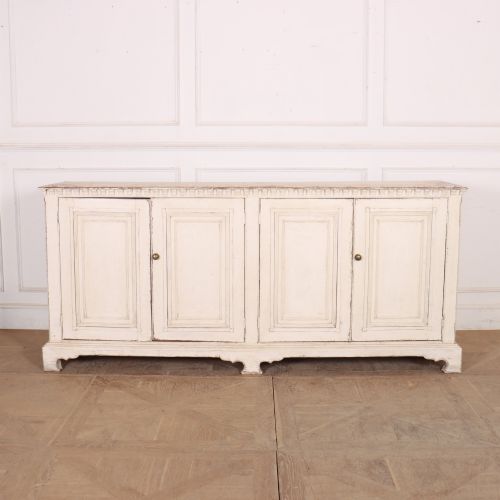


Italian Painted Cabinet
An italian painted cabinet brings distinct regional colour and surface texture to a room, offering practical storage disguised as art.
Italian Painted Cabinet
When you search for an italian painted cabinet, you encounter storage forms ranging from grand eighteenth century enfilades and corner cupboards to modest nineteenth century bedside tables and commodes. These pieces carry regional decorative traditions from Venetian rococo flourishes to Tuscan simplicity, translated through centuries of domestic use.
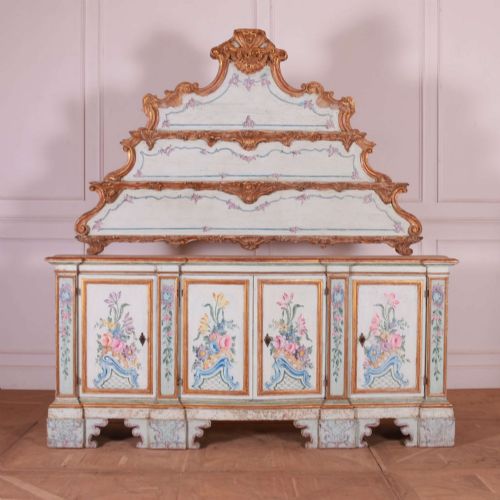
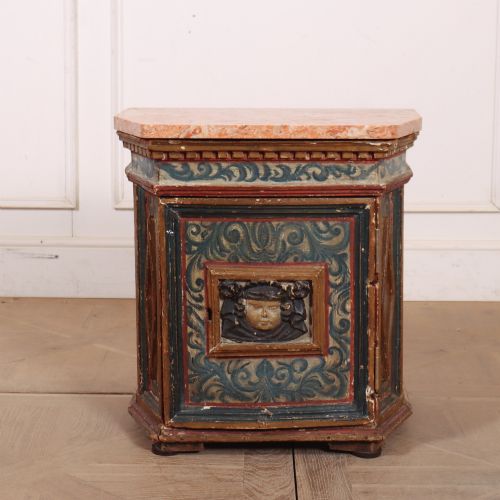
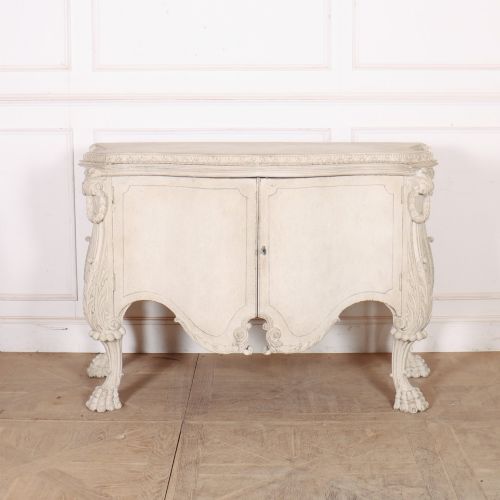
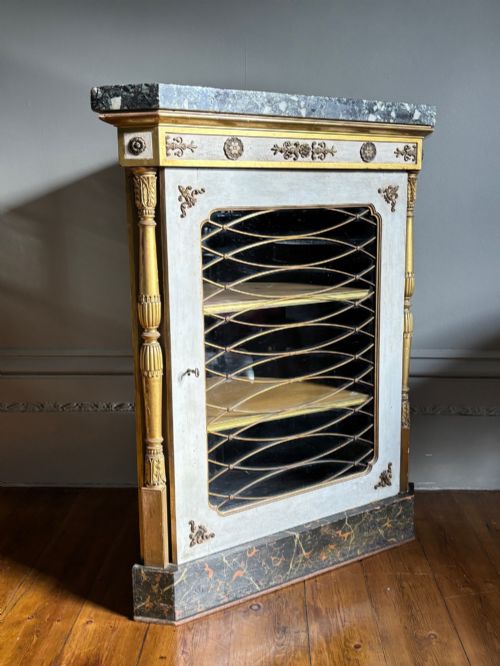
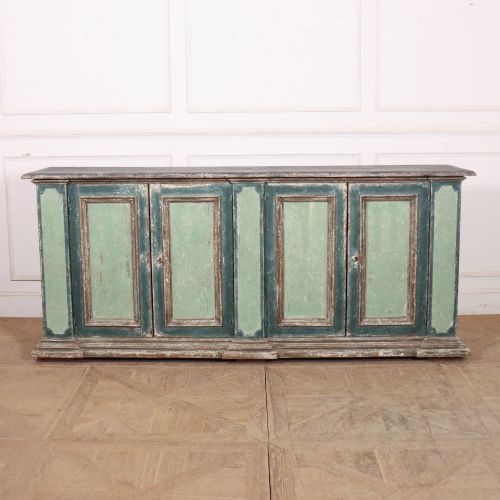
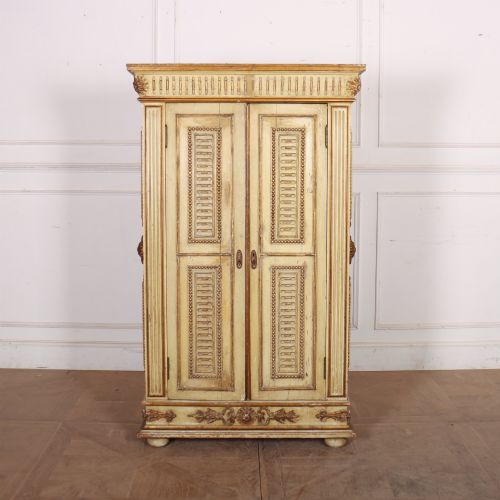
The most frequent examples on this page are side cabinets and buffets dating from the eighteenth and nineteenth centuries, often finished with polychrome pigments, giltwood accents, or parcel gilt details on pine and hardwood surfaces. They combine utilitarian storage with the distinct ornamental vocabulary of Italian provincial and metropolitan workshops.
Construction and decoration
Makers built these pieces primarily from wood, applying gesso as a smooth preparation layer before laying down oil or tempera paint and occasionally adding giltwood or metal mounts. Surfaces frequently received multi-layered polychrome schemes, sometimes finished with protective varnishes that have darkened gracefully over decades of exposure.
Structural joinery relies on traditional carpentry appropriate to the period, supporting heavy painted and gilded exteriors on carcases made from pine and walnut. Decorative hardware in iron and other metals provides functional hinges and pulls that complement the painted facades.
Listings feature periods spanning from the seventeenth century through the 1930s, constructed in painted wood, gesso, and giltwood.
Judging quality and preservation
The distinction between tiers rests upon the integrity of the original painted surface and the sophistication of the regional style, whether Venetian rococo or provincial country work. Untouched pigment layers and authentic historical patination command greater interest than later decorative overpainting.
Proportional harmony and the subtlety of carved details, such as serpentine fronts and gesso mouldings, separate standard utility cupboards from ambitious architectural and cabinet pieces. The relationship between the structural carcase and the surviving decorative scheme dictates the overall character.
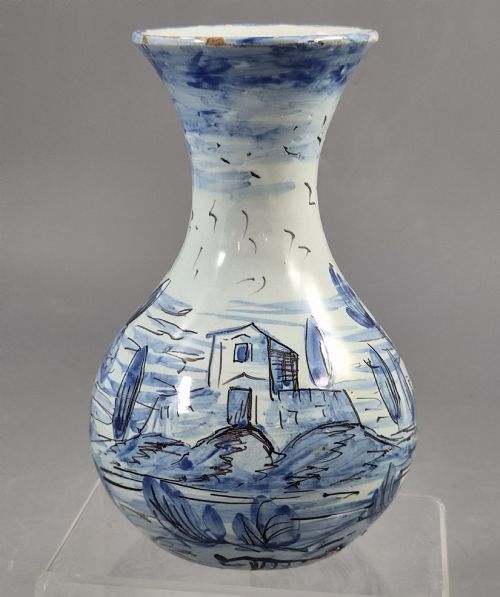
Cantagalli·Pauly et Cie
The Italian Painted Cabinet Glossary
- Enfilade
- A long suite of cabinets or a grand sideboard designed to stand along a continuous wall. These large storage pieces often anchor formal dining rooms and hallways.
- Gesso
- A plaster-like mixture applied to wood surfaces to create a smooth base for painting and gilding. It provides the crisp foundation for raised decorative reliefs.
- Parcel Gilt
- A technique where selective areas of a piece are highlighted with gold leaf while the rest remains painted or natural. This creates contrast against the primary painted ground.
- Serpentine
- A shaped furniture front featuring a curving contour that bulges outward in the centre and recedes at the sides. It demands skilled carpentry and adds fluid movement to case pieces.
- Polychrome
- Decorated in multiple colours across the painted surface. This multi-hued approach defines much of the traditional furniture output from Venice and Tuscany.
Italian Painted Cabinet: Frequently Asked Questions
Where should I place an italian painted cabinet?
These pieces suit living rooms, hallways, and bedrooms where their decorative painted surfaces can function as focal points while providing concealed storage.
Smaller side cabinets and bedside tables fit easily into domestic spaces, while larger enfilades and buffets require substantial wall space to display their proportions.
How do I distinguish eighteenth century pieces?
Earlier pieces from the eighteenth century typically display hand-mixed pigments, authentic craquelure in the paint layers, and traditional timber construction without modern mechanical fasteners.
Stylistic cues such as Venetian rococo curves or Tuscan provincial lines also help align a piece with its period of origin.
Are these cabinets suitable for daily use?
Most pieces function well for everyday storage of tableware, linens, or books, provided the internal shelving and structural joinery remain sound.
Care should be taken to protect antique painted surfaces from excessive moisture, direct sunlight, and abrasive cleaning products.
What is the difference between provincial and Venetian styles?
Provincial examples tend to feature simpler lines, sturdier pine construction, and straightforward floral or geometric painted motifs suited to country houses.
Venetian pieces frequently showcase elaborate serpentine fronts, sophisticated giltwood accents, and refined rococo or neoclassical decorative schemes.