


Italian Maritime Oil Painting
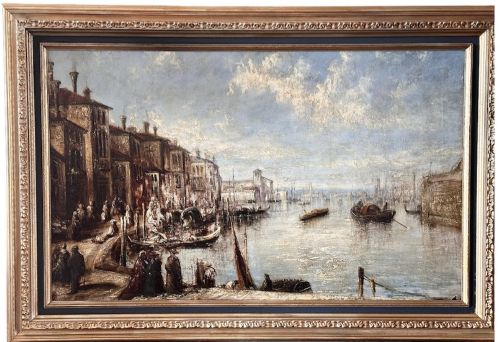
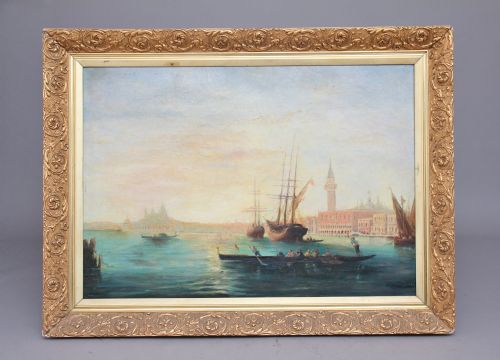
An italian maritime oil painting brings the light of the Mediterranean into a room, capturing coastal scenes from bustling Venetian canals to the Bay of Naples.
Italian Maritime Oil Painting
An italian maritime oil painting captures coastal views, bustling ports, and serene lagoons from the seventeenth century through to the mid-twentieth century. Buyers searching this phrase will find works depicting iconic landmarks such as Venice, Naples, Sorrento, and Rome.
The nineteenth century forms the bulk of the selection, featuring detailed townscapes, harbour scenes, and stormy seascapes by named artists and regional schools. These oil paintings range from large architectural views to intimate miniature panels.
Works span diverse artistic movements, including Victorian academic traditions, Italian Impressionism, and the specific output of the School of Posillipo. Each piece records the changing light and maritime trade of historic Italian ports.
How they were made
Artists painted primarily with oil paint on stretched canvas or prepared wood panels, building up layers of pigment to achieve depth in water and sky. These traditional supports allowed for careful blending and varied brushwork.
Many period works retain their original giltwood or gesso frames, often embellished with gold leaf to complement the warm palettes of the coastal scenes.
Several artists painted the same Venetian lagoon repeatedly, ensuring future generations could track the exact movement of nineteenth-century gondolas.
What varies in quality
The strength of an italian maritime oil painting lies in the handling of light, atmospheric perspective, and architectural precision. Finer examples display confident brushwork that brings movement to water and clarity to distant monuments.
Signatures, artist attribution, and documented provenance elevate certain works, while compositional balance and the preservation of the original paint surface separate standard commercial pieces from superior artistic achievements.
Francis Moltino·Fernando Del Basso·Jane Vivian·Consalvo Carelli·Alfred Pollentine·Arthur Joseph Meadows
The Italian Maritime Oil Painting Glossary
- Oil on Canvas
- A traditional painting medium where pigments bound in oil are applied to a woven fabric support. This combination allows for rich colour blending and textured application.
- Giltwood
- Wood carved and coated with gold leaf or metallic paint to create a decorative frame. These frames often reflect the period taste of the painting's creation.
- School of Posillipo
- A nineteenth-century group of artists based near Naples who focused on plein-air landscape and marine painting. Their work prioritised natural light and direct observation of coastal topography.
- Gesso
- A plaster-like mixture applied to wood panels or frames to prepare a smooth surface for painting or gilding. It provides a durable base for the subsequent layers of gold leaf or oil.
Italian Maritime Oil Painting: Frequently Asked Questions
How do I identify a Venetian canal scene?
Venetian scenes typically feature identifiable landmarks such as the Santa Maria della Salute, the Dogana, or the lagoon. Painters often captured the distinctive architecture flanking the water alongside gondolas and local craft.
Look for the quality of light on the water and the treatment of historic palazzos, which help distinguish nineteenth-century works from later copies.
What is a pierhead painting?
A pierhead painting specifically records a named vessel, such as a steamship or sailing ship, entering or leaving a specific port. These works served as portraits of merchant or passenger ships against recognisable coastal backdrops.
They combine precise maritime rigging detail with regional topography, often commissioned by ship captains or owners.
How should I hang an oil painting?
Oil paintings on canvas or wood should be placed away from direct sunlight, high humidity, and extreme temperature fluctuations. Stable indoor conditions protect both the canvas support and the traditional gesso frame.
Ensure the wall fixings match the weight of the piece, particularly if the work retains a heavy nineteenth-century giltwood frame.
Are these paintings signed by the artist?
Some works bear signatures or inscriptions by known nineteenth and twentieth-century painters, while others remain unsigned or attributed to specific regional circles. Signatures are typically found in the lower corners of the canvas.
Lack of a signature does not diminish the age or quality of a coastal scene if the handling and materials match the period.