



Blue Water Seascape Painting
A blue water seascape painting brings the motion of the open sea or coastal lagoon straight into a room through oil or watercolour.
Blue Water Seascape Painting
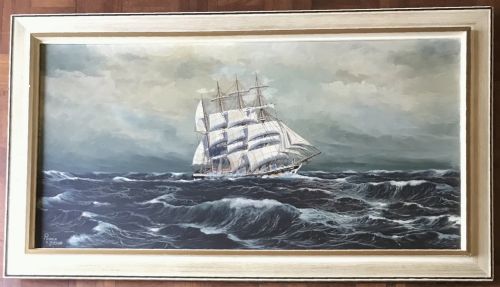
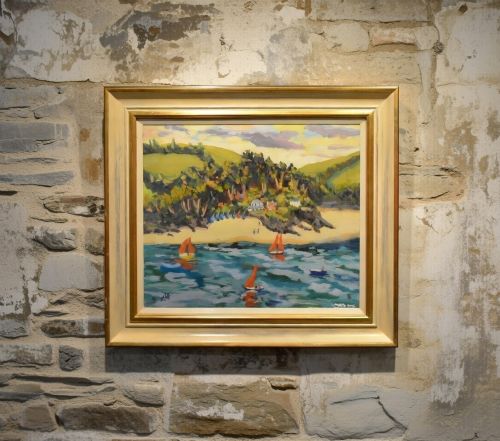
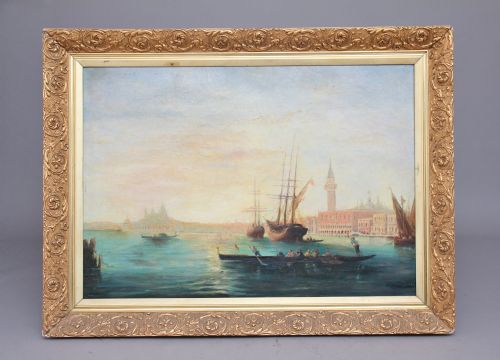
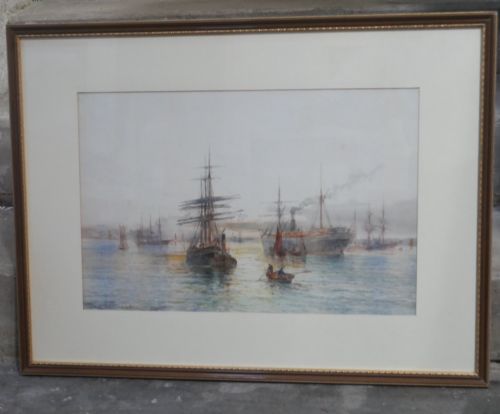
A blue water seascape painting focuses on maritime views, coastal harbours, and deep waters rendered in oil or watercolour. These works capture everything from calm Venetian lagoons to stormy shipping lanes off the English coast.
The pieces on this page span the nineteenth century up to the later twentieth century, taking in Victorian marine art, Edwardian coastal scenes, and post-impressionist interpretations. Common subjects include sailing craft, clippers, and Mediterranean ports.
Buyers will encounter works on canvas, paper, card, and panel, reflecting the diverse methods artists used to portray water and sky. Whether executed in delicate watercolour or rich oil paint, each piece records a specific coastal or marine encounter.
What separates the work
Quality rests on the artist's handling of light, atmosphere, and the movement of water. Stronger works demonstrate a secure understanding of nautical architecture and the play of reflections across shifting tides.
The depth of the composition and the fidelity of the atmospheric conditions separate standard decorative pieces from accomplished works by named painters of the period. Pigment preservation and the integrity of the original support also shape the standing of each painting.
Sailors traditionally believed that painting stormy seas brought bad weather indoors, yet artists kept sending ships into choppy waters anyway.
Lucy Pratt·William Frederick Settle·William Knox·Frederick William Booty·Arthur Joseph Meadows·Yves Brayer·Edward Aubrey Hunt
The Blue Water Seascape Painting Glossary
- Watercolour
- A paint consisting of colour pigment suspended in a water-soluble vehicle. It is typically applied to paper to achieve transparent washes of light.
- Oil on Canvas
- A painting technique where oil-based paints are applied to a woven fabric surface stretched across a wooden frame. This method permits rich blending and textured brushwork.
- Gesso
- A plaster-like mixture used as a base coat on wooden frames or panels before gilding or painting. It provides a smooth surface for decorative mouldings.
- Impasto
- A technique where paint is laid on an area of the surface in very thick layers, usually thick enough that the brush or painting-knife strokes are visible.
- Post-Impressionism
- An art movement extending roughly from the late nineteenth century that rejected naturalistic depiction in favour of broader expression of emotion and structure.
Blue Water Seascape Painting: Frequently Asked Questions
How do I care for an antique watercolour?
Keep watercolour paintings away from direct sunlight to prevent the paper from yellowing and the pigments from fading.
Ensure they hang in rooms with stable humidity to protect both the paper and the wooden frame from warping.
Can I hang oil paintings in bright rooms?
Oil paintings on canvas tolerate ambient light better than works on paper, but prolonged direct sun can still dry the paint surface.
Check that the room lacks excessive moisture so the canvas and wooden stretcher bars remain stable.
How do I identify the period of a seascape?
Look at the rig of the vessels, the clothing of any figures, and the framing style, which often match the fashion of the execution date.
Signatures, dealer labels on the reverse, and the type of canvas or paper also point to the era of creation.
What is the difference between canvas and panel?
Canvas consists of woven fabric stretched over a wooden frame, offering slight give and a textured surface for oil paint.
Panel provides a rigid wooden or card support that prevents flexing and preserves fine detail without the weave of cloth.