


Gondola Scene Oil Painting
A gondola scene oil painting brings the serene light and iconic waterways of Venice directly into a room, capturing the romance of the lagoon.
Gondola Scene Oil Painting
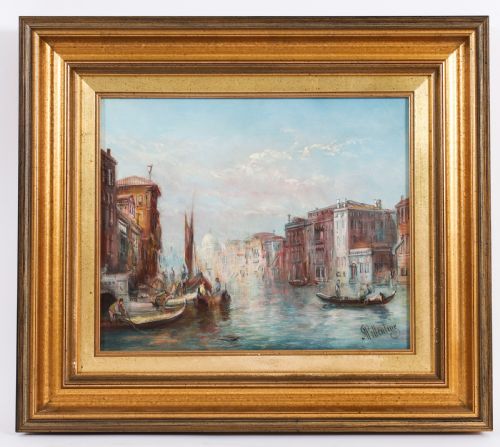
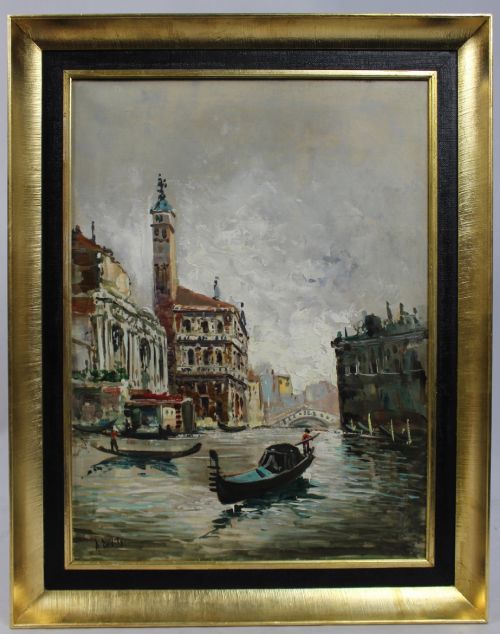
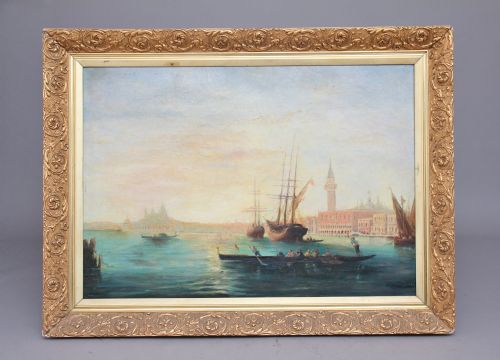
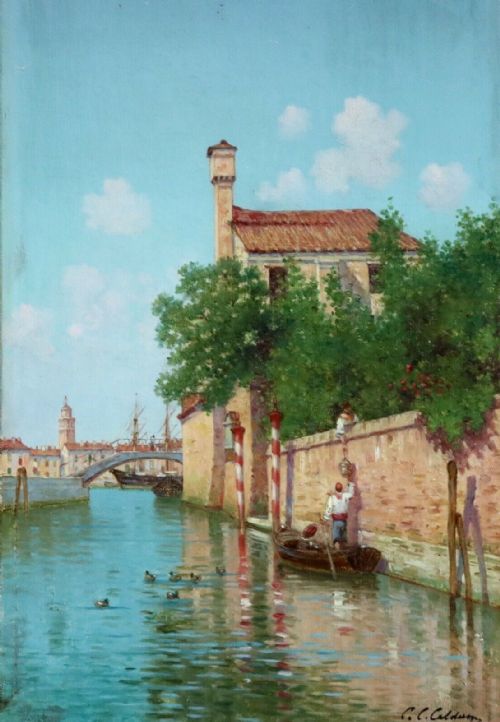
A gondola scene oil painting depicts the canals, lagoons, and architecture of Venice, focusing on the traditional boats and their operators. These works range from Victorian canvases to mid-century impressionist interpretations.
Buyers frequently encounter nineteenth-century depictions alongside early twentieth-century examples on this page, reflecting enduring artistic interest in the Venetian waterway. The subjects span from bustling grand canals to quiet corners near the Bridge of Sighs.
The objects typically take the form of framed oil paintings on canvas, utilising traditional formats to present cityscapes and lagoon vistas. Painters such as Alfred Pollentine, Antonio DeVity, and Marc Aldine exemplify the genre across different periods.
Materials and construction
These works are executed in oil paint on canvas, a medium prized for its rich texture and depth of colour. Artists built up the surface with layered pigments to capture the shimmering light on the water.
Many frames incorporate wood, gesso, and gold leaf or gilt, creating an ornate finish that complements the traditional subject matter. Giltwood surrounds enhance the visual impact of the canvas within domestic settings.
Listings feature works spanning the nineteenth century through the mid-twentieth century, utilising oil on canvas alongside ornate giltwood frames.
Assessing quality in these paintings
Quality rests in the handling of light and atmosphere, where skilled brushwork conveys the distinctive luminosity of the Venetian lagoon. Stronger works demonstrate confident spatial depth in the depiction of canals and palazzos.
The integrity of the canvas and the preservation of the original paint layer influence the overall standing of a piece. Finer examples retain their vibrancy and textural detail without excessive restoration or surface dullness.
Alfred Pollentine·Antonio DeVity·F.D. Campo·Marc Aldine·Jane Vivian·Charles Clement Calderon
The Gondola Scene Oil Painting Glossary
- Oil on canvas
- A traditional painting medium where pigments bound in drying oil are applied to stretched fabric. This combination allows for subtle blending and rich impasto effects.
- Giltwood
- Wood that has been coated with a thin layer of gold leaf or gilt. It provides a decorative and protective border for traditional fine art.
- Gesso
- A paint mixture consisting of a binder mixed with chalk, gypsum, or pigment. It serves as a prepared base for wood panels and picture frames before gilding.
- Impressionism
- An art style characterised by relatively small, thin, yet visible brush strokes and an emphasis on accurate depiction of light. This approach suits the shimmering reflections found on Venetian waters.
- Lagoon
- A stretch of salt water separated from the sea by a low sandbank or coral reef. In these paintings, the Venetian lagoon provides an expansive setting distinct from narrow canals.
Gondola Scene Oil Painting: Frequently Asked Questions
How do I date a Venetian canal painting?
Dating relies on stylistic clues, canvas preparation, and framing techniques characteristic of periods like the Victorian era or the early twentieth century. Signatures and biographical details of artists also help establish a reliable timeframe.
Examining the back of the canvas and any stretcher marks can reveal additional clues about the age and origin of the piece.
Where should I hang a canvas of Venice?
These works suit reception rooms, studies, or hallways where adequate wall space allows the composition to draw the eye. Placing them away from direct sunlight protects the oil pigments and gilt frames from fading.
Pairing the painting with traditional interior decor helps anchor the historical aesthetic of the piece.
What is the difference between an urban view and a lagoon scene?
Urban views focus on architectural facades, bustling canals, and famous landmarks like palazzos and bridges. Lagoon scenes offer wider horizons with open water, distant skylines, and atmospheric skies.
Both formats capture different aspects of Venetian topography explored by artists over successive generations.
How should I care for an antique oil painting?
Maintain a stable room temperature and humidity level to prevent the canvas from slackening and the oil paint from cracking. Dust the surface and frame gently with a soft, dry brush without applying pressure.
Avoid using liquid cleaners on either the canvas or the giltwood frame to preserve the original materials.