


Italian Carved Wood Prickets
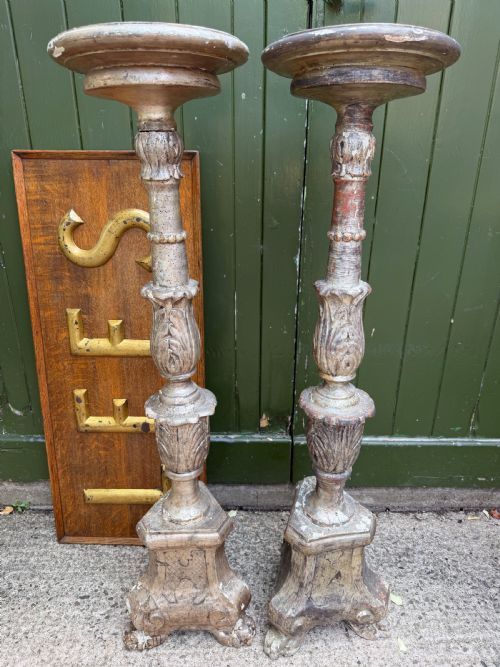
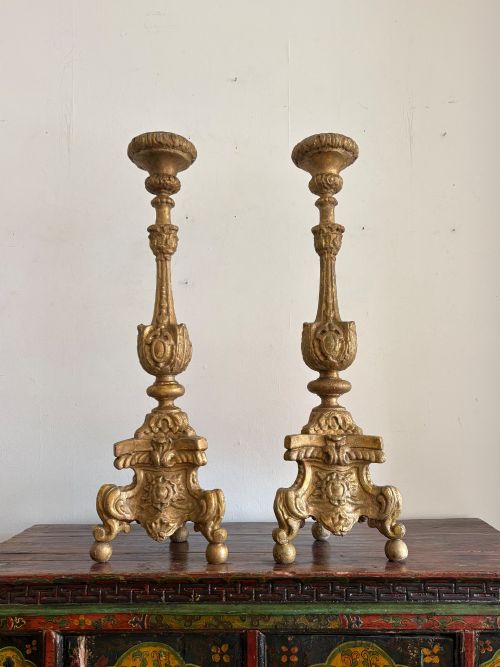
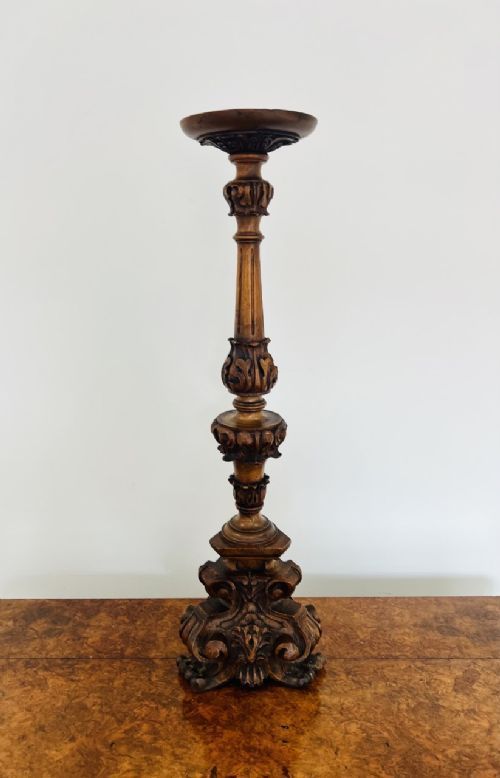
These Italian carved wood prickets are church and altar survivals shaped by baroque and neoclassical hands, offering dramatic height and rich surface presence to a room.
Italian Carved Wood Prickets
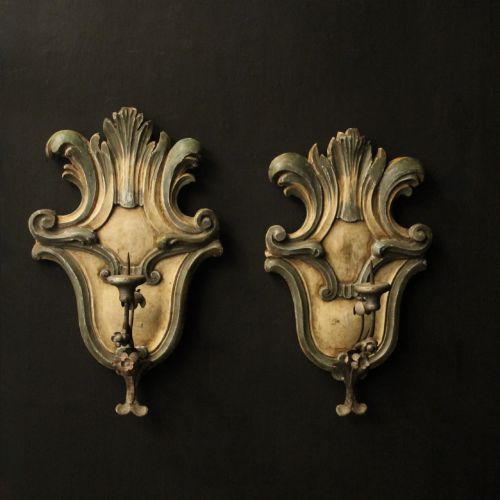
When you search for italian carved wood prickets, you encounter liturgical survivors originally made for altars and chapels across the centuries, most frequently meeting examples from the seventeenth, eighteenth, and nineteenth centuries. These objects take the form of tall candlesticks, torcheres, candle stands, and wall sconces that have often been subsequently adapted into lamps.
The aesthetic vocabulary draws heavily from Italian Baroque, Baroque Revival, and Florentine styles, yielding monumental proportions and sculptural presence. Pieces vary from grand pairs of altar-type candle-holders to single floor torcheres, reflecting their ecclesiastical origins in domestic settings.
Materials and construction
The underlying structure relies on carved wood, pinewood, and walnut, shaped by hand before receiving decorative surface treatments. Artisans applied layers of gesso to smooth the carved details and prepare the body for gilding or silvering.
Surfaces are finished with gold leaf, silver leaf, or mecca, a warm translucent varnish applied over silver to simulate gold. Iron and metal elements sometimes appear in structural supports or socket components.
Some wooden altar-stiffeners managed to survive centuries of choir practice and incense smoke only to end up holding reading lights beside modern sofas.
Assessing quality and execution
Quality rests primarily in the depth, crispness, and vigor of the original carving, distinguishing masterwork altar pieces from simpler provincial outputs. The rhythm of the acanthus foliage and the anatomical surety of sculptural elements dictate the artistic standing.
The integrity and ageing of the original giltwood, silver leaf, or mecca surfaces define the visual impact. Patina accumulated across centuries of church and domestic use determines the depth of character on the finished object.
The Italian Carved Wood Prickets Glossary
- Pricket
- A sharp metal spike on top of a candlestick designed to hold a candle in place, typical of early church altarware. This differs from a socket into which a candle is inserted.
- Torchere
- A tall ornamental stand or candlestick designed to carry a light, often standing on the floor or mounted to a wall. These pieces provide significant vertical emphasis.
- Giltwood
- Wood that has been coated with gold leaf or gold dust over a prepared gesso ground. This technique creates a rich reflective surface that catches candle or lamp light.
- Mecca
- A transparent golden varnish applied over silver leaf to imitate the appearance of gold at a lower cost. It produces a distinctive warm and aged metallic tone.
- Gesso
- A plaster mix applied to wood surfaces to create a smooth base for gilding and fine carving detail. It allows artisans to crisp up edges before applying metal leaf.
Italian Carved Wood Prickets: Frequently Asked Questions
What is a pricket candlestick?
A pricket candlestick uses an upright metal spike instead of a socket to secure the candle during use. This design is historically associated with ecclesiastical settings and church altars.
Over time, many of these prickets were converted to modern lamps while retaining their distinctive carved wooden shafts.
How are these pieces dated?
Dating relies on stylistic clues found in the carving, the proportions, and the construction methods used by the artisans. Baroque and neoclassical motifs offer clear temporal markers.
Additionally, the composition of the underlying gesso and the wear patterns on the gold or silver leaf help establish the age.
Can I use them as lamps?
Many surviving examples have already been adapted into table lamps, standard lamps, or wall sconces to suit contemporary domestic lighting needs. This conversion preserves the sculptural wooden base while adding functional wiring.
Unconverted prickets can also be displayed as decorative objects or paired with appropriate candle setups.
Where were they originally used?
These pieces originated in Italian churches, chapels, and grand palazzos to illuminate altars and large state rooms. Their impressive scale and elaborate decoration were designed for dramatic visual impact.
Today, they function as focal points in residential interiors, bringing historical weight to living spaces.