
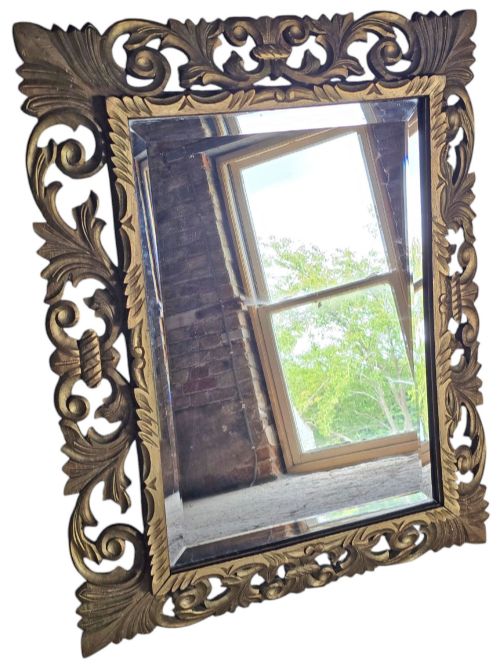
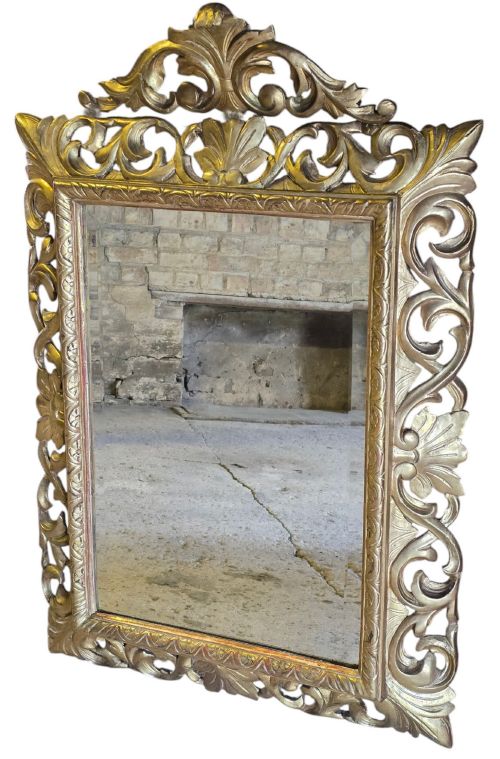

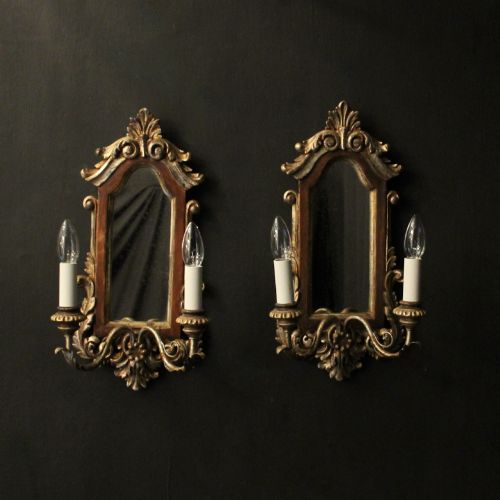
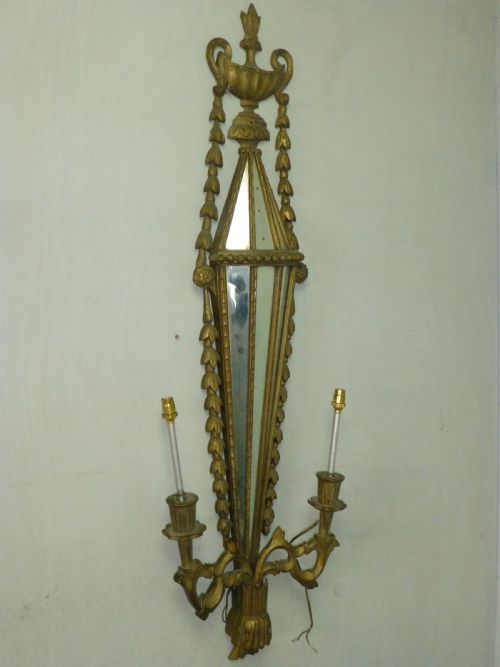
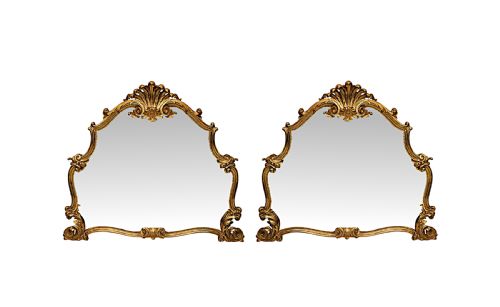
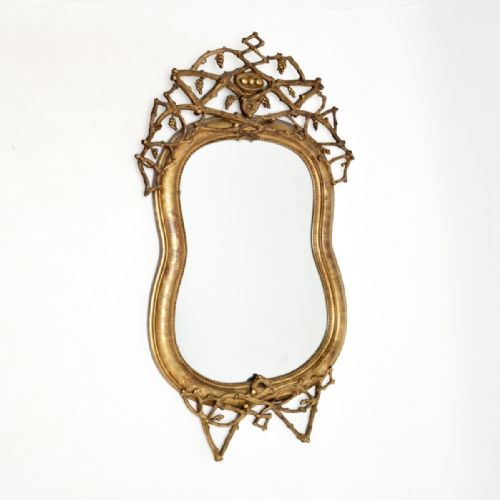

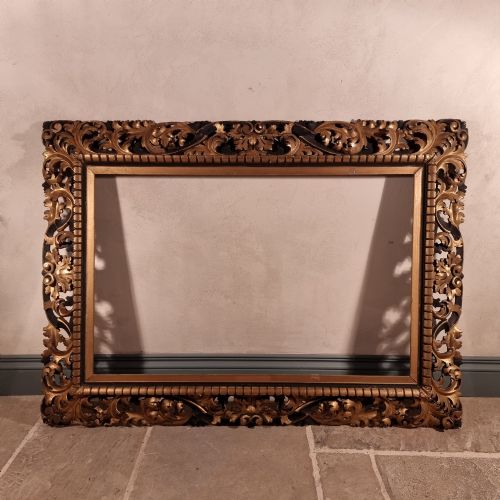
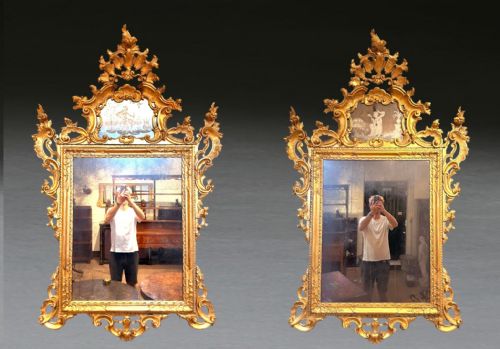
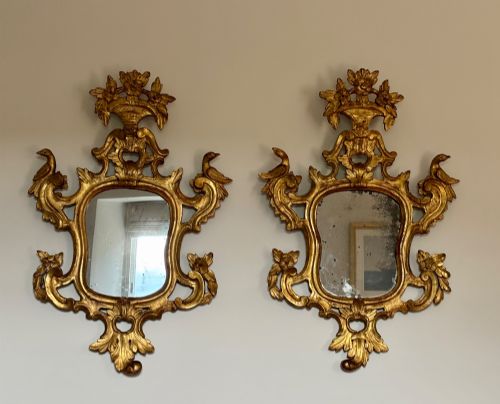
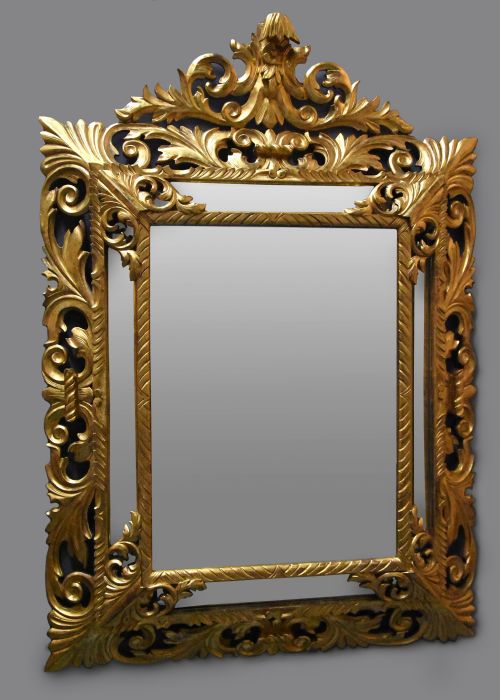
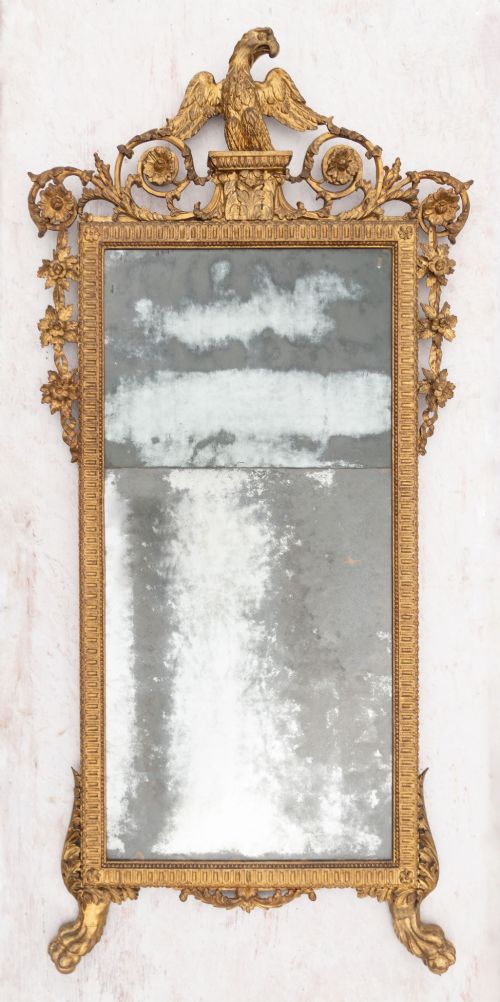
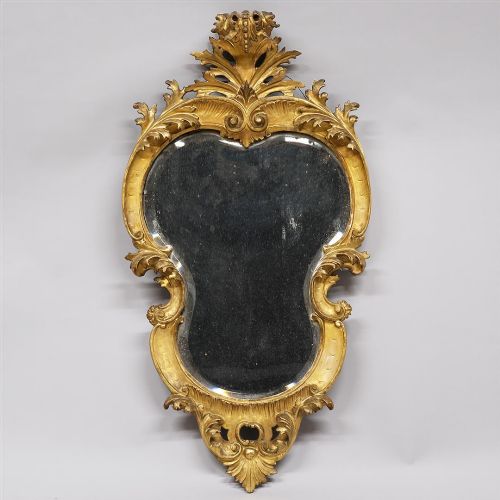
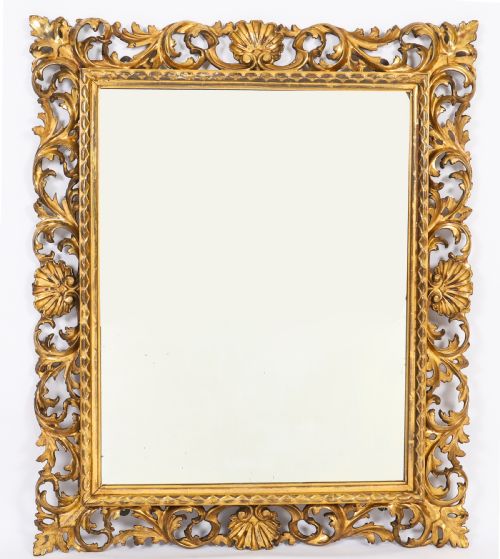

Italian Carved Gilt Mirror
An italian carved gilt mirror brings warmth and ornate craftsmanship into a room through centuries of continental design.
Italian Carved Gilt Mirror
An italian carved gilt mirror encompasses grand overmantle pieces, intricate Florentine wall fixtures, and delicate cartouche forms originating from various continental periods.
The selections available range from 18th-century Baroque and Rococo examples to later 19th-century revivals and early 20th-century interpretations.
Buyers frequently encounter wall mirrors, pier glasses, and girandoles designed to reflect light and anchor a room's decorative scheme.
Materials and Construction
Artisans carved intricate wooden frames from pine or other timbers before applying layers of gesso to smooth the surface for detailed ornamentation.
Gold leaf or silver leaf was then carefully laid over the prepared ground, often supplemented by painted highlights or original foxed mirror glass.
Some mirrors wear their centuries proudly with spotted glass, proving that even reflections appreciate a little patina.
Assessing Quality and Execution
The depth and crispness of the wood carving distinguish superior examples from simpler production, separating master workmanship from standard workshop output.
The survival of original gilding and the character of the aged mirror plate contribute significantly to the integrity and visual weight of the piece.
Ciceri and Co
The Italian Carved Gilt Mirror Glossary
- Giltwood
- Wood that has been coated with gold leaf or gold paint. This technique provides a luminous metallic surface that defines the classic appearance of these frames.
- Gesso
- A plaster mix applied to wood frames to create a smooth base for carving and gilding. It allows for sharp relief work and intricate decorative details.
- Cartouche
- An ornamental frame resembling a rolled-up piece of paper or a scroll. This form is frequently seen in Rococo designs.
- Girandole
- A branched wall mirror or sconce designed to hold candles. The reflective glass multiplies the candlelight within the interior space.
- Overmantle
- A large mirror specifically proportioned to hang above a fireplace mantel. These pieces often feature grand scales to command the chimney breast.
Italian Carved Gilt Mirror: Frequently Asked Questions
Where should I hang an italian carved gilt mirror?
These mirrors suit placement above a mantelpiece, across from a window to maximise natural light, or above a console table in a hallway.
Their substantial frames allow them to function as primary focal points in living rooms and reception spaces.
How do I clean an antique gilt surface?
Dust the carved wooden frame gently with a soft, dry brush to prevent damage to the delicate gold leaf layers.
Avoid using liquid cleaners or chemical polishes on the gilding, as moisture degrades the historical gesso and metal leaf.
How do I tell Rococo style from Baroque?
Baroque designs tend to be heavier, symmetrical, and monumental, emphasising grand architectural drama and solemn authority.
Rococo pieces introduce asymmetry, C-scrolls, and playful natural motifs like foliage and shells for a lighter, more fluid aesthetic.