


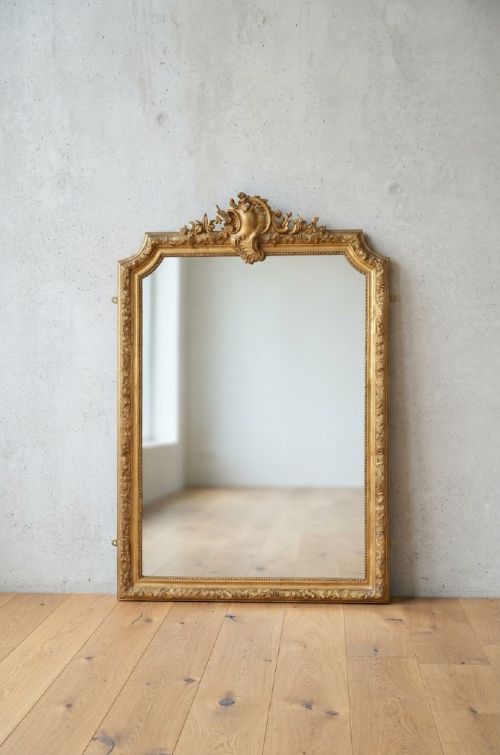
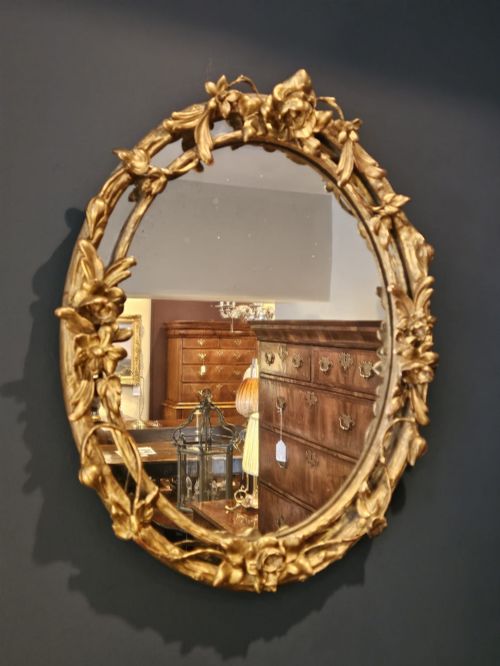
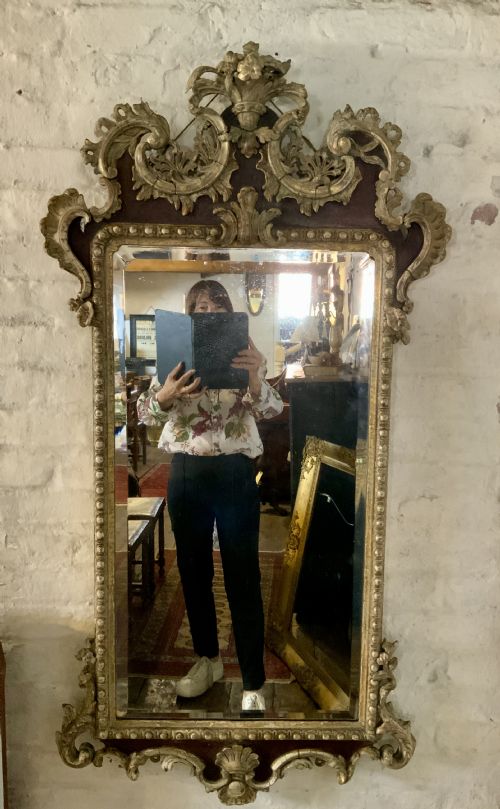
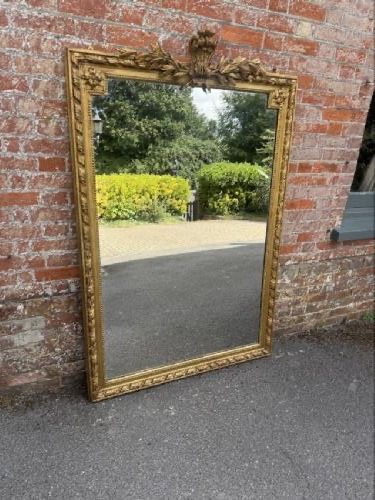

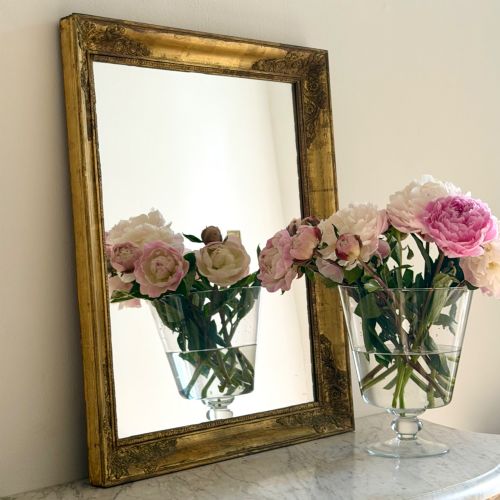
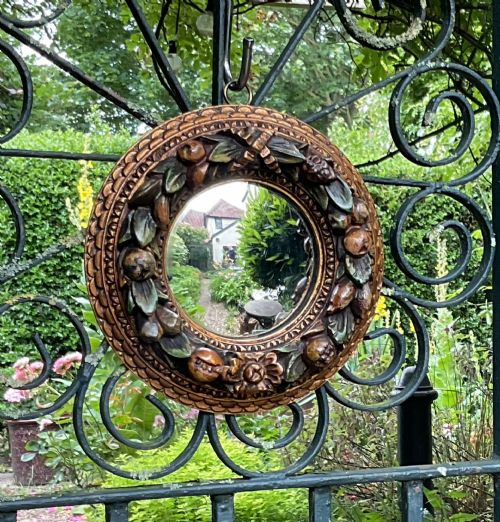
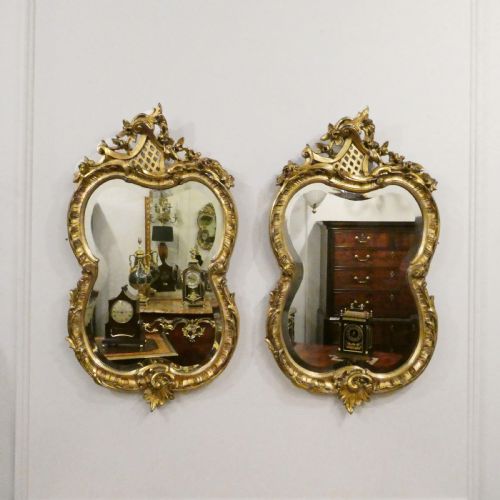
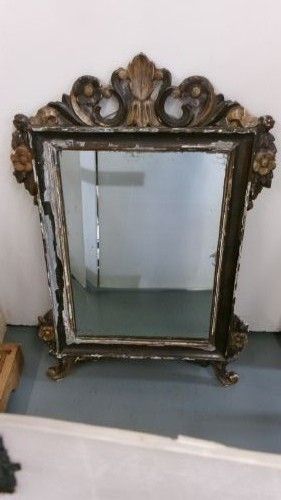

Gilt Wood Accent Mirror
A gilt wood accent mirror brings warmth and reflective depth to a room, drawing on centuries of European carving traditions.
Gilt Wood Accent Mirror
When you search for a gilt wood accent mirror, you encounter pieces spanning from the eighteenth century through to the early twentieth century, with nineteenth-century examples appearing frequently. These objects take the form of wall mirrors, pier glasses, and large overmantels designed for domestic interiors.
The styles range from elaborate Rococo and Baroque revivals to restrained Georgian designs and Chinese Chippendale interpretations. Origin points include English, French, and Italian workshops, each bringing distinct regional ornament to the carved frames.
Materials and Construction
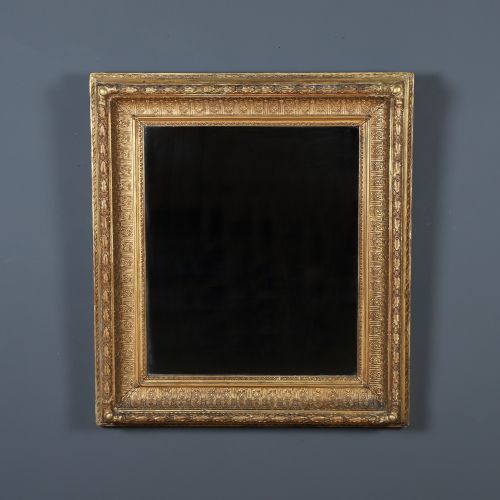
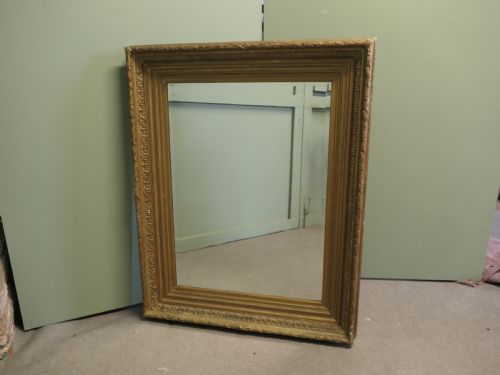
Frames are constructed primarily from wood, such as pine, walnut, or timber, which is then shaped using carved wood or moulded gesso. The decorative surfaces receive an application of gold leaf or parcel gilt finishes to achieve the characteristic metallic lustre.
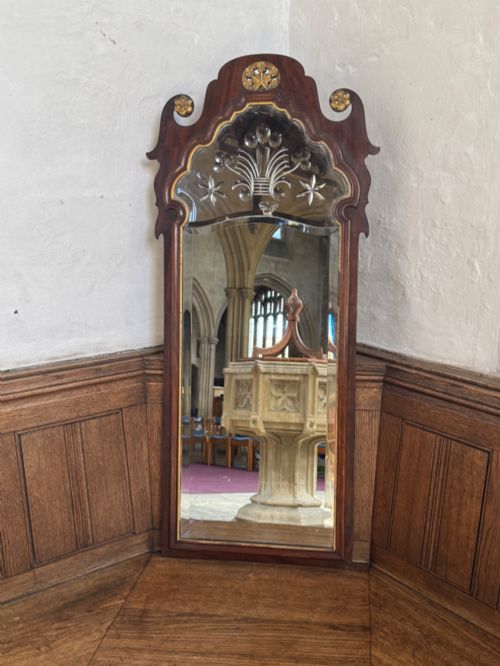
Mirrored components include glass plates, often featuring reverse cut engraving or bevelled edges appropriate to the period of manufacture.
Listings feature pieces spanning the 18th century, the Victorian era, and the early 20th century, utilising materials like gesso, gold leaf, and mirror glass.
Craftsmanship and Proportion
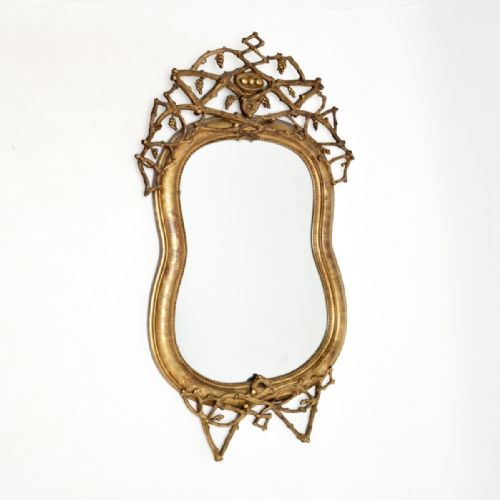
The standard of a gilt wood accent mirror rests upon the crispness of the hand-carving in the wood and gesso layers. Deep undercut foliate cresting and scrolls display superior artisanal skill compared to softer, shallower moulding.
Proportion and harmony between the frame dimensions and the mirror plate dictate the visual balance of the piece.
John Belchier
The Gilt Wood Accent Mirror Glossary
- Giltwood
- Wood that has been coated with gold leaf or a gold-coloured metallic finish. This surface treatment provides the bright reflective quality characteristic of these frames.
- Gesso
- A plaster-like mixture applied to wood frames to create a smooth surface for carving and gilding. It allows artisans to model intricate relief details.
- Pier glass
- A tall mirror traditionally hung on the pier, the section of wall between two windows. These pieces often coordinate with console tables placed below them.
- Overmantel mirror
- A wide mirror designed to hang directly above a fireplace mantelpiece. They frequently incorporate arched tops or extensive ornamental cresting.
- Parcel gilt
- A decoration method where only specific portions of an object are gilded while other areas show the natural wood. This technique highlights particular carved motifs.
Gilt Wood Accent Mirror: Frequently Asked Questions
Where should I hang a gilt wood accent mirror?
These mirrors function well above fireplace mantels, along hallway walls, or between windows as pier glasses. Their reflective plates bounce natural light deeper into living spaces.
Ensure the wall fixings match the weight of the timber and gesso frame before mounting.
How do I identify the period of a gilt wood mirror?
Examine the carving style, the type of wood visible on the reverse, and the characteristics of the mirror plate itself. Eighteenth-century pieces often display hand-beveled glass and distinct joinery.
Revival pieces from the Victorian era and the early twentieth century frequently emulate earlier Georgian or French Rococo motifs.
What is the difference between gesso and carved wood?
Carved wood involves shaping the solid timber frame directly with chisel and gouge. Gesso is a mixture applied over the wood base to build up intricate decorative details.
Many antique frames utilise both techniques, featuring a wooden structure finished with moulded gesso ornamentation.
How should I clean a gilt wood accent mirror?
Dust the carved frame gently with a soft, dry brush to protect the delicate gold leaf surface. Avoid using liquid polishes or harsh chemical cleaners near the gilt.
Clean the glass plate with a mild glass cleaner applied to a cloth rather than sprayed directly onto the mirror.