
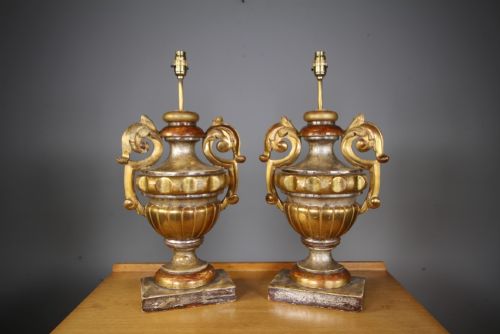
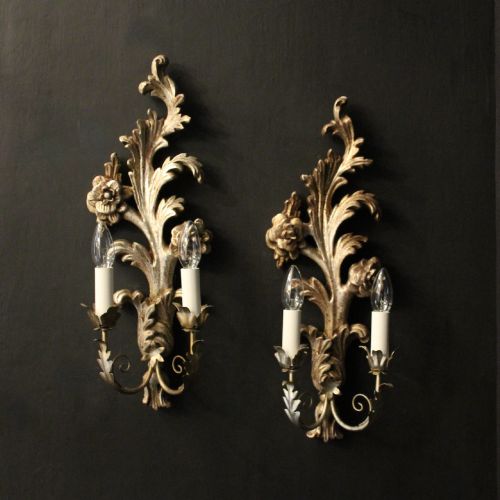


Italian Carved Gilt Lamp
An italian carved gilt lamp brings warmth and ornate craftsmanship into a room through rich surfaces and sculptural timber forms.
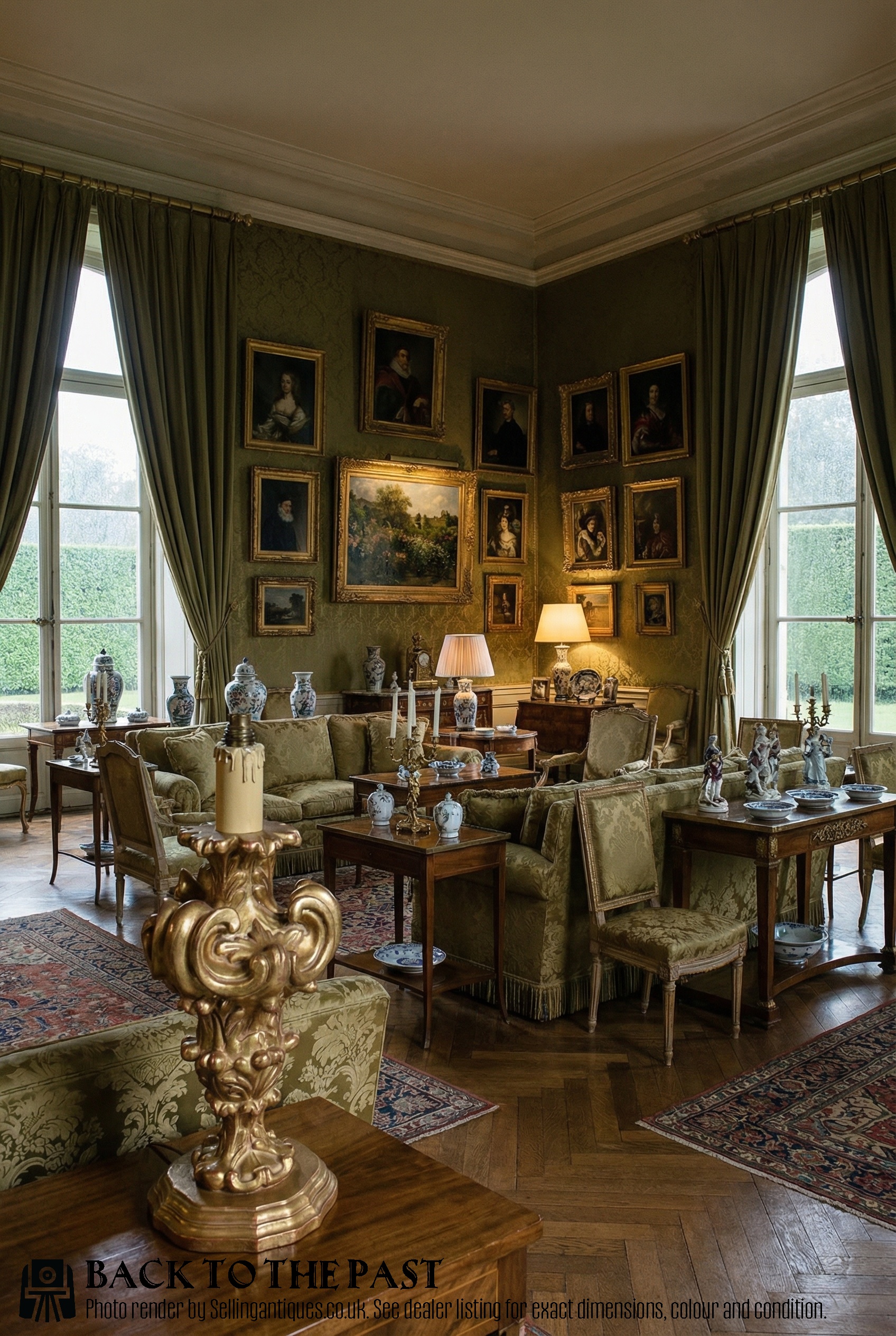
Italian Carved Gilt Lamp
These pieces encompass standard lamps, floor lamps, and table lamps shaped from timber and finished with metallic leaf or paint. An italian carved gilt lamp typically reflects regional aesthetics from Florence and Venice, drawing on historical forms.
Buyers meet examples ranging from nineteenth century carved pine urns to floor-standing standards created in the early decades of the twentieth century. Many pieces adapt older church candlesticks or pricket sticks into functional lighting fixtures.
The selection includes matched pairs and single statement pieces, often decorated with gesso, polychrome pigments, or silver leaf alongside traditional gold.
Materials and construction
Artisans shaped these lighting standards from solid timbers including pine and carved wood, building up decorative relief details with gesso. The underlying structure receives meticulous hand-carving before the application of surface finishes.
Layers of gold leaf or silver leaf are meticulously applied over bole to create a luminous metallic sheen, sometimes complemented by painted or polychrome accents. Ormolu mounts, brass elements, and marbleised details appear on specific forms from the nineteenth century.
Several tall standards began life as quiet ecclesiastical furnishings before finding new purpose holding modern lightbulbs.
Judging quality and craftsmanship
Depth and precision of the wood carving dictate the visual impact, where crisp acanthus leaves and fluid drapery separate superior work from simpler production. The handling of the gesso layer beneath the gilding ensures sharp detail rather than a softened, muddy appearance.
The integrity of the gold or silver leaf surface, alongside the harmony of any polychrome or painted highlights, determines the long-term character of the object. Converted ecclesiastical pieces show quality through the original weight and balance of the turned or carved base.
The Italian Carved Gilt Lamp Glossary
- Giltwood
- Wood that has been coated with thin sheets of gold leaf over a prepared gesso and bole ground. This technique gives furniture and lamps a warm, metallic radiance that deepens with age.
- Gesso
- A plaster mixture applied to carved wood surfaces to create a smooth base for gilding or painting. It allows craftsmen to model intricate low-relief details before applying metal leaf.
- Pricket stick
- A type of liturgical candlestick featuring a central spike to secure a large wax candle. Many nineteenth century examples were later converted into lamp bases.
- Polychrome
- The practice of decorating surfaces in multiple colours, often combined with gilding on figurative Italian works. This adds vibrant visual depth to carved wooden sculptures and stands.
- Torchere
- A tall ornamental stand or candlestick designed to hold a light source. In this collection, similar tall proportions are often categorised as standard or floor lamps.
Italian Carved Gilt Lamp: Frequently Asked Questions
How are old candlesticks converted into lamps?
Many nineteenth century wooden sticks and altar pieces had internal wiring channelled safely through their centres while preserving the original base.
Craftsmen adapt the top fittings to hold standard bulb holders without compromising the historic carved exterior.
Where should I place a standard lamp?
These tall floor-standing fixtures work effectively in corners or beside seating areas where their vertical carved silhouette can be fully appreciated.
They provide ambient illumination while serving as sculptural focal points within a room.
How do I clean gilded wooden lamps?
Dust the carved surfaces gently with a soft, dry brush to prevent any abrasion to the delicate metallic leaf layers.
Avoid moisture and chemical cleaners entirely, as liquids can damage the underlying gesso and historical finishes.
What distinguishes Florentine styles?
Florentine designs frequently incorporate elaborate leaf motifs, scrollwork, and rich gold or silver leaf applications.
These pieces lean towards ornate decorative flourishes derived from regional artistic traditions.