

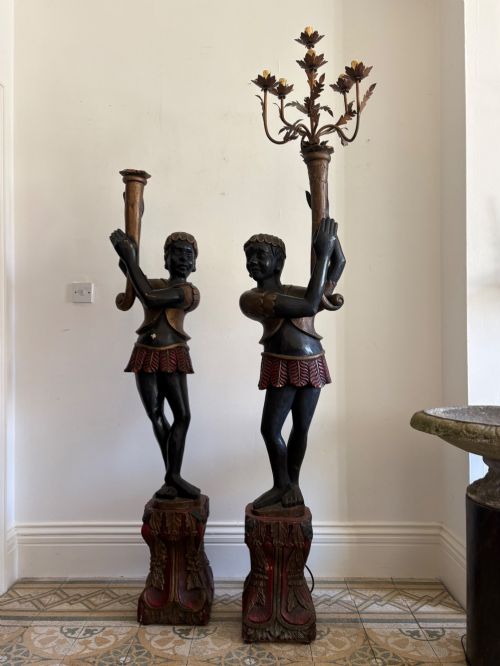


Italian Carved Floor Lamp
An italian carved floor lamp brings dramatic height and old-world craftsmanship into a room, offering sculptural presence alongside warm illumination.
Italian Carved Floor Lamp
When you search for an italian carved floor lamp, you encounter tall stands designed to hold a light source, often referred to as standard lamps or torcheres. The selections gathered here span the nineteenth and early twentieth centuries, including Edwardian examples and pieces from around nineteen-twenty.
You will see various regional expressions and revivals, notably Venetian Baroque, Italian Florentine, and Neoclassical styles. Forms range from classical turned wooden columns to figural stands depicting Venetian figures on stands.
Most pieces rely on traditional wooden construction, frequently enhanced with applied gesso and gold leaf or polychrome paint. Several incorporate marble details or paired formats that suit grander interior schemes.
How they were made
Carved wood forms the structural core of these lamps, shaped by hand into fluted columns, ornate scrolls, and intricate figural subjects. Artisans applied layers of gesso over the timber base to create a smooth, receptive ground for subsequent decoration.
Surface finishes typically involve gold leaf or rich polychrome paint applied by hand. Giltwood and gilt surfaces catch the ambient light, while specialised techniques like marbleizing introduce textured decorative layers to the standard.
Italian Carved Floor Lamp Retail Price Guide 2026
Typical asking prices for italian carved floor lamp among the pieces listed under this phrase on Sellingantiques today, from the lower quarter to the upper quarter. They describe what is for sale here now, not the wider market.
Some nineteenth-century figures stand patiently on their original wooden plinths, having spent over a century holding lamps instead of torches.
What varies in quality
The sophistication of the carving dictates much of the distinction between pieces, moving from simple turned supports to deeply undercut acanthus leaves and expressive figural work. Crisp detail in the gesso relief work preserves the original artistic intention.
The preservation of original surface decoration, whether original gilt polychrome or gold leaf, plays a significant role in a lamp's character. Hand-applied finishes that show honest patination hold greater visual depth than uniform modern interventions.
The Italian Carved Floor Lamp Glossary
- Giltwood
- Wood that has been coated with gold leaf or gold paint. This technique creates a luminous, reflective surface finish common in traditional European furniture.
- Gesso
- A plaster-like mixture applied to wood to create a smooth surface for carving and gilding. It allows for crisp, detailed decorative relief work.
- Torchere
- A tall ornamental stand originally designed to hold a torch or candle. In later periods, these forms were adapted to function as electric floor lamps.
- Polychrome
- Decorated in multiple colours. This traditional paint technique brings vibrant life to figural wooden sculptures and architectural stands.
Italian Carved Floor Lamp: Frequently Asked Questions
How do I date an antique floor lamp?
Dating relies on examining the construction methods, tool marks, and stylistic indicators such as Venetian Baroque or Neoclassical Revival motifs. Materials like early gesso formulations and traditional gold leaf also offer chronological clues.
Comparing the turned wood profiles and wiring access points helps distinguish nineteenth-century examples from later twentieth-century productions.
Where should I place a standard lamp?
These tall stands suit corners or flanking positions where their height can fill vertical space effectively. They work well in reception rooms, libraries, or beside substantial seating arrangements.
Because of their decorative presence, they function best when given adequate clearance to display their carving and surface finish.
What styles are common in these lamps?
Venetian Baroque and Italian Florentine designs dominate this category, featuring rich carved details and classical proportions. Neoclassical revival pieces also appear frequently, utilising marble bases and formal columns.
Figural standards depicting traditional Venetian figures on stands offer a more theatrical alternative to standard turned timber columns.