

Antique Gilt Light Fitting
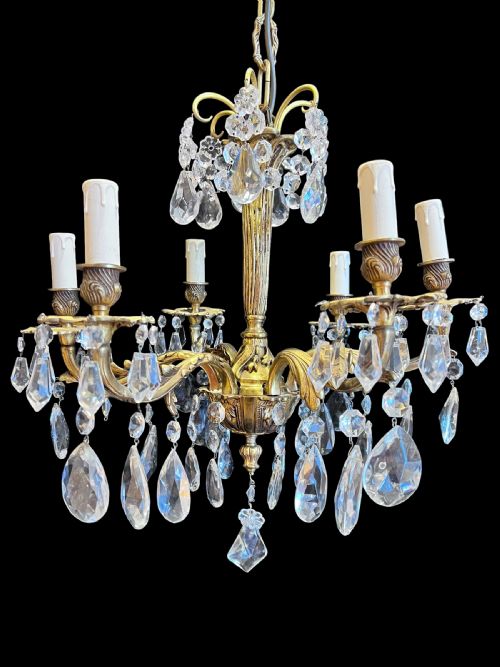
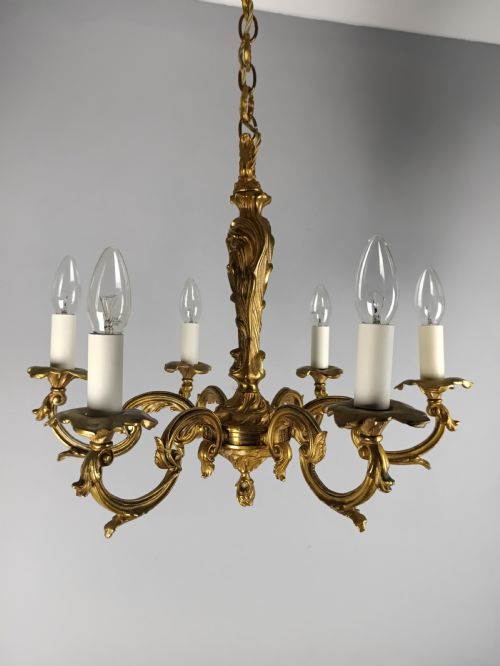
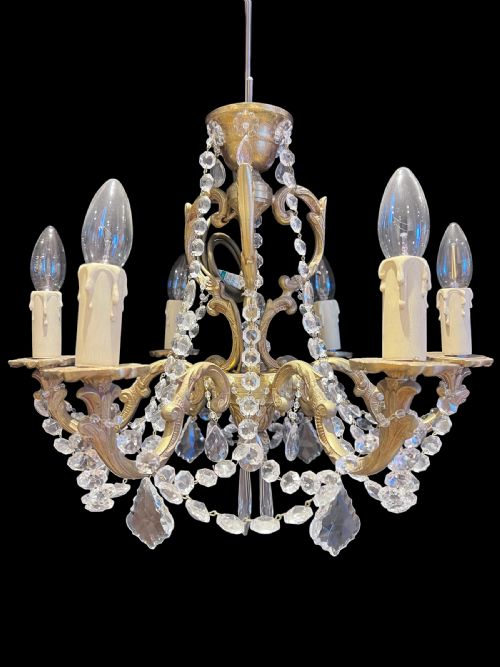
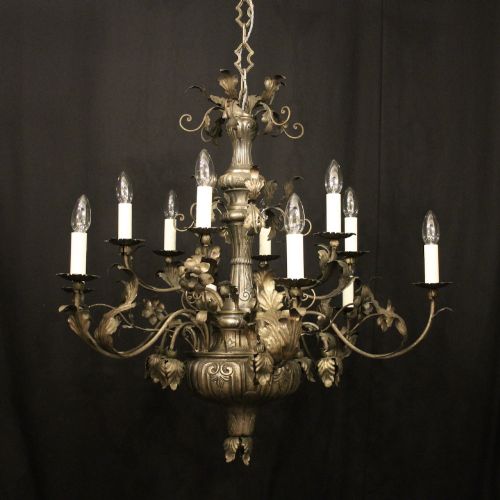
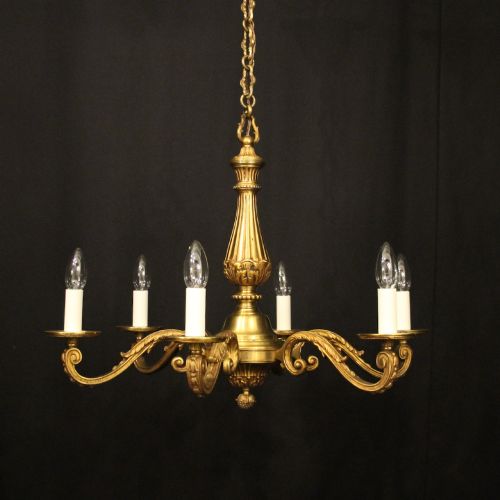
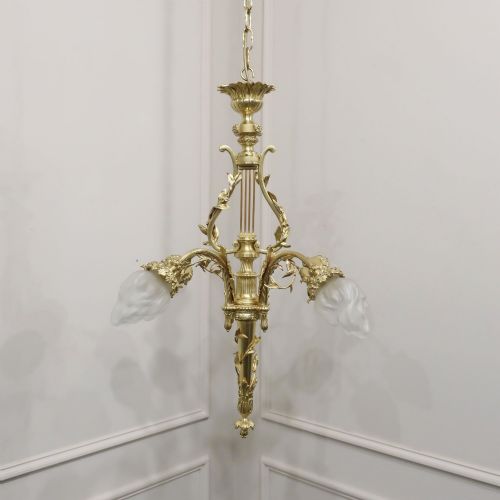
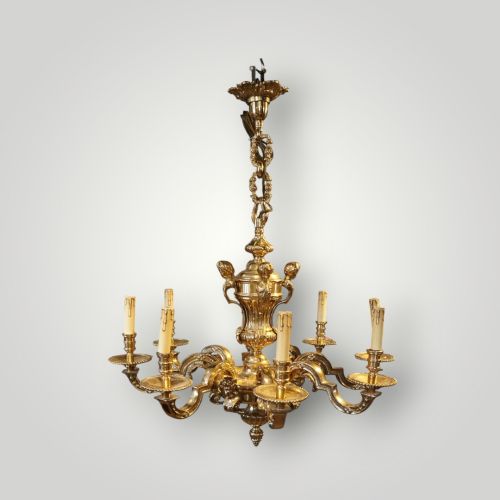
An antique gilt light fitting brings heavy French or Italian presence into a room through cast metal and hanging crystal.
Antique Gilt Light Fitting
An antique gilt light fitting spans multi-arm chandeliers, wall lights, table lamps, and hall lanterns sourced mainly from French and Italian workshops. The pieces on this page originate across the nineteenth century and the early decades of the twentieth century, covering periods such as the Edwardian era and the nineteen-twenties and thirties.
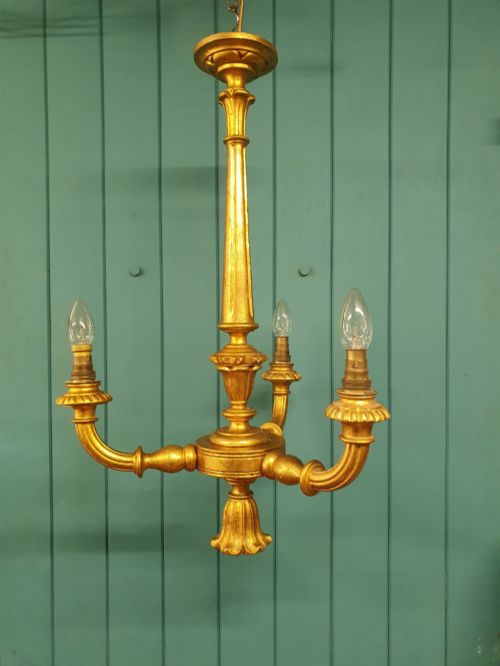
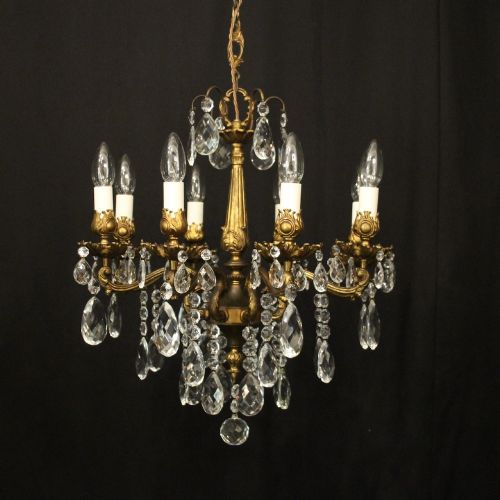
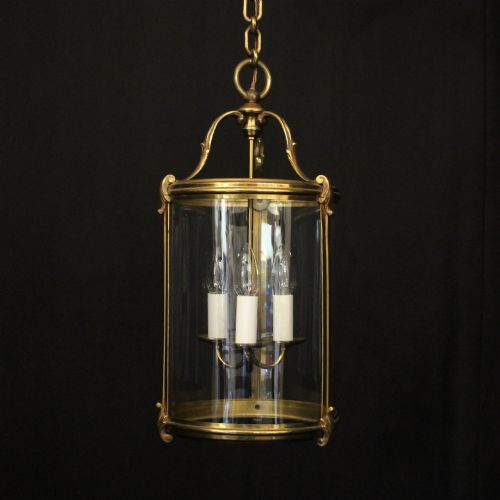
Chandeliers dominate the selection, ranging from small three-light fixtures up to grand twenty-five-light centrepieces designed for high ceilings. Buyers will also find pairs of wall lights, hall lanterns with convex glass panels, and decorative table lamps featuring figures and urns.
Materials and technique
The foundation of an antique gilt light fitting relies on cast bronze, brass, spelter, or carved giltwood, finished with mercury gilding, gold leaf, or silver gilt. Workshops shaped these metals into complex frames ornamented with cherubs, leafy scrolls, urns, and floral motifs.
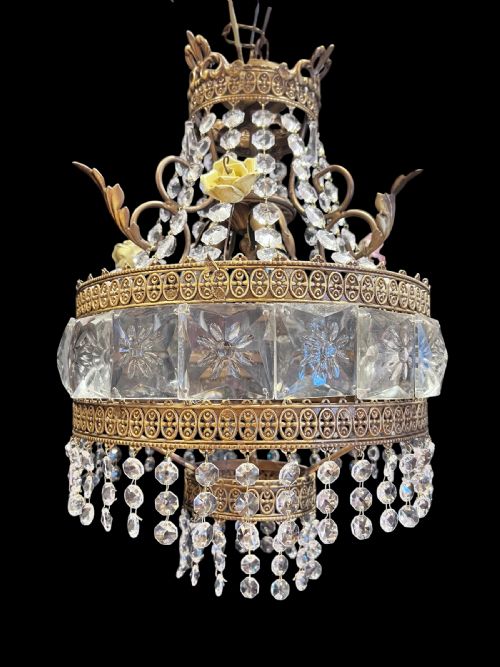
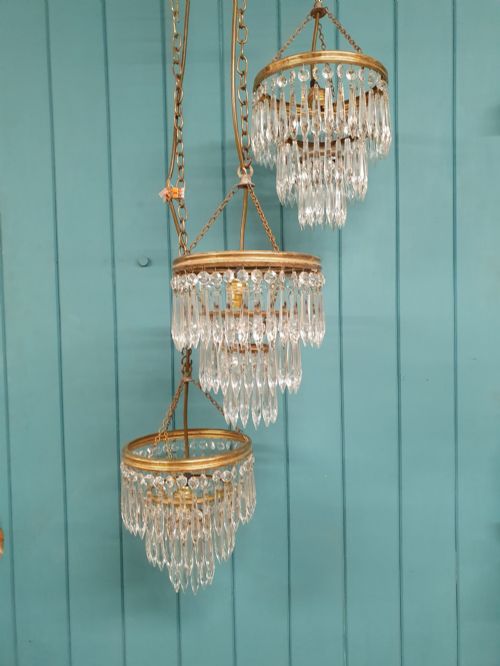
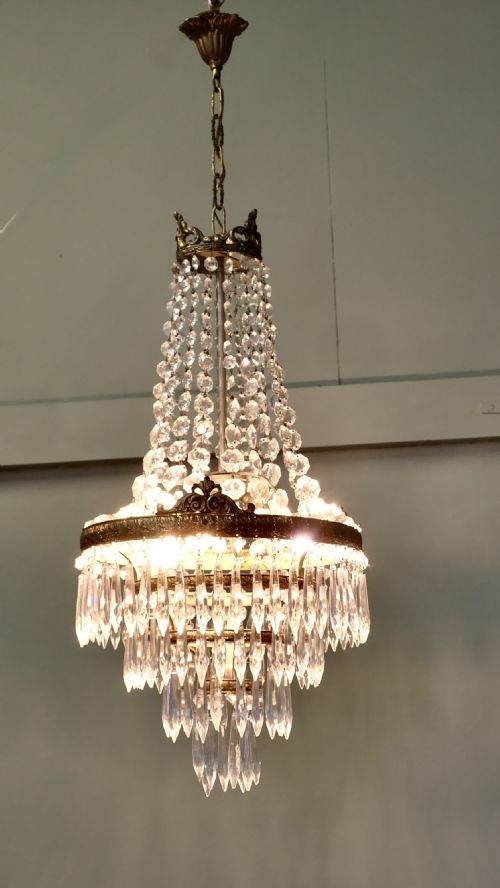
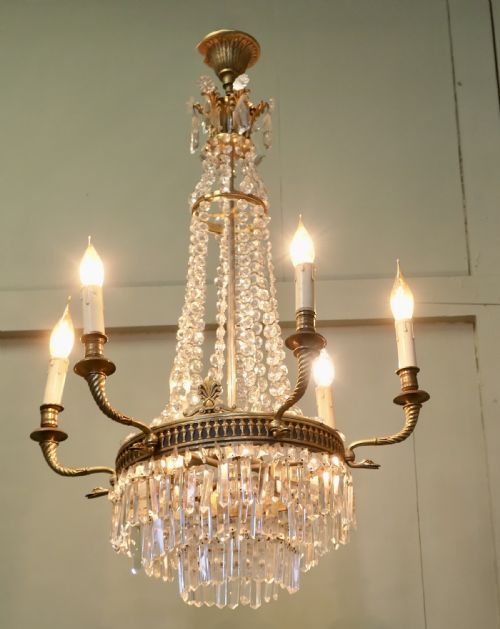
Prisms, spikes, beads, and waterfall drops of cut glass and crystal hang from the metal structures to reflect illumination. Some examples incorporate ceramic flowers, porcelain elements, or turquoise crystals alongside traditional toleware and gesso.
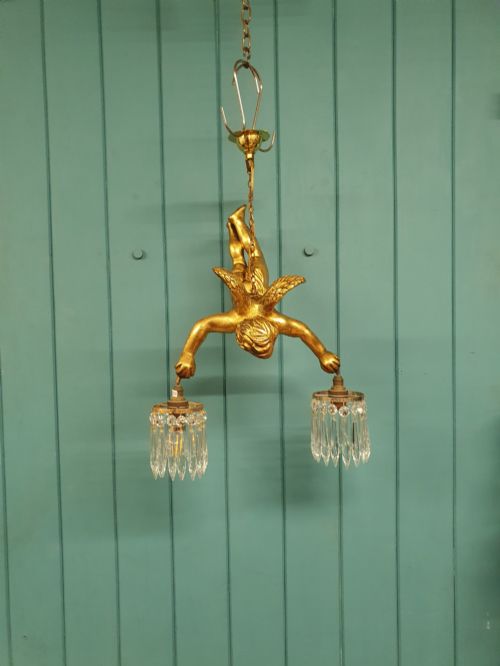
A mischievous gilt spelter cherub peers down from a spike chandelier, holding glass crystals like tiny frozen raindrops.
What varies in quality
Quality rests in the crispness of the metal cast and the depth of the gilding applied to the bronze or brass frame. Superior pieces display finely chiselled surface details on figures and foliage rather than soft, mass-produced contours.
The integration of the glass elements dictates the standard of the fixture, with heavy cut crystal drops and undamaged prisms holding more weight than pressed glass alternatives. Original matching components across multi-arm chandeliers elevate the integrity of the design.
G.E.C
The Antique Gilt Light Fitting Glossary
- Gilt bronze
- Metal cast and coated with a layer of gold, often providing a durable finish that resists tarnishing over decades.
- Spelter
- An alloy of zinc and other metals used as a cheaper alternative to bronze for casting figures and decorative mounts.
- Ormolu
- A gilded bronze technique popular in French decorative arts, known for producing a rich, yellow metallic lustre.
- Toleware
- Painted or lacquered sheet metal, frequently shaped into floral or decorative foliage components on lighting fixtures.
- Gesso
- A plaster-based mixture applied to wood frames before gilding, allowing carvers to create raised ornamental details.
Antique Gilt Light Fitting: Frequently Asked Questions
How do I clean an antique crystal chandelier?
Dust the metal frame and glass components gently with a soft brush or microfibre cloth while the fixture hangs in place. Avoid harsh chemical sprays that might strip the gilt surface from the bronze or brass.
For deeper cleaning, remove individual crystal drops and wash them in warm soapy water before drying them thoroughly with a lint-free cloth. Reattach each piece to its original pin to maintain the balance of the chandelier.
What is the difference between Empire and Rococo styles?
Empire style lighting draws on neoclassical Roman and Greek motifs, featuring strict symmetry, laurel wreaths, lyres, and martial trophies. These pieces feel formal and structured, often utilising heavy gilt bronze and tent-and-waterfall crystal arrangements.
Rococo style pieces embrace asymmetry, flowing curves, C-scrolls, and naturalistic leaf or flower motifs. They appear lighter and more whimsical, reflecting eighteenth-century French taste revived during the nineteenth century.
Where should I hang a hall lantern?
A hall lantern suits high-ceilinged entranceways, corridors, or stairwells where vertical space allows the fixture to hang freely without obstruction. Convex glass panels and enclosed frames protect the light source from drafts in narrow spaces.
Ensure the lantern hangs at a height that provides adequate clearance for people walking underneath while remaining a focal point upon entry.