

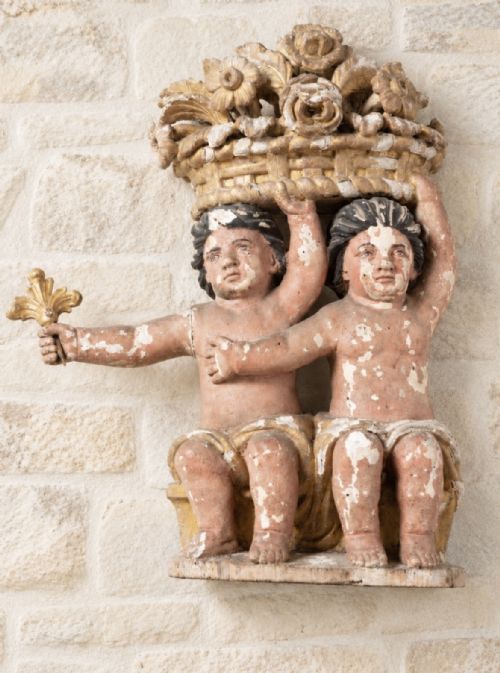


Italian Baroque Carved Putto
An italian baroque carved putto brings high theatrical drama and rich religious devotion straight into a modern interior.
Italian Baroque Carved Putto
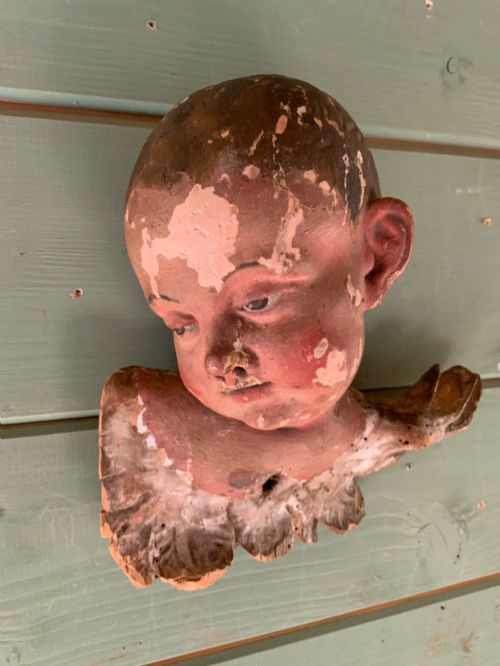
An italian baroque carved putto represents the sculptural cherubic figures that populate European churches, altarpieces, and noble residences from the seventeenth century onwards. These spirited winged infants appear as standalone figures, wall brackets, console supports, and mirror mounts.
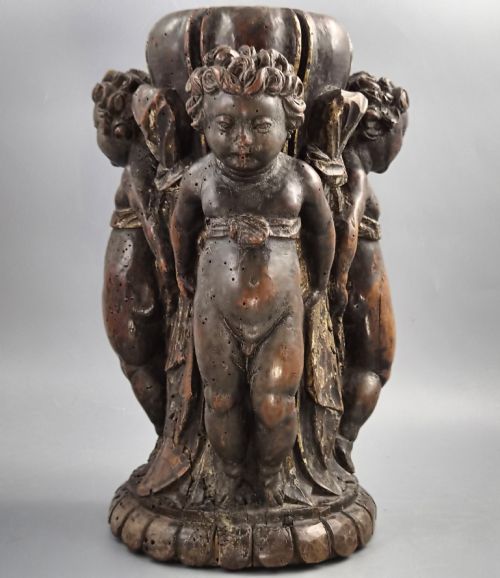
The pieces on this page span from authentic seventeenth-century walnut fragments and eighteenth-century polychrome figures to nineteenth-century revival interpretations in carved wood and giltwood. Collectors encounter single heads, paired figures resting on clouds, and elaborate torchieres featuring multiple putti.
While original seventeenth-century church carvings provide the foundation of this category, nineteenth-century revival pieces dominate the selection, capturing the same exuberant movement and theatrical presence through skilled hand carving.
Materials and Technique
Solid walnut and various regional woods form the structural core of these sculptures, shaped by carvers using traditional gouges and chisels. The natural timber grain often remains visible in seventeenth-century walnut panels and torchiere bases.
Many surfaces receive a preparation layer of gesso before being finished with brilliant gold leaf or applied polychrome paint and silvering. This combination of gesso and gilding creates the luminous, reflective quality seen on wall brackets, mirrors, and hanging lanterns.
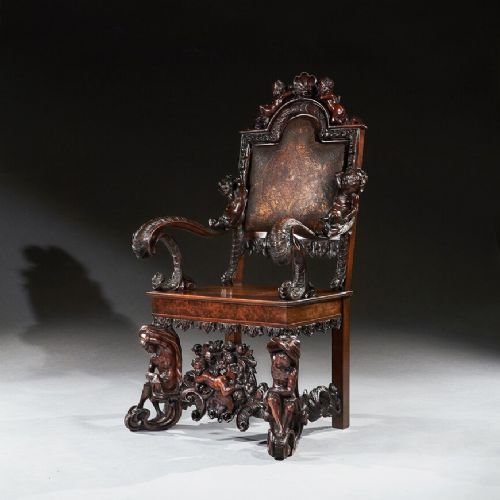
The listings on this page span multiple centuries, uniting 17th-century walnut carvings with 19th-century giltwood mirrors and revival armchairs.
Judging Quality
The integrity of the original surface finish defines the preservation standard. Pieces retaining their early polychrome paint or authentic gold leaf over gesso command greater appreciation than later, heavy-handed overpainting.
Andrea Brustolon
The Italian Baroque Carved Putto Glossary
- Putto
- A plump, often winged male infant figure derived from classical art and heavily utilised in baroque religious decoration. These figures embody both secular playfulness and sacred innocence.
- Giltwood
- Timber that has been coated with thin sheets of gold leaf over a prepared gesso ground. This technique protects the wood while providing a brilliant reflective surface.
- Gesso
- A plaster-like mixture applied to wooden surfaces to create a smooth base for gilding or painting. It allows carvers to achieve crisp, fine details before applying leaf.
- Torchiere
- A tall ornamental stand or floor lamp designed to hold a light source. Baroque examples often incorporate carved figures supporting the central column.
Italian Baroque Carved Putto: Frequently Asked Questions
How do I date an antique putto carving?
Dating relies on examining the underlying timber, the preparation layers, and the tool marks left by the carver. Seventeenth-century pieces typically utilise dense walnut with hand-tooled surfaces, while nineteenth-century revival works often display different wood preparation and mechanical aid.
The style of the gesso, the type of gilding, and overall wear patterns also provide reliable indicators of age.
Where were these figures originally displayed?
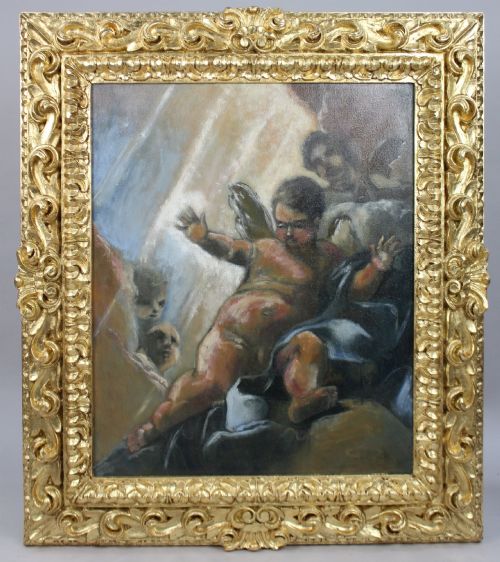
These carved figures originally belonged to grand Italian churches, domestic chapels, and aristocratic palazzos. They adorned altars, supported large wall mirrors, framed oil paintings, and functioned as structural elements on console tables and torchieres.
Today, collectors place them on mantelpieces, mount them directly onto walls, or display them on dedicated pedestals.
How should I care for antique giltwood?
Antique giltwood requires a stable environment away from direct sunlight, excessive heat, and high humidity to prevent the gesso and gold leaf from lifting. Dusting should be done very gently with a dry, soft-bristled brush.
Avoid using liquid cleaners, polishes, or abrasive cloths, as these can permanently damage the delicate historical surfaces.